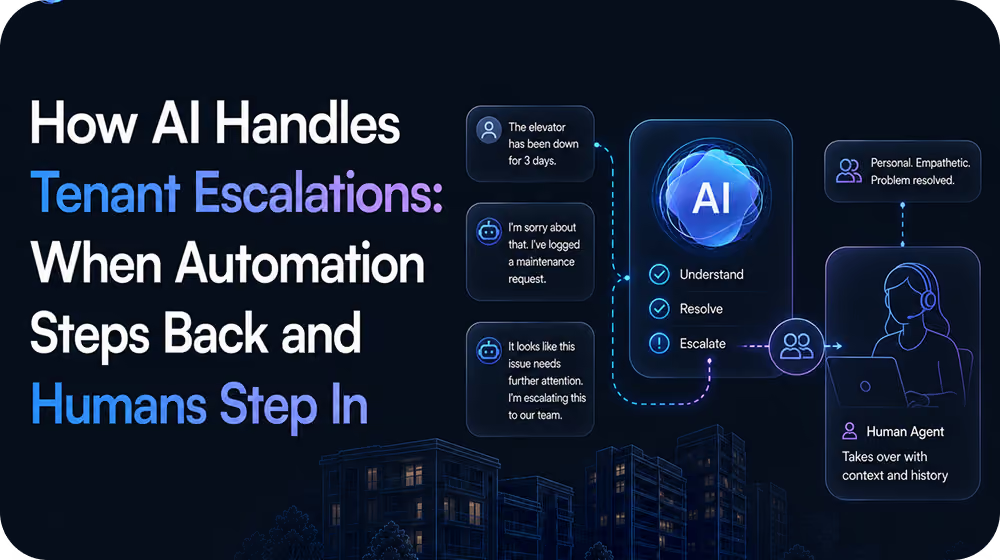

Every platform in proptech now claims to have an agent. The label turns up on demos and in cold emails. Behind it sits everything from genuinely autonomous software to a chatbot with a fresh coat of paint.
The gap between those two is wide, and it matters.
An agent is meant to do the work a leasing team would otherwise do by hand. An assistant talks about qualifying a lead or booking a tour. An agent does it end to end, then moves to the next one.
This article sets out what agentic AI means and what it can and cannot do on a leasing team. It also shows how to tell a real agent from a relabelled assistant.
What Is Agentic AI? A Plain-English Definition
Agentic AI is software that pursues a goal with limited supervision. Instead of waiting for one instruction at a time, it breaks a goal into steps and works through them. At each step it decides what to do next, then acts through the systems it connects to.
A few capabilities separate an agent from a simple responder:
- Perception: It reads the situation from data, not only the latest message.
- Reasoning and planning: It works out the sequence of steps needed to reach the goal.
- Tool use: It acts through connected systems such as a calendar, a CRM or a payment platform.
- Memory: It carries context across a conversation and between sessions.
Put together, these let a system take an outcome you define, such as a booked tour. It then works towards that outcome without a person steering every step.
How Agentic AI Differs From Chatbots and Standard AI Assistants
The difference comes down to autonomy and action.
A chatbot or a standard assistant responds to what you ask. It answers a question or drafts a reply, then stops and waits for the next prompt.
An agent is built around a goal rather than a single reply, so it can decide on and carry out the steps that reach it.
In leasing terms, an assistant can tell a prospect which units are free. An agent can check availability and book the tour, then update the record so your team sees it. The first answers a question. The second completes a task.
The distinction matters because the labels have blurred. Vendors now relabel chatbots and automation scripts as agents. The useful test is whether a system only responds or can finish a task on its own.
What Agentic AI Can Do in Leasing
In leasing, agentic systems already take on work that used to need a person at every step. Common examples include:
- Lead qualification: An agent reads an enquiry and scores intent, then pushes high-value prospects forward, the core of AI lead acquisition.
- Tour scheduling: It offers live slots and books the viewing straight into the calendar, with no email back-and-forth.
- Follow-up: It chases quiet leads with timely, personalised messages across channels.
- Resident support: It resolves routine resident questions and escalates anything sensitive with full context.
- Record keeping: It logs each conversation and outcome in your CRM, so the data stays current without manual entry.
The pattern is the same across all of them. The system is given an outcome and the access to reach it, then works through the steps on its own.
Autonomous Lead Qualification, Tour Booking, and Follow-Up
This top-of-funnel sequence is where agentic AI earns its place first, because speed and consistency decide whether an enquiry becomes a lease.
Qualification comes first. When an enquiry lands, the agent reads it and asks the few questions that matter, such as move-in date and budget. It then scores the lead against your criteria. A genuine prospect moves forward, and a weaker one is nurtured rather than dropped.
Booking follows. The agent offers live tour slots and writes the confirmed viewing to the calendar, so there is no manual coordination or double-booking.
Follow-up is where most leasing teams lose ground, and where autonomy helps most. The first response usually wins the lease.
An agent that replies in seconds at any hour protects conversion that staffing alone cannot. When a prospect goes quiet, it re-engages with personalised messages rather than waiting for someone to notice.
This is the logic behind outbound re-engagement campaigns, applied lead by lead. It turns dormant leads back into pipeline you have already paid for.
Handled together, these steps move a lead from first enquiry to booked tour without a person touching the routine work. Your team stays on the conversations that need judgement.
The Limits of Agentic AI in Property Management (What It Cannot Do Yet)
Autonomy has clear boundaries, and treating an agent as if it has none is how operators get caught out. Several things still sit outside what an agent should do alone:
- Genuine judgement calls: Rent negotiation, lease exceptions and goodwill decisions need authority a model does not hold.
- Emotional or vulnerable situations: A distressed resident needs human tone, not an efficient reply.
- Compliance-sensitive decisions: Screening and accommodation requests carry fair housing exposure and belong with a person.
- Novel or ambiguous cases: Outside its knowledge, an agent can act confidently and wrongly, which is why a human handover matters.
The technology is also early. Many agentic projects stall, not because the idea is wrong but because they are pointed at the wrong work or run without controls. The sensible path is simple. Give an agent the routine, high-volume tasks it handles well, and keep a person on everything that carries real weight.
Is Your Team Ready for Agentic AI?
Agentic AI is moving quickly.
Gartner forecasts that 33% of enterprise software will include agentic AI by 2028, up from less than 1% in 2024. At the same time, it expects more than 40% of agentic AI projects to be cancelled by the end of 2027, usually because of unclear value or weak controls. The lesson is that readiness matters more than enthusiasm.
A few conditions decide whether agentic AI pays off for a leasing team:
- Clean systems to act through: An agent is only as good as the CRM and calendar it connects to, so the underlying data has to be reliable.
- Defined boundaries: You decide which decisions an agent can make and where it must hand to a person.
- Policies worth grounding in: Clear rules on pricing and availability give the agent something accurate to work from.
- A working escalation path: The cases that need judgement have to reach your team with context attached.
Where those are in place, an agent reduces workload from day one. Where they are missing, it amplifies whatever problems it is plugged into.
How to Evaluate Agentic AI Vendors for Multifamily
Once you are ready, choosing a vendor is mostly about telling real autonomy from a relabelled assistant. Gartner calls the gap agent washing, where existing chatbots and automation scripts are rebranded as agents without the underlying capability. The questions below cut through it.
Weigh each vendor against the following:
- Real autonomy: Can it complete a task end to end, or does it only respond and wait? Ask for a live walkthrough, not a recorded demo.
- Deep integration: It has to act inside your stack, so a clean link to your CRM and PMS is essential.
- Built for real estate: A platform that understands leasing and resident operations beats a generic engine retrofitted to property.
- Guardrails and oversight: Clear boundaries, an audit trail and human escalation, so autonomy never runs unchecked.
- Compliance: Fair housing awareness in how the agent speaks, alongside recognised security standards.
VerbaFlo is a conversational AI platform built for real estate operators, which is what an agentic system for leasing has to be. Rather than one assistant bolted on, it runs specialised AI agents across the leasing and resident lifecycle.
Each agent is trained for its function and connected into the systems your team already uses. Those agents qualify leads and schedule viewings. They automate follow-ups and update records, then hand to a person when a conversation needs one.
They work across multifamily and Build-to-Rent (BTR) portfolios and across every channel, from web chat and voice to email and WhatsApp. A prospect gets the same standard wherever they reach you.
See how VerbaFlo runs agentic leasing across your portfolio. Book a demo