PBSA marketing is no longer simply about getting a property in front of students. The bigger challenge is knowing which students to reach, what to say, where to engage them and how to turn that interest into a booking. That makes AI for PBSA marketing less about producing more content and more about making the marketing journey responsive.
AI can help student accommodation operators analyse enquiry patterns, adapt messaging, respond to prospects faster and connect marketing activity with what happens further down the funnel. Used properly, it can support the journey from first discovery to enquiry, viewing and booking.
Knight Frank's 2025/26 UK Student Accommodation Survey found that nearly 50% of applicants said incentives influenced their accommodation choice, highlighting how important it is for operators to understand what is influencing student decisions.
So, where does AI actually fit into PBSA marketing?
What Does AI for PBSA Marketing Actually Mean?
AI for PBSA marketing goes beyond using generative AI to write social media captions or email copy. It can support different parts of the marketing funnel, including:
- Analysing which channels generate enquiries and bookings
- Identifying patterns in student behaviour
- Creating and testing messaging variations
- Personalising follow-up based on enquiry context
- Identifying leads that need faster attention
- Answering routine questions outside office hours
- Analysing conversations to identify recurring objections
- Connecting marketing activity with lead and booking outcomes
The distinction is important. An AI tool that creates 30 versions of an advert may save a marketer time. An AI system that helps identify which channel, message and follow-up approach produces better-quality enquiries can influence occupancy.
That is where student housing marketing AI becomes strategically useful.
Start With the Channel Mix, Not the AI Tool
Before introducing AI, PBSA operators need to understand how their marketing channels contribute to the student journey.
The objective is not to add AI to every channel. Instead, identify where prospective students are dropping out, waiting too long for a response or receiving generic information that could be made more relevant. Those are often the areas where AI can create the most value.
Use AI to Make PBSA Messaging More Relevant
Student accommodation marketing needs to appeal to different priorities. One prospective resident may care about affordability. Another may prioritise proximity to university, while an international student may want reassurance about the booking process and what happens after arrival. A single generic message cannot address every motivation equally well.
AI can analyse enquiry and behavioural data to identify recurring themes and help marketers develop messaging around them.
Instead of a generic line about premium accommodation close to university, a campaign could focus on a specific concern, such as living close to campus without giving up your own space, or comparing room types before booking.
The value of AI here is not necessarily that it writes better copy than a marketer. It helps marketing teams create, test and refine relevant variations at scale.
Connect Marketing With the Actual Student Journey
A common PBSA marketing problem is the gap between campaign performance and occupancy. A campaign may generate thousands of impressions and hundreds of clicks. But those numbers do not tell an operator whether the campaign is actually helping fill rooms.
A more useful journey runs from search or social to a website visit, then enquiry, qualification, viewing, application and booking.
AI can help analyse what happens between these stages. If a campaign generates plenty of enquiries but few bookings, the issue may not be the campaign itself. Students may ask questions about pricing, availability, room types, or contract terms and then disappear.
Conversation data can reveal those patterns. This creates a useful feedback loop, where marketing generates interest, conversations reveal objections, messaging changes, campaigns improve and lead quality improves.
Generate Better Leads, Not Simply More Leads
One of the most important questions for PBSA operators is not how to get more leads. It is how to get more of the right leads.
AI can help identify characteristics associated with stronger prospects, including preferred university or location, preferred move-in period, room requirements, budget range, booking stage, questions asked and engagement with previous communications.
This can help marketing and lettings teams distinguish between someone casually researching accommodation and someone actively considering a booking. That matters because high enquiry volume does not automatically mean strong marketing performance. The better question is how effectively marketing contributes to qualified demand and, ultimately, occupancy.
Use Conversational AI to Bridge the Response Gap
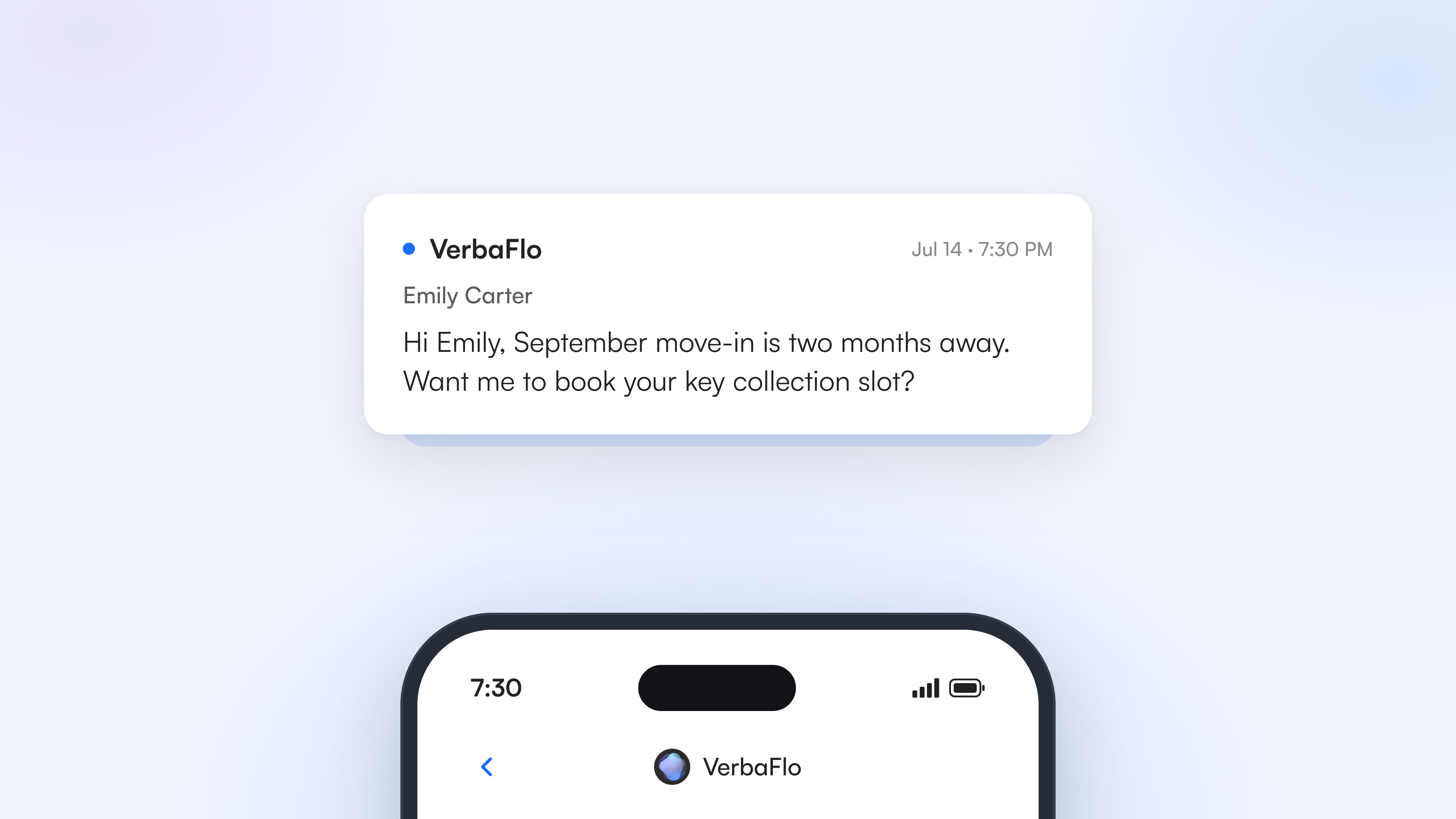
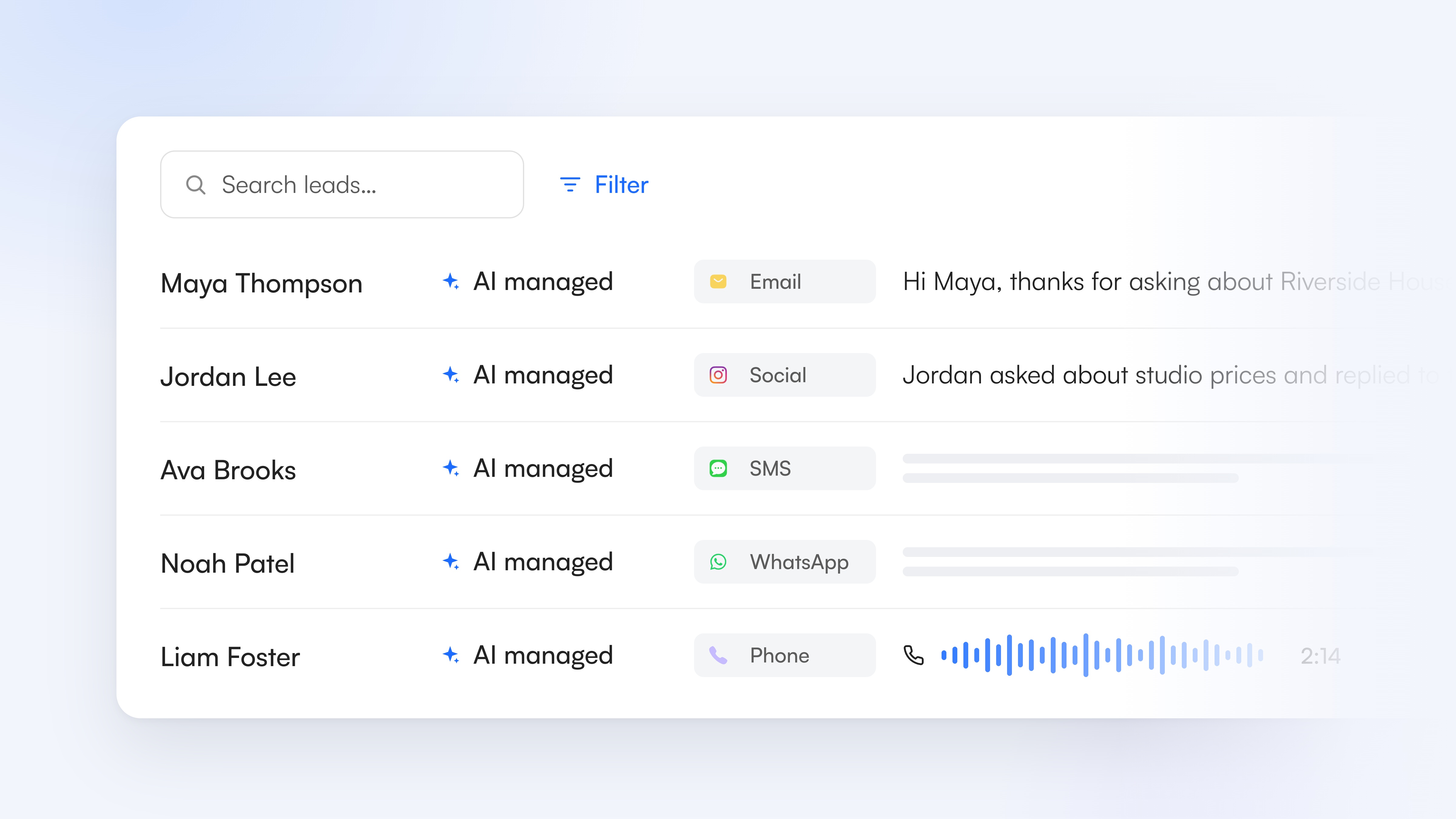
A marketing campaign does not stop working when the marketing team leaves for the day. A prospective student might discover a property in the evening, visit the website and ask a question before deciding whether to continue. Conversational AI can become part of this marketing journey by handling routine questions about room types, amenities, location, availability, booking steps, viewing arrangements, payment information and move-in information.
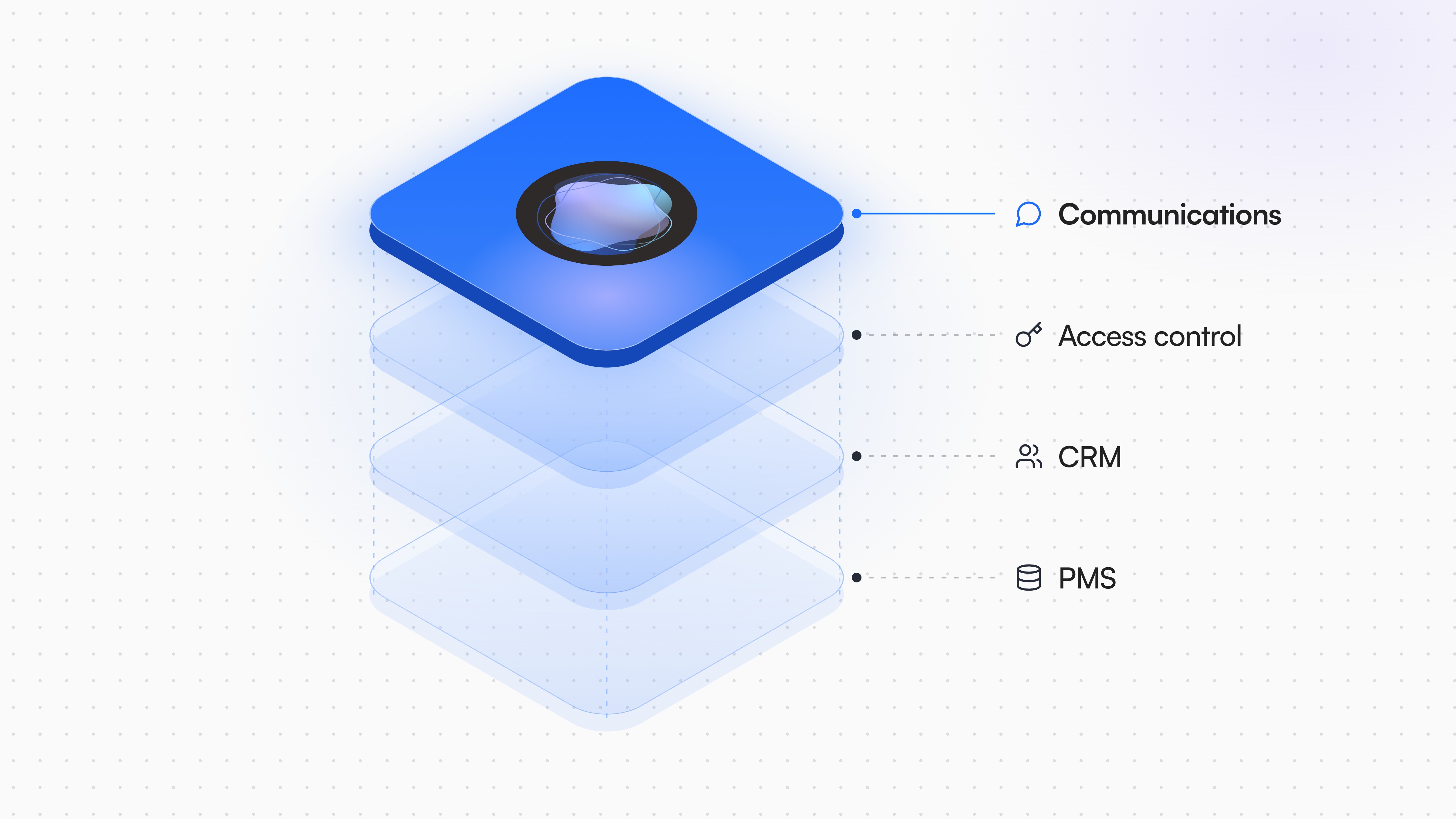
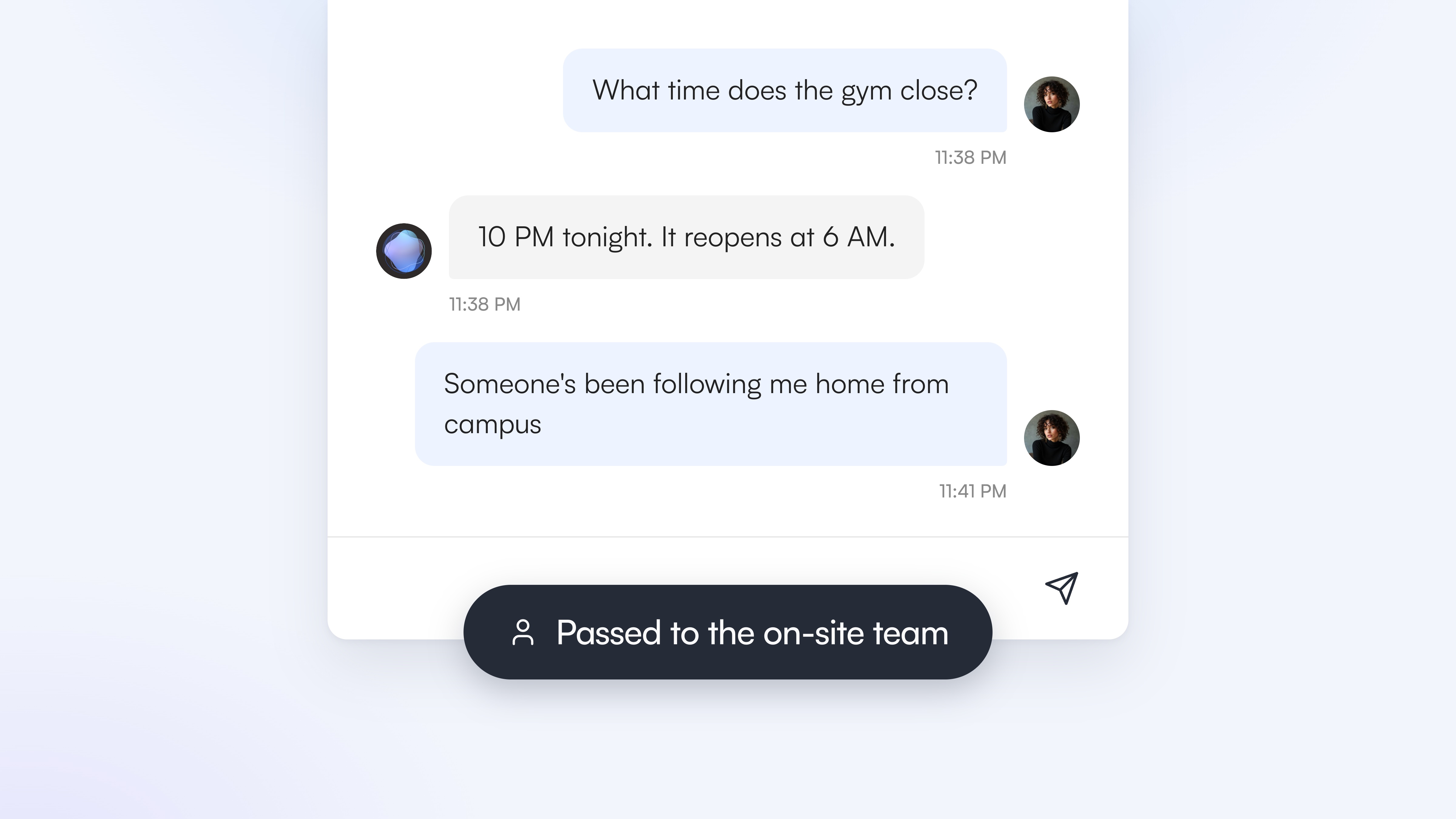
It can also capture conversation context, so prospects do not have to repeat themselves every time they interact with the property. This is where VerbaFlo can fit naturally into a PBSA marketing stack, helping operators turn website and enquiry traffic into ongoing conversations, support routine lead follow-up and escalate more complex queries to the appropriate team.
The aim is not to remove the human relationship from PBSA. It is to reduce the number of routine interactions that become barriers to booking.
What Should PBSA Marketers Measure?
AI becomes much more valuable when marketing teams measure the complete funnel rather than individual channel metrics. A useful dashboard can include:
- Awareness: impressions, reach, video engagement, branded search activity and organic visibility.
- Acquisition: website visits, enquiry volume, cost per enquiry, enquiry source and landing-page conversion.
- Lead quality: qualified enquiries, viewing requests, application starts, lead-to-viewing rate and lead-to-application rate.
- Conversion: applications, bookings, booking conversion rate, cost per booking and channel contribution to bookings.
- Occupancy: booked rooms, remaining availability, booking pace and occupancy by room type.
The principle is simple. Do not optimise marketing purely for clicks when the commercial objective is occupancy. Google recommends evaluating advertising performance using conversions and business value rather than relying solely on clicks or traffic metrics.
Personalisation Needs Clear Boundaries
AI can make personalisation easier, but PBSA operators should not treat every available piece of student data as something that can automatically be used for marketing.
The Information Commissioner's Office highlights the importance of transparency, fairness, an appropriate lawful basis and safeguards when organisations use personal information for direct marketing and profiling.
PBSA marketers should therefore consider what information is being collected, why it is being collected, how it will be used, whether profiling is taking place, who the information is shared with, and how students can object or opt out.
AI should make marketing more relevant without making it feel intrusive.
Build a Closed-Loop PBSA Marketing System
The strongest use of AI is not necessarily one standalone marketing tool. It is a connected system where information flows between marketing, enquiries and lettings.
Marketing data identifies channel and audience patterns, which informs relevant messaging, which generates enquiries. Those enquiries enter AI-assisted conversations, then qualification and follow-up, then viewing or application, then booking. Analysing what converted then improves the next campaign.
This creates a feedback loop between what marketers put into the market and what prospective students actually do afterwards.
The Future of PBSA Marketing Is More Responsive
AI will not replace the fundamentals of PBSA marketing. Operators still need compelling properties, strong creative, clear propositions and effective channels. What AI can change is how quickly marketing teams learn from demand and act on it. The opportunity is therefore not simply to use AI. It is to build a marketing system that listens to prospective students, learns from their behaviour and turns those insights into better conversations, better campaigns and better occupancy outcomes. Book a demo to see how it works.