Running a modern purpose-built student accommodation (PBSA) scheme involves far more than managing rooms and collecting rent. Operators need to attract prospective students, process bookings, manage tenancies, control building access, handle maintenance, communicate with residents and coordinate teams across the property.
As schemes become larger and resident expectations become increasingly digital, relying on one system for everything can create gaps. A property management system may handle core operations, but it does not necessarily cover CRM, access control, resident communications or the growing role of AI. This is why understanding the PBSA tech stack matters.
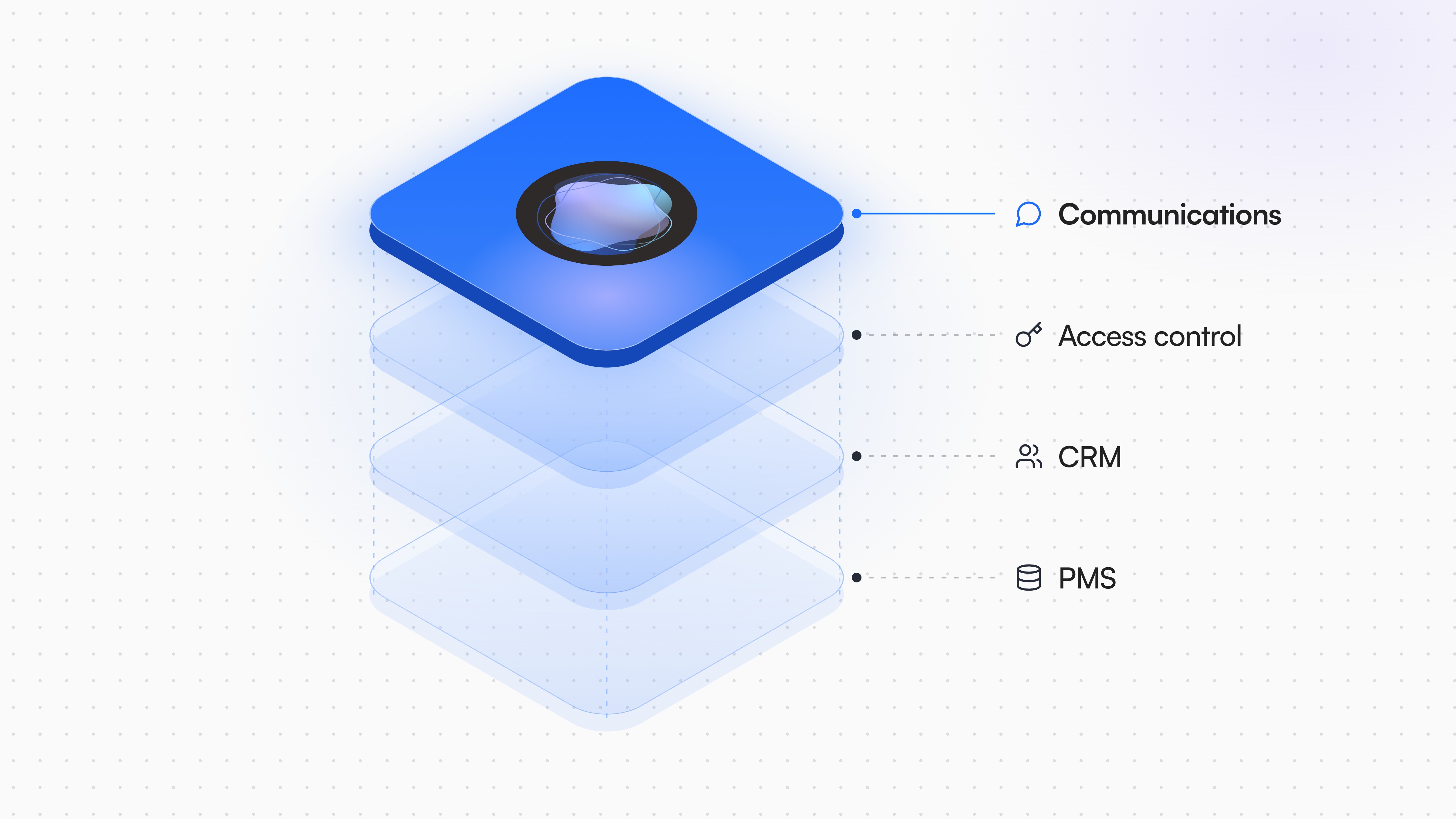
The objective is not to buy the largest number of platforms. It is to build a connected set of systems where each technology has a clear role and information can move between them without creating unnecessary administrative work. For UK PBSA operators, the core stack typically brings together four areas: property management, CRM and lettings, access control, and resident communications. AI is increasingly becoming a layer across these systems rather than another disconnected tool.
What Is a PBSA Tech Stack?
A PBSA tech stack is the collection of software, digital systems and connected technologies used to operate a student accommodation scheme. At its simplest, the stack needs to support two sides of the operation.
The first is the operational side, covering rooms, tenancies, payments, maintenance, access and building management.
The second is the resident journey, covering enquiry, booking, pre-arrival communication, move-in, day-to-day support, renewals and move-out.
A useful PBSA technology stack should connect these functions rather than leaving teams to transfer information manually between separate systems. The exact combination will vary depending on the size and operating model of the scheme, but four core components form the foundation.
1. PMS: The Operational Core
The property management system (PMS) is usually the central operational system within a PBSA environment.
It manages the information and workflows that underpin the property, such as:
- Units, rooms and beds
- Tenancies and contracts
- Resident records
- Payments and balances
- Maintenance workflows
- Availability
- Move-ins and move-outs
- Property-level reporting
The PMS effectively provides the operational source of truth. Other systems may specialise in particular parts of the resident journey, but they often need to exchange information with the PMS. For example, when a student completes a booking, relevant information may need to flow into the property management system. When a resident moves out, their status needs to be reflected across connected systems. The important consideration is therefore not simply whether a PMS has enough features. It is whether it can connect effectively with the rest of the PBSA tech stack.
2. CRM: Turning Enquiries Into Bookings
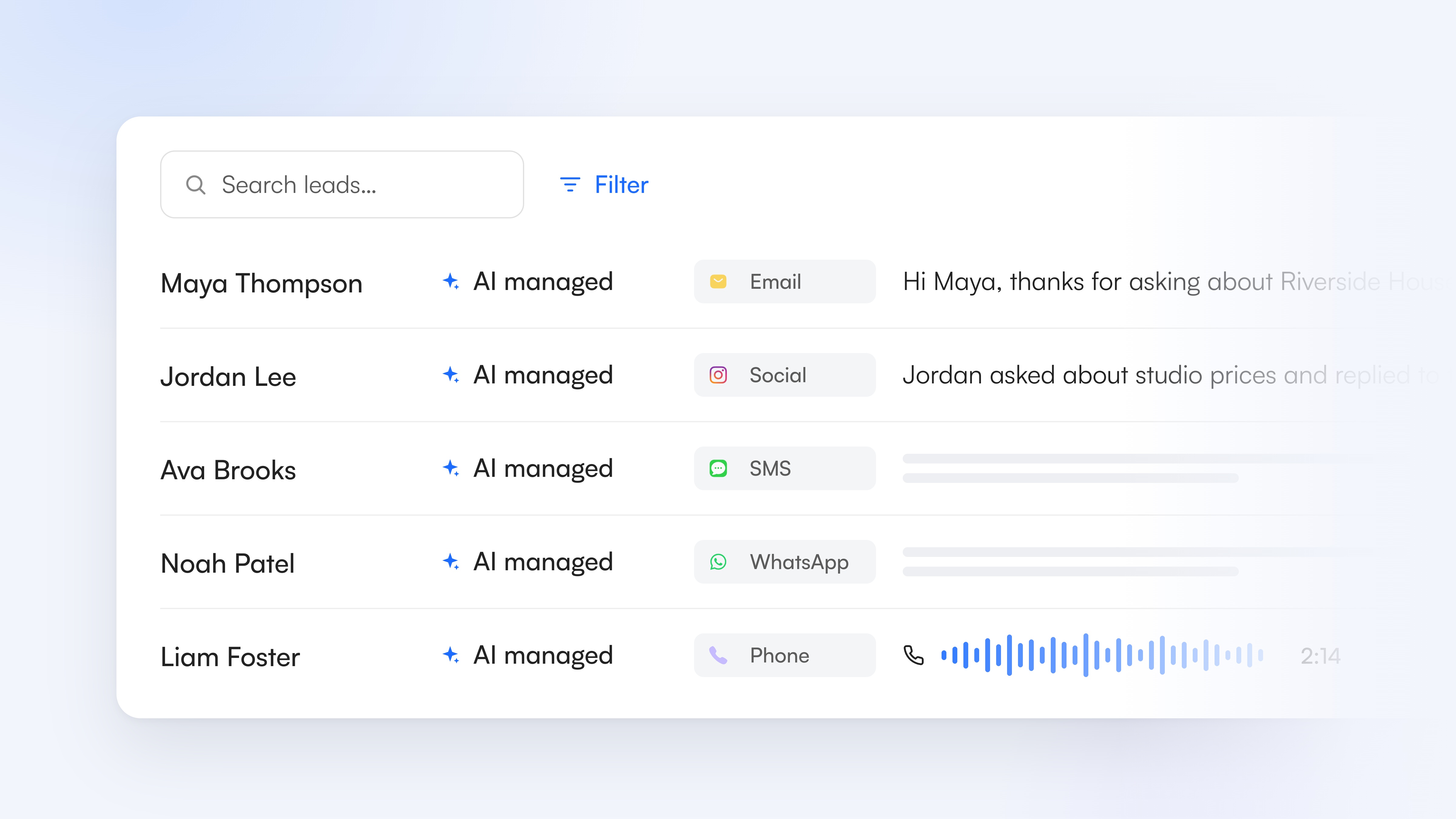
A PMS manages the property. A CRM focuses more on the prospect and the journey towards a tenancy. Student accommodation providers can receive enquiries through property websites, portals, email, phone, social media and other marketing channels. Without a structured CRM, it can be difficult to understand which prospects have been contacted, what they are interested in, and what should happen next.
A PBSA CRM can help teams manage:
- New enquiries
- Prospect information
- Follow-ups
- Viewing or tour requests
- Booking activity
- Communication history
- Lead sources
- Conversion performance
This becomes particularly important during peak student letting periods, when enquiry volumes can rise rapidly.
The CRM should not operate as an isolated database. Ideally, it connects with the PMS and communication tools so that teams have a consistent view of each prospective resident.
3. Access Control: Connecting the Digital and Physical Building
Access control sits at the intersection of technology and the physical resident experience. Modern PBSA schemes may use digital credentials, smart locks, mobile access or other electronic systems to control entry to buildings, communal areas and individual rooms.
The technology can support building access, room access, communal-area permissions, temporary access, staff and contractor access, and access management during move-in and move-out.
The key consideration is how access control interacts with the rest of the stack. For example, when a tenancy begins, access permissions may need to be activated. When a resident moves out, those permissions need to change. If these processes depend entirely on manual administration, they can create unnecessary work and potential errors.
4. Resident Communications: The Layer Students Actually Experience
Students may never see the PMS or CRM, but they interact with the communication layer constantly. They may ask questions about their booking, report maintenance issues, request information about the building, ask about events or need help before moving in. Communication can take place through email, SMS, portals, web chat, messaging platforms or conversational AI.
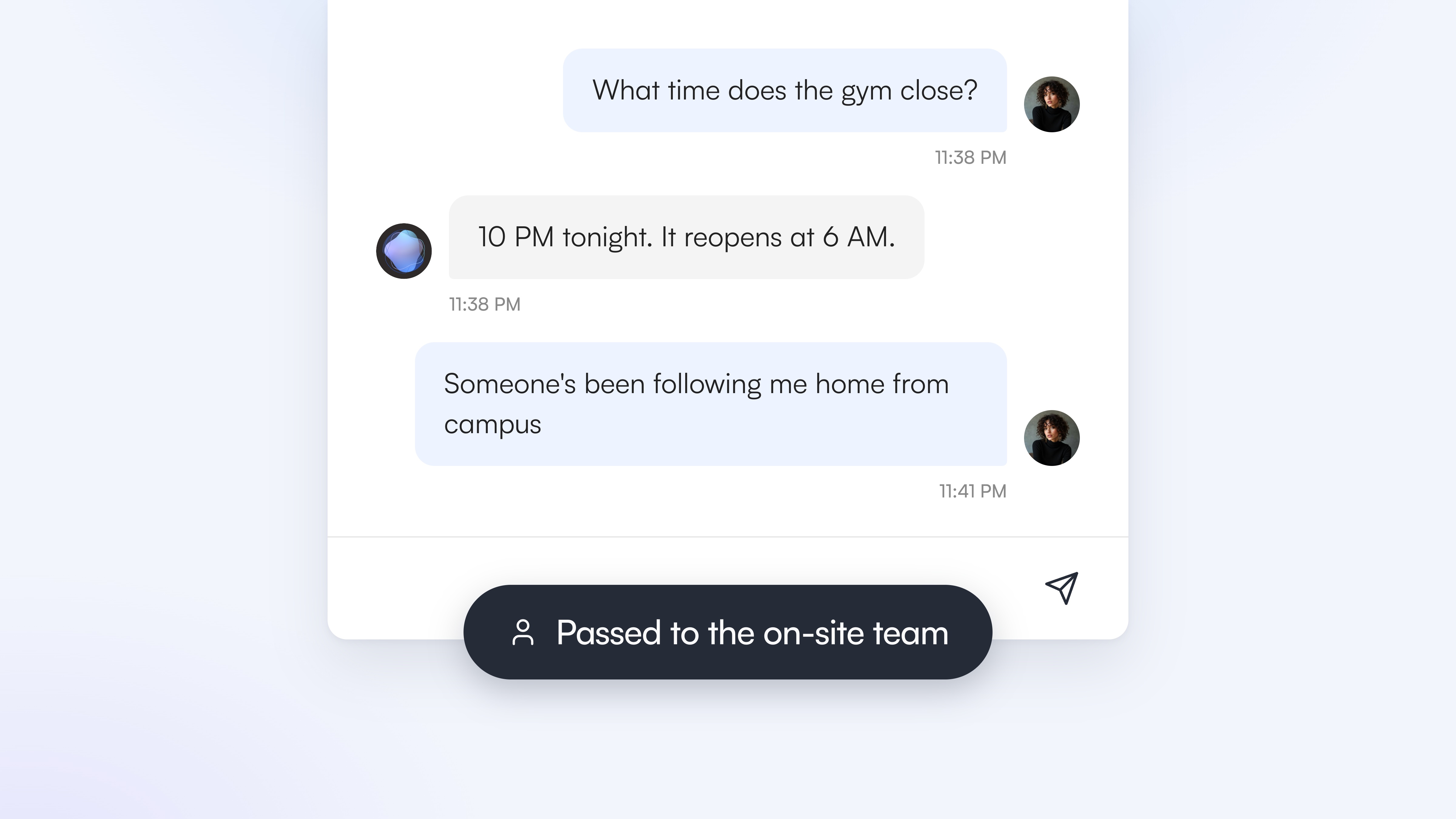
This is where a connected communication system becomes particularly valuable. Instead of requiring staff to answer every routine question manually, automation can handle straightforward requests while escalating situations that require human intervention.
For example, a resident might ask where to collect their keys. A connected system can provide the relevant approved information immediately.
A more complex issue, such as a dispute about a tenancy or a safeguarding concern, should instead be routed to an appropriate staff member. The goal is not to automate every interaction. It is to make routine communication easier while ensuring the right conversations reach the right people.
Where Does AI Fit Into the PBSA Tech Stack?
AI does not necessarily need to sit alongside every system as another standalone platform. Its greatest value can come from acting as an intelligent communication and workflow layer across the existing stack.
For example, AI can help with:
- Responding to prospective resident enquiries
- Answering routine questions
- Qualifying prospects
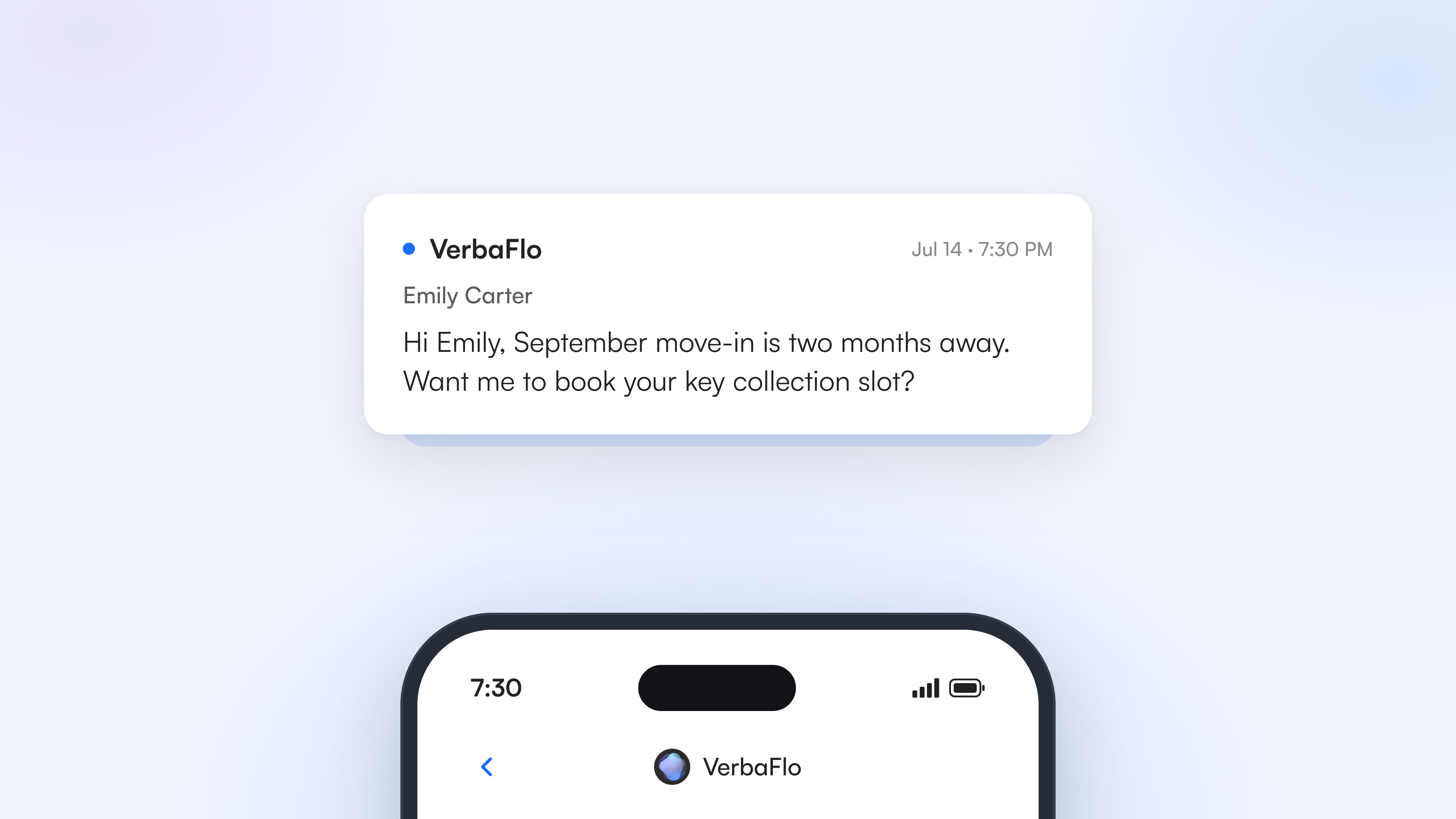
- Following up with applicants
- Supporting viewing and booking enquiries
- Handling out-of-hours conversations
- Answering routine resident questions
- Capturing maintenance information
- Routing requests to the appropriate team
- Sending reminders and updates
This is particularly useful because PBSA teams deal with large volumes of repetitive communication. VerbaFlo can sit within this broader ecosystem, helping operators connect conversational AI with existing operational workflows rather than forcing teams to manage another isolated communication channel.
What Should a PBSA Tech Stack Look Like by Scheme Size?
Not every operator needs the same level of technology. A smaller scheme may be able to operate effectively with a PMS, basic CRM functionality and resident communication tools. As the number of rooms, buildings and residents increases, the need for integration becomes more significant.
For a growing operator, the technology stack may gradually expand to include a PMS, CRM, digital access control, resident communications, maintenance management, payment systems, reporting and analytics, AI-powered engagement, and building management or IoT systems.
The important principle is to avoid adding technology simply because it exists. Every new platform introduces another integration, another source of data and another system for staff to understand. The question should always be what operational problem the technology solves, and how it connects with the systems already in place.
The Real Value Is in Connecting the Stack
A collection of good systems does not automatically create a good technology stack. The real value comes from how those systems work together. Consider a student moving into a new scheme. Their journey runs from enquiry into the CRM, then booking into the PMS, pre-arrival communication, access activation, move-in, resident support, maintenance, renewal and finally move-out.
If each stage operates independently, staff may have to duplicate information, check multiple systems and manually update residents. A connected stack allows information to move between these stages more efficiently.
What Should UK PBSA Operators Look for When Choosing Technology?
Before adding another system to the stack, operators should consider five questions:
- Does it integrate with the existing PMS and CRM?
- Can information be shared without excessive manual data entry?
- Does it improve the student or resident experience as well as internal efficiency?
- Can it scale across multiple schemes?
- Does it provide clear human escalation when automation is not appropriate?
The last point is particularly important for resident-facing AI. Student accommodation involves more than routine operational questions. Issues relating to wellbeing, safeguarding, complaints, tenancy disputes or other sensitive circumstances may require trained staff and should not be treated as ordinary automated interactions.
Building a PBSA Tech Stack That Can Scale
The best PBSA technology stack is not necessarily the one with the most software. It is the one that gives teams a clear operational foundation, connects the resident journey and reduces unnecessary manual work. A PMS provides the operational core. A CRM manages prospective residents and the lettings journey. Access control connects residents to the physical building. Communication technology keeps students informed and supported. AI can then add an intelligent layer that helps these systems work more efficiently together. Book a demo to see how it works.