.avif)
A prospect submits an enquiry on your listing at 9pm, then opens two more tabs and enquires at the communities next door. By the time your leasing agent sees the message the following morning, that renter has already toured one property and scheduled another. The lease is not lost on price or product. It is lost on response time.
Speed to lead has quietly become one of the strongest predictors of whether a vacancy fills. This piece breaks down what it means on the ground for US leasing teams and what good looks like heading into 2026.
What Speed to Lead Means in Multifamily Leasing
Speed to lead is the time it takes a leasing team to respond to a new enquiry. It measures the gap between a prospect raising their hand and the team making meaningful first contact.
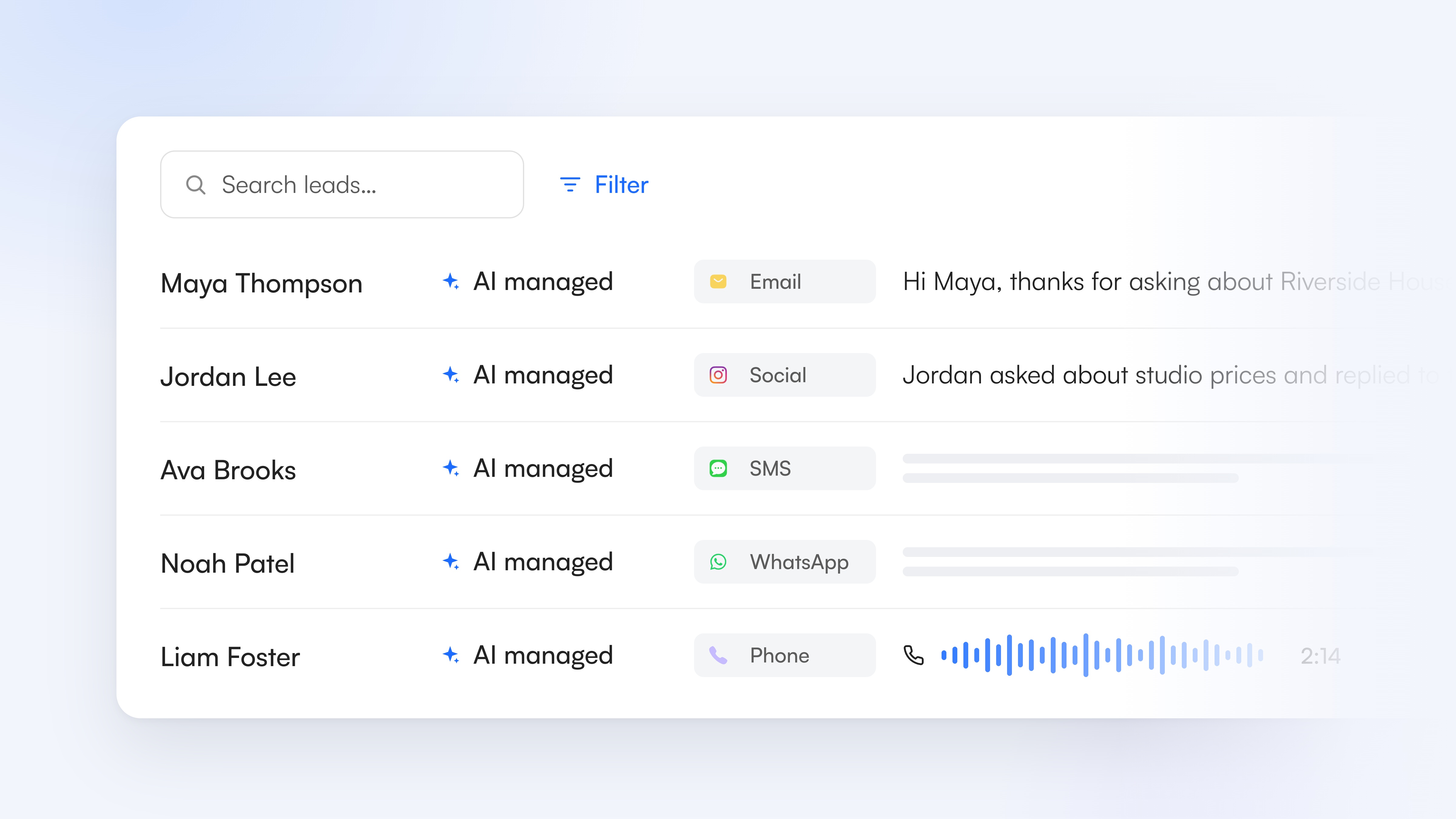
In multifamily, that hand-raise rarely arrives during office hours. It comes through an Internet Listing Service (ILS), a chat widget, a web form, a text, or a missed call, and it often lands in the evening or at the weekend when no one is at the desk.
The metric matters because renter intent decays fast. A prospect searching for an apartment is usually comparing several communities at once, and the first operator to reply with a real answer shapes the shortlist before anyone else has responded. First contact is the moment a prospect decides whether your community is worth a closer look.
The Real Cost of a Slow Response
The cost of a slow response is easy to underestimate, because the lost lease never shows up as a line item. It goes to a faster competitor.
The foundational research here is dated but has held up: a Harvard Business Review study from 2011 of more than 2,000 US companies found the average first response to a web lead took 42 hours, and that firms contacting a prospect within an hour were close to seven times more likely to qualify the lead than those who waited 60 minutes longer.
In a leasing context, the maths is unforgiving:
- Marketing spend buys the lead, whether through an ILS subscription, paid search, or a referral fee. That cost is sunk the moment the enquiry arrives, regardless of whether anyone answers it.
- A delayed reply hands the prospect to whichever community responds first, so the spend converts for a competitor rather than for you.
- An empty unit keeps accruing loss for every day it sits vacant, and a single avoidable vacancy can erase the margin on several filled ones.
Every hour an enquiry sits unanswered widens the gap. In a competitive submarket, that gap is measured in leases, not minutes.
Why Most US Leasing Teams Struggle With Response Time
Slow response is rarely a motivation problem. Leasing teams want to reach every prospect. The structure of the work makes it hard.
- Enquiries arrive around the clock, but leasing offices keep business hours. A large share of leads land in the evening or at the weekend, when no agent is available to reply.
- Agents juggle live tours, walk-ins, renewals, and resident issues, so an inbound enquiry competes with whoever is physically standing in the office.
- Leads scatter across channels. An ILS message, a website chat, a text, and a phone call may each sit in a different inbox, with no single queue and no clear owner.
- Manual follow-up does not scale. When the second and third touches depend on an agent remembering to chase, they often never happen, even though those touches are what book most tours.
Each of these is a structural constraint, not a coaching issue. Asking a fully booked team to also answer every enquiry within minutes, at any hour, sets a target that effort alone cannot reach.
How AI Closes the Speed Gap Without Replacing Agents
AI changes the economics of first response by removing the dependency on someone being free to reply. A conversational AI layer sits across your enquiry channels and engages the moment a lead arrives, day or night. AI handles the first response so the leasing agent inherits a warm, qualified prospect rather than a cold one.
What AI does in the first-response window
- Responds instantly across every channel, so an evening web enquiry gets the same fast reply as a 10am phone call.
- Qualifies the prospect in conversation, capturing budget, move-in date, occupancy, and must-have features before an agent is involved.
- Books the tour directly into the leasing calendar, converting interest into a scheduled visit while intent is still high.
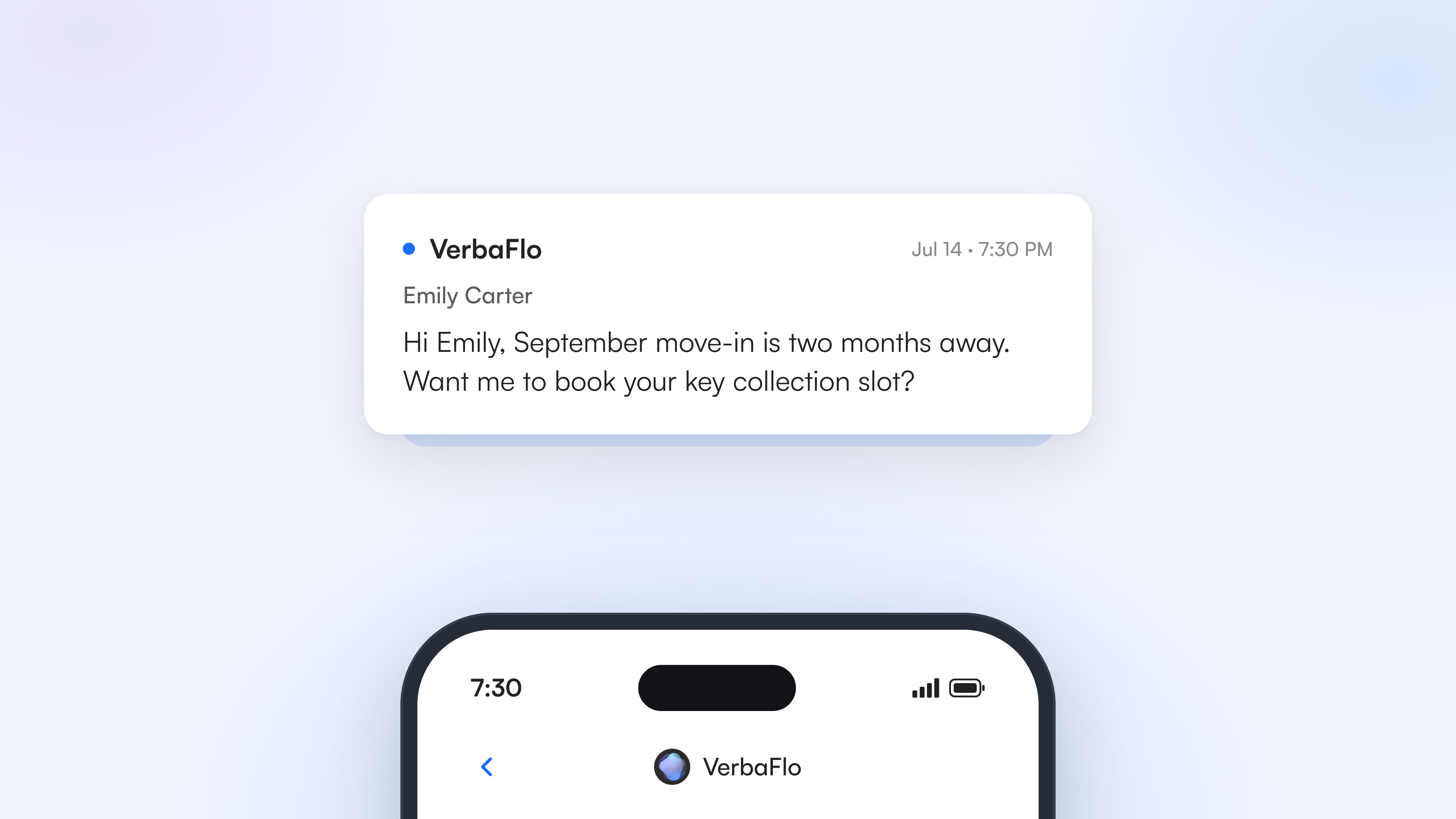
- Follows up automatically when a prospect goes quiet, running the second and third touches that manual workflows usually drop.
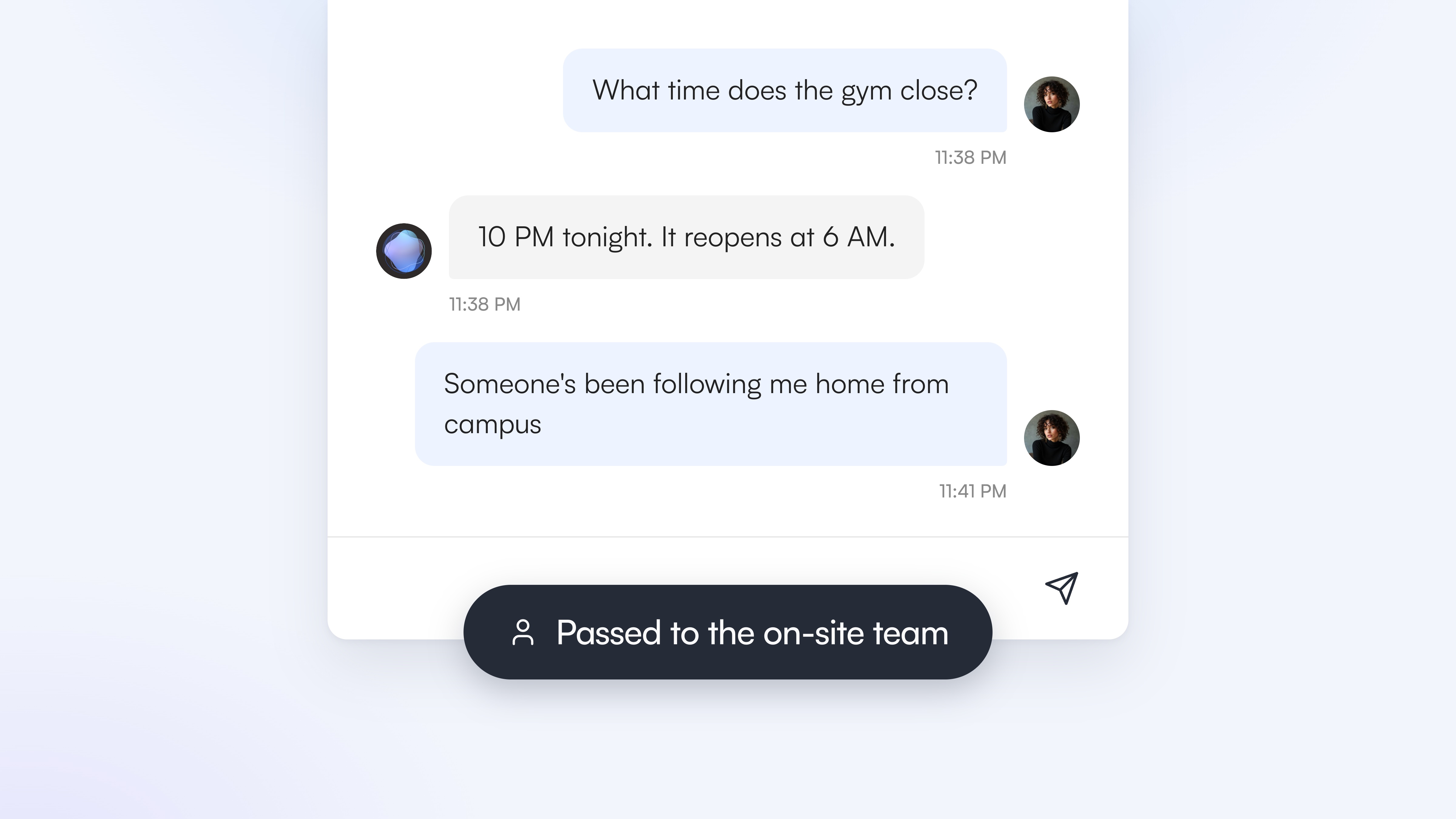
- Hands over to a human agent at the right moment, passing full context so the prospect never repeats themselves.
This frees your leasing agents to focus on tours and the judgement calls that close a lease, while the routine work of being first to reply runs without them.
Benchmarks: What Good Looks Like in 2026
Benchmarks for speed to lead have tightened as renters have grown used to instant replies everywhere else in their lives. The standard a renter applies to a leasing enquiry is now the standard they apply to any consumer purchase: a fast, useful answer on the channel they chose.
The 2024 NMHC and Grace Hill Renter Preferences Survey found that the apartment search now begins online for most renters, with email the preferred channel for communication, including for arranging tours. Meeting that expectation means being reachable and quick wherever the enquiry starts.
The target most operators now work towards is a first response within minutes, not hours. The table below sets out what good looks like across the wider funnel.
No leasing team staffed by humans alone can answer within minutes at 11pm on a Sunday. That is the gap AI now fills, and it is why first response has become a question of systems rather than effort.
How VerbaFlo Helps US Operators Win the First Response
VerbaFlo is a conversational AI platform built for US real estate operators across multifamily, Build-to-Rent (BTR), and Purpose-Built Student Accommodation (PBSA). It is designed around the first response: engaging every enquiry the moment it arrives, qualifying it in conversation, and moving it towards a booked tour without waiting for an agent to be free.
- Omnichannel engagement: instant responses across web chat, text, email, and ILS enquiries, so a lead on any channel, at any hour, gets an immediate and useful reply.
- AI qualification and tour booking: VerbaFlo holds a real conversation, captures the details that matter, and books the tour straight into the leasing calendar.
- Human handover: when a prospect needs a person, VerbaFlo passes the full conversation to a leasing agent so nothing is repeated.
- Outbound re-engagement: VerbaFlo reopens conversations with leads that went quiet, running the follow-up that manual workflows miss.
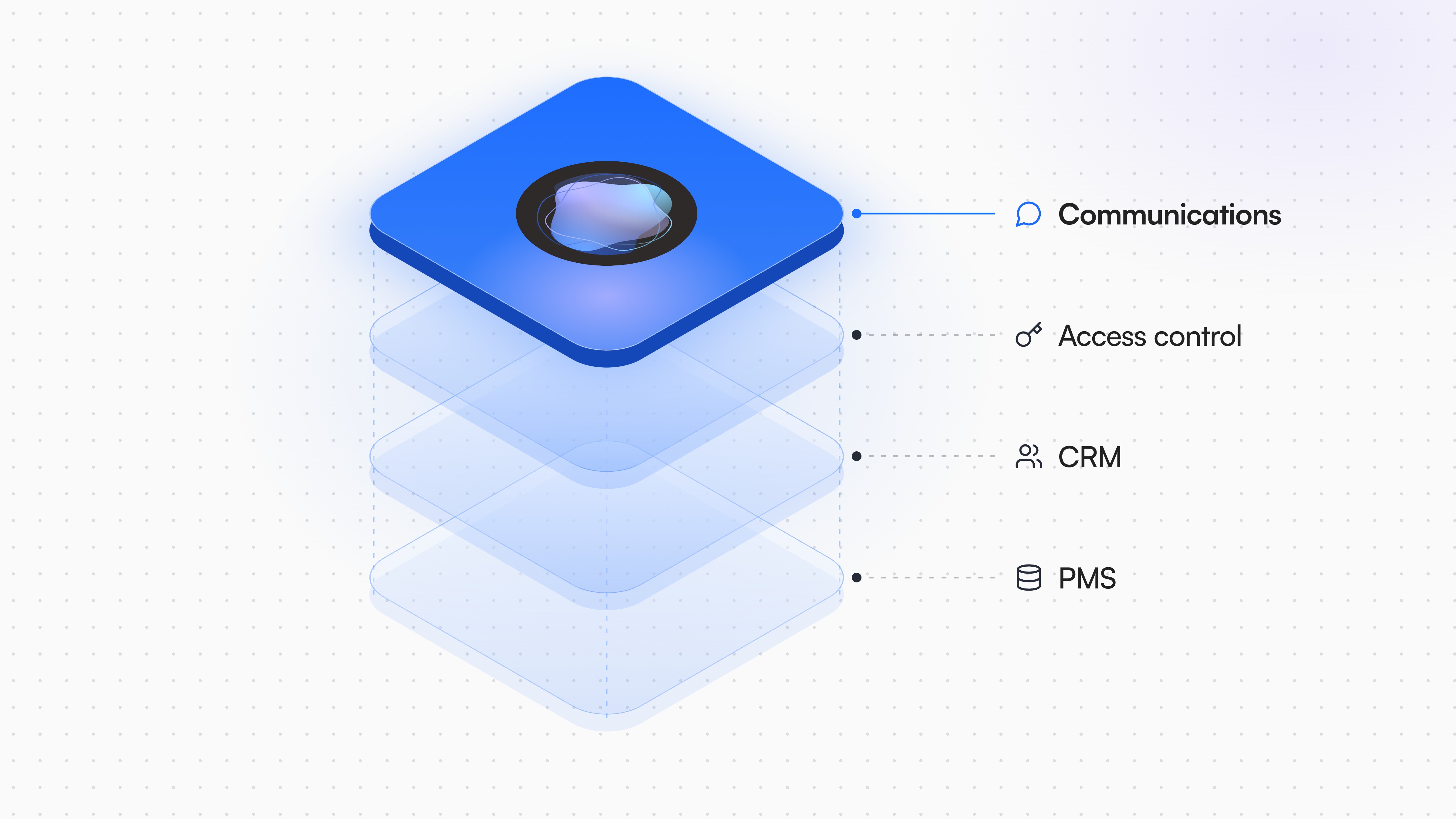
Underneath these, WorkFlo coordinates messaging across channels, so the same prospect is not contacted twice or dropped between systems as a conversation moves from AI to agent and back.
The clearest way to judge whether this fits your communities is to watch it run against your own enquiries: book a demo and see VerbaFlo answer a live leasing enquiry the moment it arrives.