How AI Helps US Multifamily Operators Manage Online Reputation
A prospective renter's journey often begins long before they schedule a property tour. A quick Google search, a visit to Apartments.com, or a glance through resident reviews can shape their first impression of a multifamily community. In an increasingly digital leasing landscape, online reputation has become one of the most influential factors in attracting and retaining residents.
According to BrightLocal's Local Consumer Review Survey, online reviews continue to play a significant role in consumer decision-making across industries, and rental housing is no exception. Prospective residents are not only looking at star ratings but also paying close attention to how property managers respond to feedback, resolve concerns, and engage with their communities.
For multifamily operators managing multiple communities, monitoring reviews across different platforms can quickly become overwhelming. This is where artificial intelligence is reshaping the online reputation management that multifamily teams rely on. AI enables property managers to monitor resident conversations, identify emerging issues, prioritise responses, and turn resident feedback into meaningful operational improvements.
Rather than replacing leasing or property management teams, AI empowers them with insights that help protect brand reputation, strengthen resident relationships, and ultimately support occupancy goals.
Why Online Reviews Now Directly Impact Occupancy in US Multifamily
Online reviews have evolved into one of the most important touchpoints in the renter decision journey. Before contacting a leasing office, prospective residents often compare communities based on review scores, resident experiences, and management responsiveness. A community with hundreds of positive reviews and thoughtful responses builds confidence. Conversely, unanswered complaints or recurring maintenance concerns can discourage prospects before they even request a tour.
Industry organisations such as the National Multifamily Housing Council (NMHC) have consistently highlighted the growing importance of resident experience as a competitive differentiator. Since online reviews directly reflect resident satisfaction, they have become an extension of a property's brand. This makes apartment reputation management an operational priority rather than simply a marketing responsibility.
AI allows operators to monitor reputation consistently across an entire portfolio instead of relying on individual teams to manually check multiple review sites every day. By identifying patterns early, operators can address resident concerns before they begin affecting leasing performance.
What AI Monitors: Google, Apartments.com, Yelp, and Social Channels
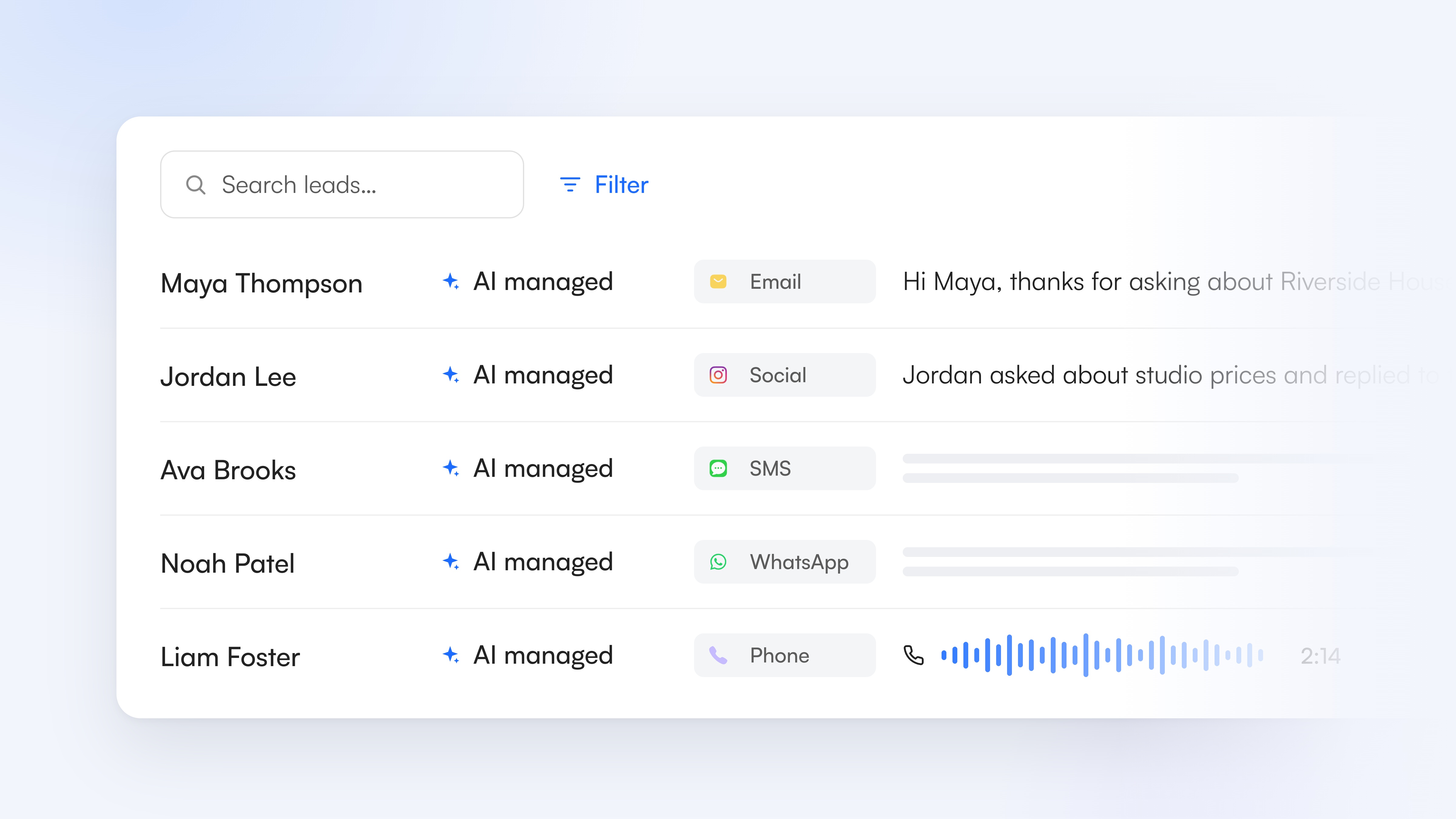
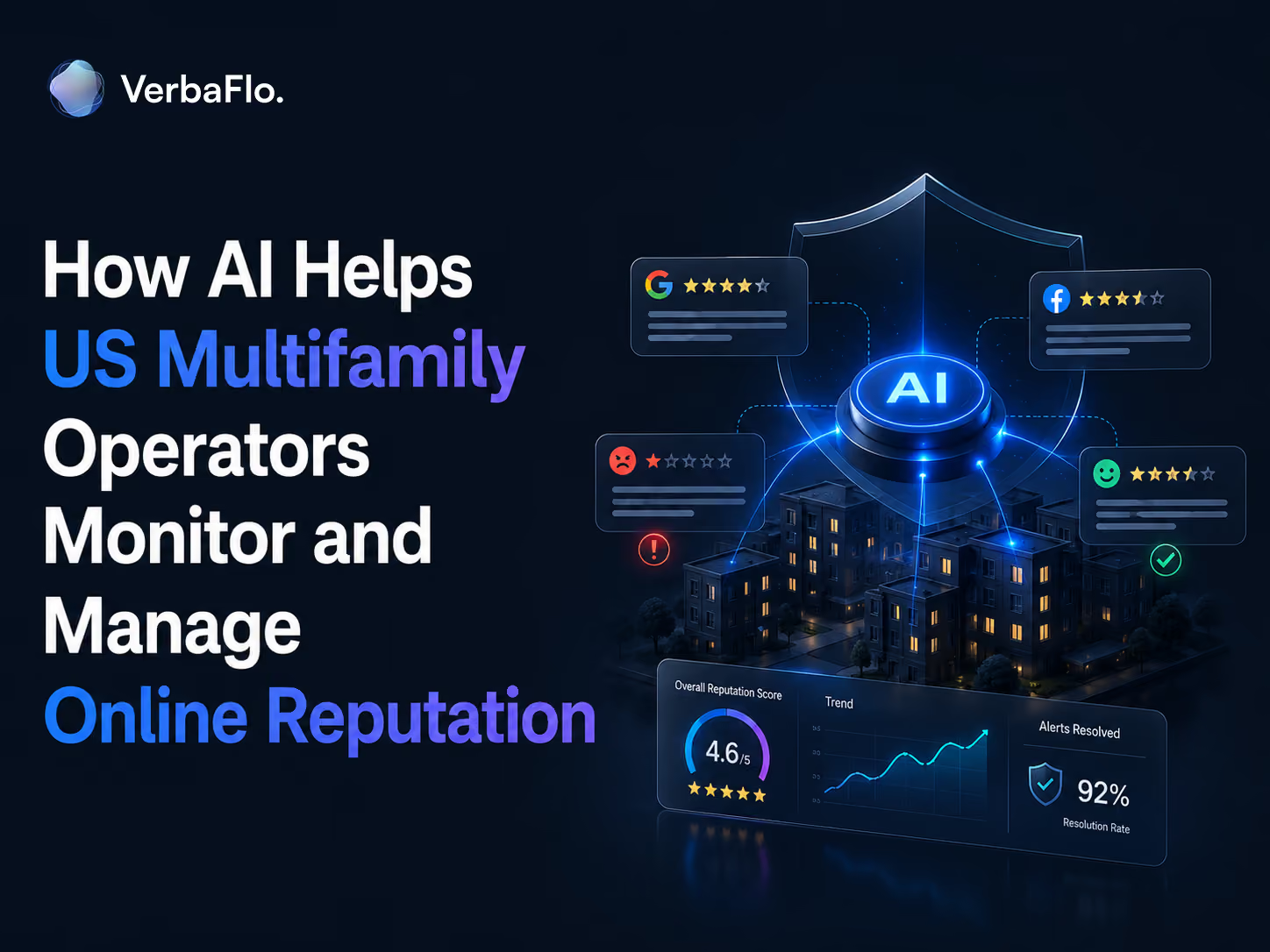
Today's residents share their experiences across numerous digital platforms. Reviews are no longer limited to a property's website. AI-powered reputation platforms can continuously monitor conversations across channels such as Google Reviews, Apartments.com, Yelp, Facebook, Instagram, X, resident surveys, and community feedback portals.
Instead of requiring property managers to log into each platform individually, AI consolidates reviews into a centralised dashboard.
For operators managing dozens or even hundreds of communities, this creates significant operational efficiencies. AI can categorise reviews based on urgency, identify properties receiving unusual spikes in negative feedback, and notify regional managers before issues escalate. For example, a sudden increase in complaints regarding parking availability or maintenance response times can trigger alerts, enabling management teams to investigate quickly. This approach makes Google reviews AI property management solutions increasingly valuable for operators seeking portfolio-wide visibility.
Solutions such as VerbaFlo help simplify this process by bringing together conversations from multiple resident touchpoints, giving property teams a clearer picture of their online reputation without switching between platforms.
AI for Sentiment Analysis: Understanding What Residents Actually Think
A five-star rating tells only part of the story. The written comments often provide the real insight into resident satisfaction. This is where sentiment analysis becomes one of AI's most valuable capabilities.
Natural Language Processing (NLP) enables AI to evaluate review language, identify emotional tone, and categorise feedback into themes such as maintenance, leasing experience, staff professionalism, amenities, safety, cleanliness, communication, and parking.
Rather than reviewing hundreds of comments manually, property managers receive summarised insights showing what residents appreciate and where recurring concerns exist. For example, AI may identify that positive reviews consistently mention friendly leasing staff while negative reviews repeatedly reference delayed maintenance requests.
This transforms resident feedback AI solutions into strategic operational tools rather than simple review trackers. Instead of reacting to individual complaints, multifamily operators gain a broader understanding of resident sentiment across entire portfolios, helping leadership prioritise improvements that create measurable impact.
How AI Drafts and Prioritises Review Responses at Scale
Responding promptly to resident reviews demonstrates accountability and professionalism. It also signals to prospective renters that management actively listens to resident concerns. However, responding individually across hundreds of properties can consume valuable staff time. AI assists by generating personalised response drafts based on the content and sentiment of each review. Property managers can review, edit, and approve responses instead of writing every reply from scratch.
Reviews can also be prioritised according to urgency. For example:
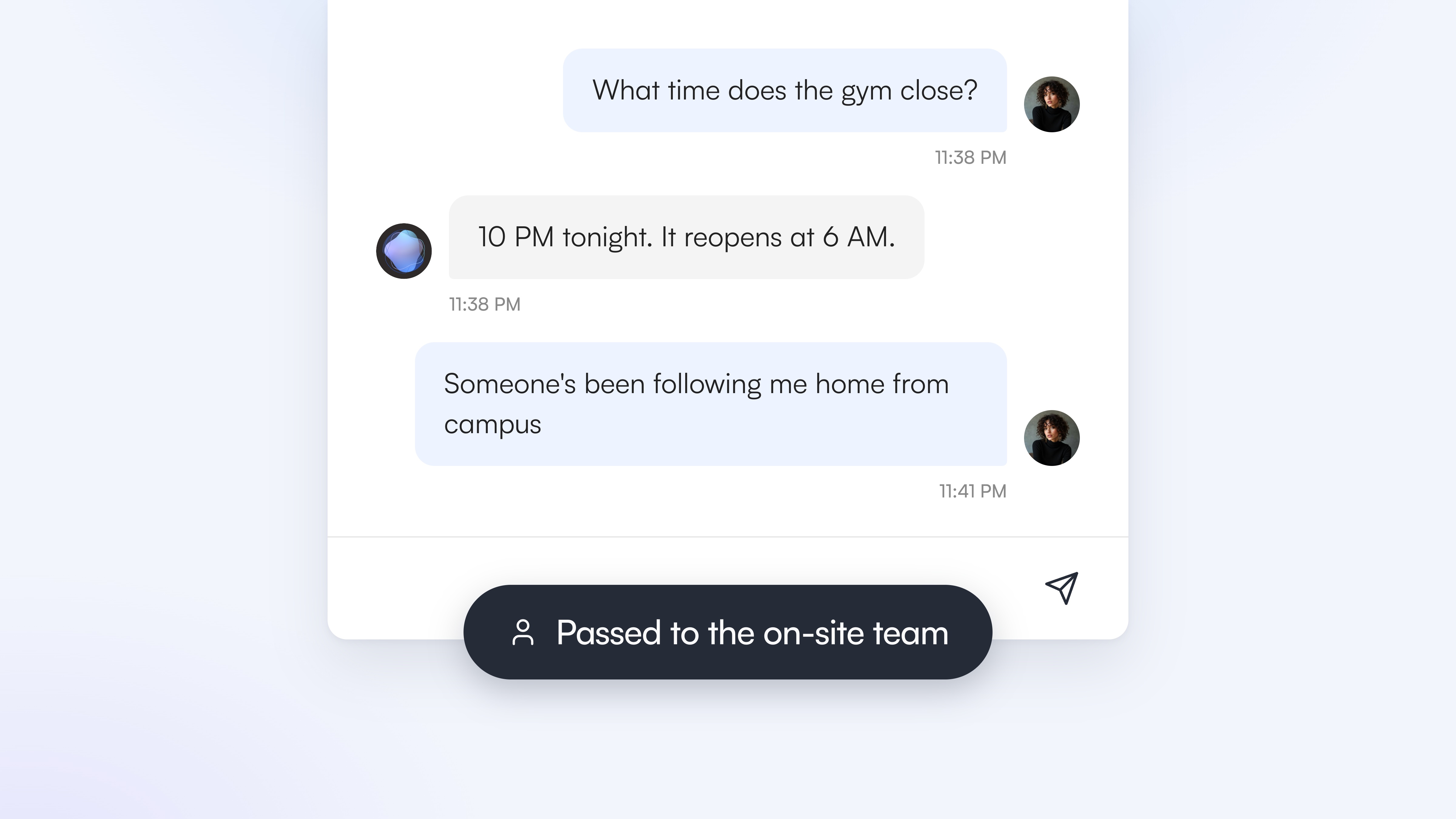
- One-star reviews involving safety concerns may receive immediate attention.
- Maintenance-related complaints can be routed to property teams.
- Positive reviews can receive personalised appreciation messages.
- Neutral reviews may be flagged for follow-up conversations.
This improves both consistency and response times while preserving human oversight. For organisations implementing AI review workflows in property management, the objective is not automation alone. It is enabling teams to spend more time resolving resident concerns and less time managing repetitive administrative tasks.
Turning Negative Reviews Into Action: AI-Driven Feedback Loops
Negative reviews often contain valuable operational insight. Instead of viewing them solely as reputation risks, AI helps operators convert them into opportunities for continuous improvement.
AI can automatically group similar complaints, detect recurring operational issues, and generate reports highlighting trends across communities. Examples may include repeated maintenance delays, poor communication from leasing offices, security concerns, parking availability, amenity cleanliness, and move-in experience.
These insights can be shared with maintenance teams, regional managers, customer experience leaders, and executive leadership.
By closing this feedback loop, multifamily operators can address root causes instead of repeatedly responding to similar complaints. VerbaFlo also supports this process by surfacing recurring resident concerns across multiple communication channels, helping property teams take proactive action before small issues affect broader resident satisfaction.
Over time, these improvements contribute to stronger resident relationships, better reviews, and a healthier online reputation.
AI for Proactively Generating More Positive Reviews
Building a strong reputation requires more than responding to existing reviews. AI also helps identify the right moments to encourage satisfied residents to share their experiences.
For example, AI can recognise positive resident interactions such as successful maintenance completion, smooth move-in experiences, lease renewals, community event participation, and positive resident survey responses.
Instead of sending generic review requests to every resident, AI can recommend personalised outreach to residents who have recently expressed satisfaction. This increases the likelihood of authentic positive reviews while maintaining compliance with platform policies. A larger volume of recent, genuine reviews also provides prospective renters with a more accurate representation of the resident experience.
Measuring Reputation ROI: Review Scores, Occupancy Correlation, and NPS
Reputation management delivers measurable business value when tracked using the right metrics. Rather than focusing solely on star ratings, multifamily operators should evaluate reputation performance alongside leasing and resident experience indicators.
When these metrics are monitored together, operators gain a clearer understanding of how online reputation supports occupancy, resident retention, and overall property performance. Online reputation has become a critical business asset for multifamily operators. Every review, response, and resident interaction contributes to how prospective renters perceive a community before they ever schedule a tour.
Artificial intelligence is making the online reputation management multifamily teams depend on more proactive, scalable, and data-driven. From monitoring reviews across multiple platforms to analysing resident sentiment and identifying operational improvements, AI enables property teams to protect their reputation while delivering better resident experiences.
As competition continues to grow across the US multifamily market, operators that combine human expertise with AI-powered insights will be better positioned to strengthen resident trust, improve occupancy, and build communities that residents are proud to recommend.