A renter's dishwasher floods at 7am while a prospect is asking for a tour that afternoon. Rent is late on three units, and the quarterly owner report is due Friday. One person is expected to keep all of it moving, and that person is the property manager.
A property manager runs the day-to-day operations of a rental property on behalf of its owner. The role is broad, and the property manager responsibilities behind it are easy to underestimate.
This article walks through what the job actually involves and what it pays in 2026, then where technology is starting to take the routine work off the plate.
The Core Responsibilities of a Property Manager
A property manager is the professional an owner hires to run a rental property in their place, acting as the single point of contact for residents and vendors.
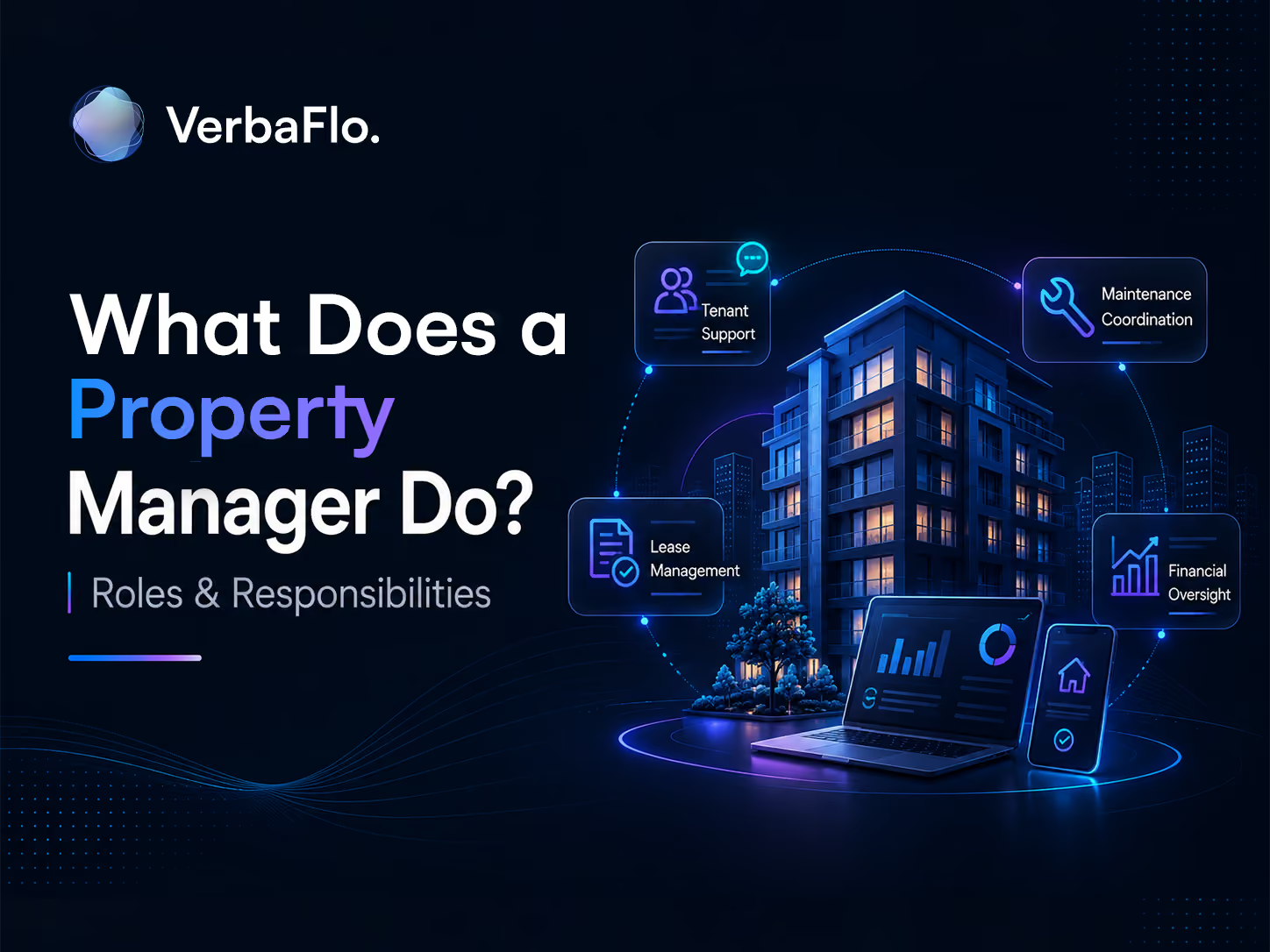
The property manager role pulls together several jobs that, in a larger company, might sit with different teams. Most property management duties fall into a few areas:
- Leasing and occupancy: Marketing vacant units, fielding enquiries, running viewings and signing qualified residents.
- Resident management: Handling requests, enforcing the lease and keeping good residents through to renewal.
- Maintenance and repairs: Logging issues, dispatching contractors and protecting the condition of the asset.
- Money: Collecting rent, controlling costs and reporting performance back to the owner.
- Compliance: Following fair housing, landlord-tenant and safety law, and keeping clean records.
None of these run on autopilot, and the hardest part is that they happen at once.
Tenant Relations: From Enquiry to Move-Out
Of all the property manager responsibilities, resident relations is the one that never stops. It runs from the first enquiry on a vacant unit to the day a resident hands back the keys, and the quality of that experience decides whether people renew or leave.
The lifecycle looks like this:
- Enquiry and leasing: A prospect asks about a unit, and a fast, accurate reply is what wins the lease before a competitor responds.
- Screening and move-in: The manager verifies income and history, signs the lease and runs a documented move-in inspection.
- Living there: Day-to-day questions, requests and complaints are handled, fairly and on record.
- Renewal: Good residents are worth keeping, so the manager reaches out early rather than waiting for the notice period.
- Move-out: A final inspection, the deposit return and the turn of the unit close the loop.
Most of this is communication, and most of it is repetitive, which is exactly why it eats so much of a manager's week.
Maintenance and Repairs Coordination
When something breaks, the property manager is the one who hears about it first. Maintenance coordination is part triage and part project management, and it protects both resident satisfaction and the value of the building.
The work splits into three types:
- Reactive repairs: A resident reports a problem, the manager assesses urgency and dispatches the right contractor, then confirms the fix.
- Preventive maintenance: Scheduled servicing of HVAC, plumbing and common areas keeps small issues from becoming expensive ones.
- Inspections: Move-in, move-out and periodic checks document condition and head off disputes.
Behind each request sits a chain of communication, from the resident to the vendor and back to the owner, that has to be tracked and closed out.
Financial Management: Rent Collection, Budgets, and Reporting
A property manager is also the financial controller for the property. The owner is trusting them to bring in the rent, keep costs in line and report honestly on how the asset is performing.
This covers a few distinct jobs:
- Rent collection: Setting due dates, applying late fees, chasing arrears and keeping an accurate ledger for every unit.
- Budgeting: Forecasting operating costs, approving spend and flagging anything unusual before it grows.
- Owner reporting: Producing regular statements so the owner can see income, expenses and occupancy at a glance.
Mistakes here are costly and visible, so accuracy matters as much as speed.
Legal Compliance and Risk Management
Property management is a regulated job, and the property manager carries much of the legal exposure. Getting compliance wrong is not a paperwork problem but a legal one.
The main areas to stay on top of:
- Fair housing: Every interaction, from advertising to screening to refusals, must apply the same standard to every applicant.
- Landlord-tenant law: Notices, deposits, entry rules and evictions all follow state-specific procedure.
- Safety and habitability: The building has to meet health and safety codes, with records to prove it.
- Data and records: Resident and financial data must be handled and retained correctly.
Because the rules vary by state and change over time, consistent records and consistent treatment are the manager's best protection.
How Much Does a Property Manager Earn? (US Salary Data 2026)
Pay reflects how much responsibility the role carries. For anyone weighing up a property manager salary in 2026, whether as a career or as a cost to budget for, the national benchmark is a useful starting point.
According to the most recent Bureau of Labor Statistics data, the average annual wage for property, real estate and community association managers was $83,710 as of May 2025. That is the national average across more than 311,000 people in the role. The real figure for any one manager moves with the local market and the size of the portfolio, so a single-site residential manager and a regional manager overseeing thousands of units sit at very different points on the scale.
For owners, the same number is a cost rather than a wage. It is roughly what doing the job well is worth, which frames the later question of what to keep with a person and what to automate.
How AI Is Automating Routine Property Manager Tasks
Look back at the responsibilities above and a pattern stands out: a large share of the work is routine communication. Answering the same leasing questions and chasing the same late rent are repetitive by nature, and that is where AI is starting to change the property management job.
Conversational AI now handles the high-volume, low-complexity work that used to fill a manager's day:
- Instant enquiry response: Leasing questions get an accurate answer at any hour, on whichever channel the renter used.
- Scheduling: Tours and call-backs are booked straight into the calendar without the back-and-forth.
- Follow-up and reminders: Rent reminders and lead follow-up go out on time, every time.
- Maintenance intake: Requests are captured, categorised and routed, so nothing sits in an inbox.
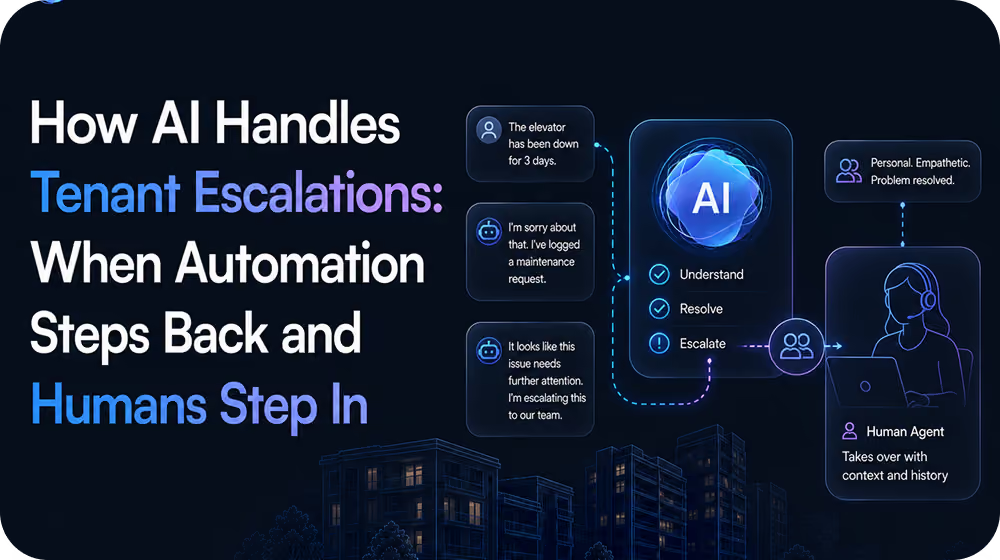
The point is not to remove the manager. It is to streamline the repetitive layer so the team spends its time on the judgement calls and the relationships, and to hand the genuinely complex cases to a person with the context already gathered.
When You Need a Property Manager vs Doing It Yourself
Plenty of small owners self-manage, and whether you need a property manager comes down to scale and distance. A single condo across town is very different from twenty units in another state.
Self-management can make sense when the numbers are small and the owner has time on their hands and the patience for late-night calls. It starts to break down as the portfolio grows and the properties spread out, and the compliance load gets heavier with them. The tipping point usually arrives when the hours spent managing start to cost more, in time or in mistakes, than a manager's fee.
A middle path has opened up more recently. An owner can keep control and still automate the most time-consuming parts, particularly the communication, so that self-management stays workable for longer.
How VerbaFlo Helps Property Managers Handle Resident Communication
That middle path is where VerbaFlo fits. Across the responsibilities above, the single heaviest, most repeatable load is communication, and VerbaFlo is a conversational AI platform for real estate operators built to carry it.
It works the resident and prospect conversations end to end:
- Leasing enquiries: It answers questions and books tours at any hour, across web chat, WhatsApp, email and voice.
- Inside your systems: It acts in the systems you already run by connecting two-way to your CRM and property management system.
- Follow-up: Outbound reminders and re-engagement run on WorkFlo, its workflow automation product, so quiet leads and renewals are not left to chance.
- Clean handover: When a conversation needs judgement, it passes to your team with the full history attached.
Because every interaction is consistent and logged, the record supports fair housing compliance, with the controls set out in the Trust Centre.
Book a demo to see VerbaFlo handle your own resident communication.