
A prospective tenant rings about a flat at nine on a Sunday evening. A tenant reports a leak at two in the morning. A landlord calls mid-afternoon while every negotiator is out on viewings. Property calls do not keep office hours, and the cost of missing them is real.
The National Apartment Association's 2024 Voice of the Property Manager report found that the inability to switch off after hours is the second-biggest challenge property managers cite, behind only dealing with abusive residents.
An answering service is how operators close that gap, and the real decision is which kind to use, a human call centre or an AI answering service.
This article compares the two honestly, sets out how each is priced, and helps you match the model to your calls.
What You Are Actually Choosing Between
An answering service handles the calls your team cannot, so a caller reaches a competent response rather than voicemail. It matters because the first response often wins the lease, and a missed call is a lead gone. Two models do that in very different ways.
A human call centre staffs agents who answer on your behalf, following a script you provide. They take a message, log an enquiry, or handle a simple query, then pass anything complex to your team. It is the established model, and its strength is that a person is on the line.
An AI answering service uses conversational AI to answer the call directly, understand what the caller needs, and act on it, whether that is answering a question, booking a viewing or logging a maintenance request. It handles the routine end to end and escalates the rest to a person.
Neither model is straightforwardly better. Each suits a different call profile, which is what the rest of this comparison is about.
Where a Human Call Centre Wins
A human call centre has real advantages, and an honest comparison names them first.
- Empathy on a hard call: a distressed tenant, a bereavement, an angry complaint. A person can read tone and respond with genuine warmth in a way that reassures a caller in a difficult moment.
- Judgement on the ambiguous: when a caller is unclear, or the situation does not fit a script, a human agent can improvise, ask the right follow-up and use common sense.
- No configuration: a call centre can be briefed and running quickly, without connecting to your systems, which suits an operator who wants coverage without a setup project.
- A familiar model: callers and staff both understand a human answering service, so there is no adjustment and no explaining what the caller is talking to.
For an operator whose calls are low in volume, high in sensitivity and mostly need a message taken, a human call centre can be the right answer.
Where an AI Answering Service Wins
An AI answering service wins where the work is high-volume, routine and always-on, which describes most property call traffic and reflects how AI is being adopted across real estate.
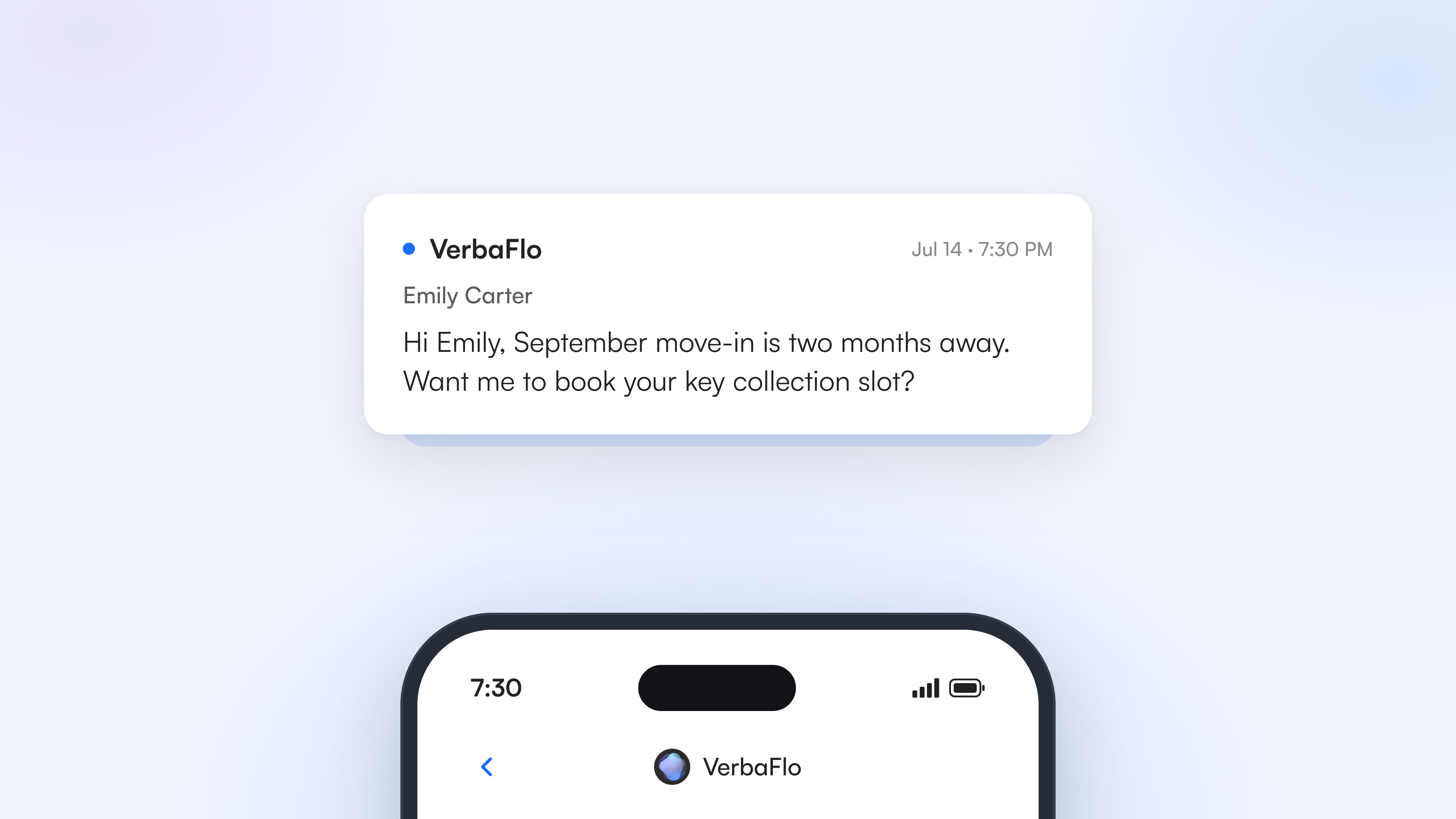
- Instant response, every time: it answers on the first ring, at any hour, with no queue and no voicemail. Every caller gets an immediate response rather than the fraction a stretched team can reach.
- True 24/7 at no premium: overnight and weekend cover costs the same as daytime, because there is no night shift to staff. After-hours coverage stops being a budget decision.
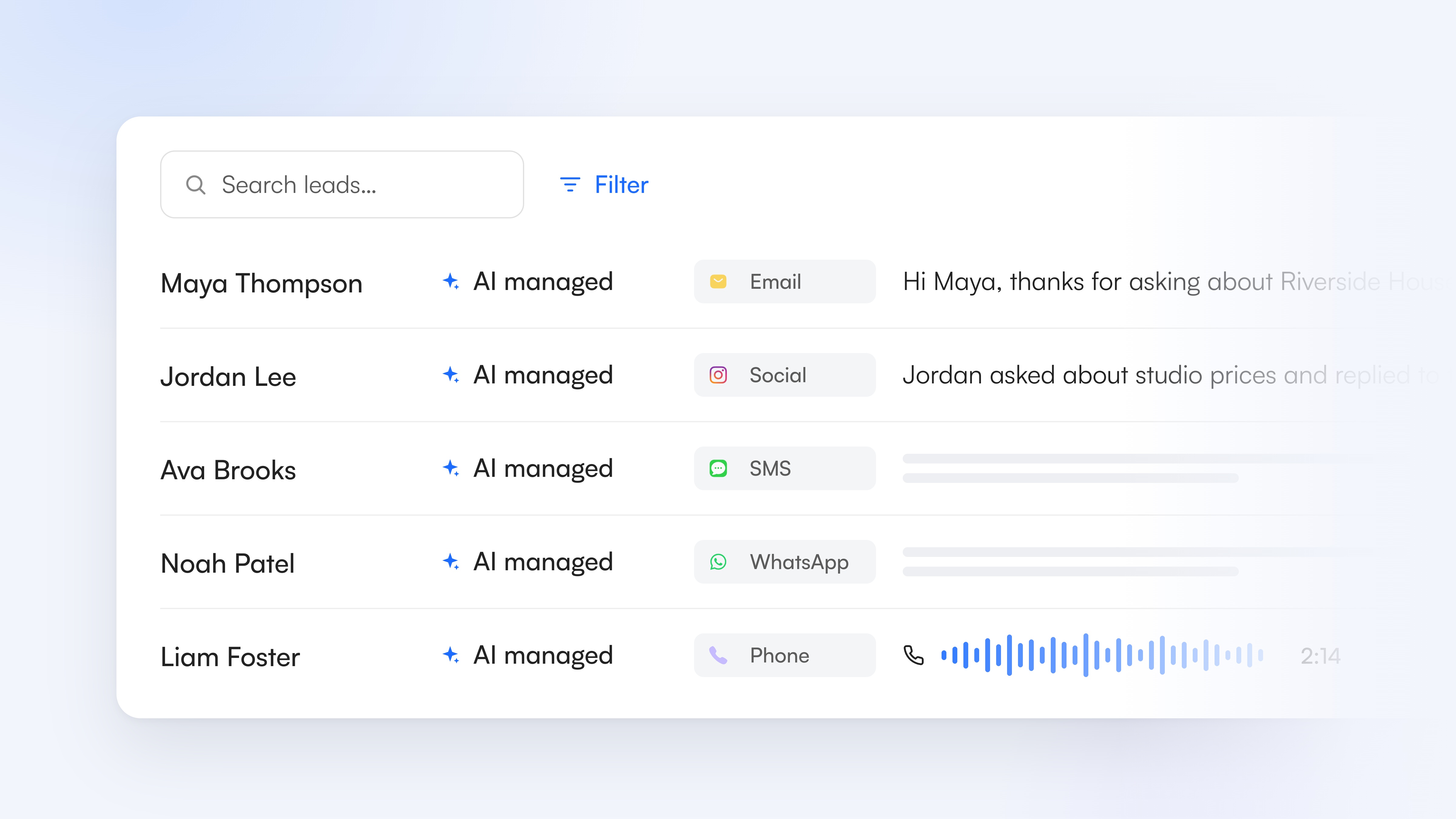
- More than the phone: it handles webchat, WhatsApp and email alongside voice, so a property enquiry is answered on whatever channel it arrives on, rather than only the phone a call centre covers.
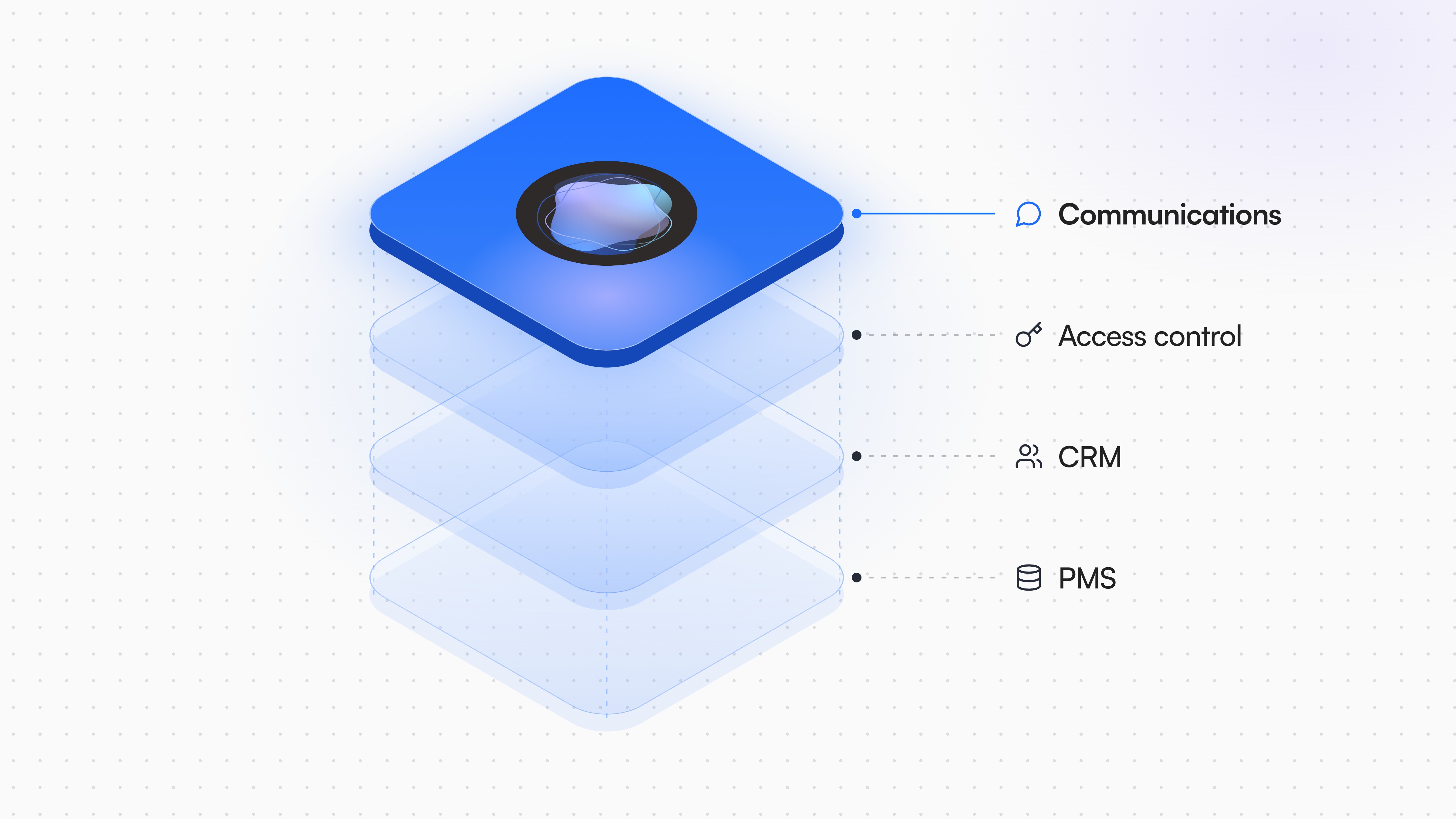
- It knows the answer: connected to the PMS or CRM, it can tell a caller the actual availability, the actual balance or the actual repair status, rather than only taking a message for someone else to action.
The difference from a human call centre is that an AI service resolves the routine call rather than relaying it, which removes the callback and the delay.
How AI and Human Answering Services Are Priced
Cost is usually the deciding factor, and the two models are priced on fundamentally different logic.
A human call centre bills for agent time, whether per minute, per call or on a retainer that assumes a call volume. Busy months cost more, after-hours cover carries a premium, and a spike in calls is a spike in the bill.
An AI answering service is usually a subscription, flat or tied to usage, so the cost does not climb with each call. The economics favour AI precisely where property generates the most calls, in high volume and outside office hours, because that is where per-minute human pricing is most expensive.
The honest caveat is that a cheap tool answering badly costs more than it saves, in lost leads and frustrated tenants. Price is only meaningful against how well the calls are actually handled.
How to Choose: Match the Model to Your Calls
The right choice depends on your call profile rather than on which model is fashionable. Four questions settle it.
- What is your volume? High call volumes favour AI, because human per-call costs climb with every one, while an AI service absorbs volume at a flat cost.
- How many calls are after-hours? A large evening and weekend share favours AI, which covers those hours at no premium. Property call traffic skews heavily after-hours, so this usually points one way.
- What is the channel mix? If enquiries arrive by webchat, WhatsApp and email as well as phone, AI covers them all, while a call centre covers the phone.
- How routine are the calls? Mostly routine questions and bookings favour AI, which resolves them. A high share of sensitive, ambiguous calls raises the value of a human on the line.
Most property operators find their traffic is high-volume, after-hours-heavy, multi-channel and largely routine, which is the profile an AI service fits. The exception is the operator whose calls are few and mostly delicate, for whom a human service still earns its place.
In practice, the strongest setup uses AI for the volume and a person for the calls that need one, which is where handover matters.
How VerbaFlo Handles Property Answering
The thread through this comparison is that AI wins the routine, high-volume, after-hours and multi-channel calls, while a person is still better for the sensitive and ambiguous. The best answer combines them.
VerbaFlo is a conversational AI platform that answers property calls and messages across every channel, built to do the routine and hand over the rest:
- Answers everywhere, instantly: it handles enquiries, bookings and support across webchat, WhatsApp, email and voice, on the first ring and at any hour.
- Knows the answer: it connects to the systems an operator already runs, so it responds with real availability and account detail rather than taking a message.
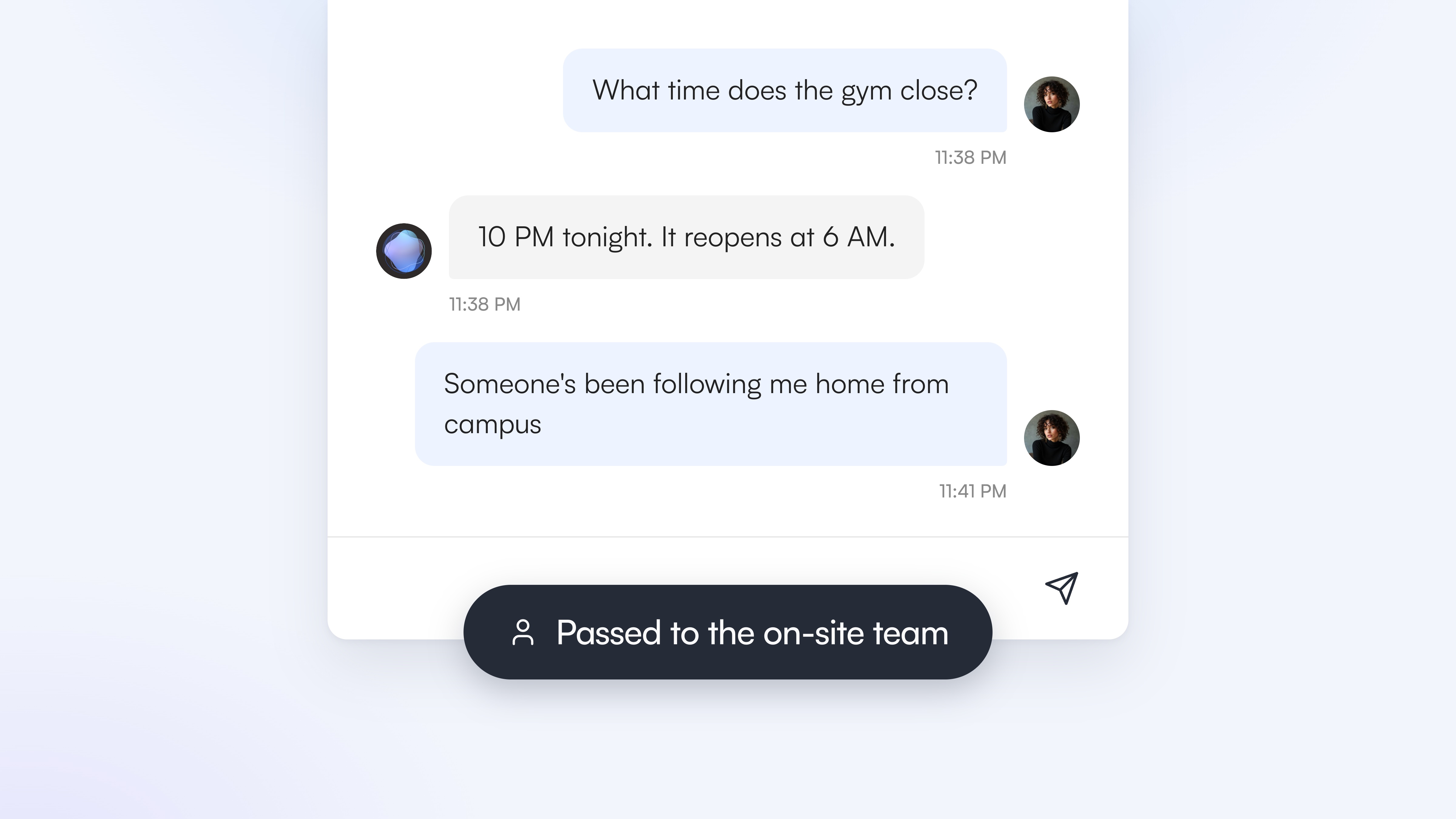
- Hands over when it counts: it passes the call to a person with the full context whenever a situation needs human judgement, so the sensitive calls still reach a human.
The result is an answering service that covers the volume an operator cannot, at a cost that does not climb with each call, while keeping a person available for the calls that need one. See how it handles your call traffic. Book a demo.