A prospect finds your apartment community at eleven at night and asks about a two-bedroom with parking and an August move-in.
The leasing office is closed, but they expect an answer now. Whether they book a tour or move to the next listing comes down to what is on the other end of the chat, and increasingly it is an AI real estate agent.
The term is broad, from helping people buy a home to running apartment leasing, so this article is specific: the AI agent that handles leasing and resident enquiries for a property portfolio.
The shift is real, with Gartner expecting 33% of enterprise software to include agentic AI by 2028, up from under 1% in 2024.
This guide covers how it works and how to judge it.
What Is an AI Real Estate Agent?
An AI real estate agent is software that holds a natural conversation with a prospect or resident and carries out leasing tasks on its own.
In a property setting it is usually called an AI leasing agent, working a lead from first enquiry towards a booked tour and a signed lease, much as your leasing team would.
What makes it an agent, rather than a chatbot, is action. A chatbot answers and stops.
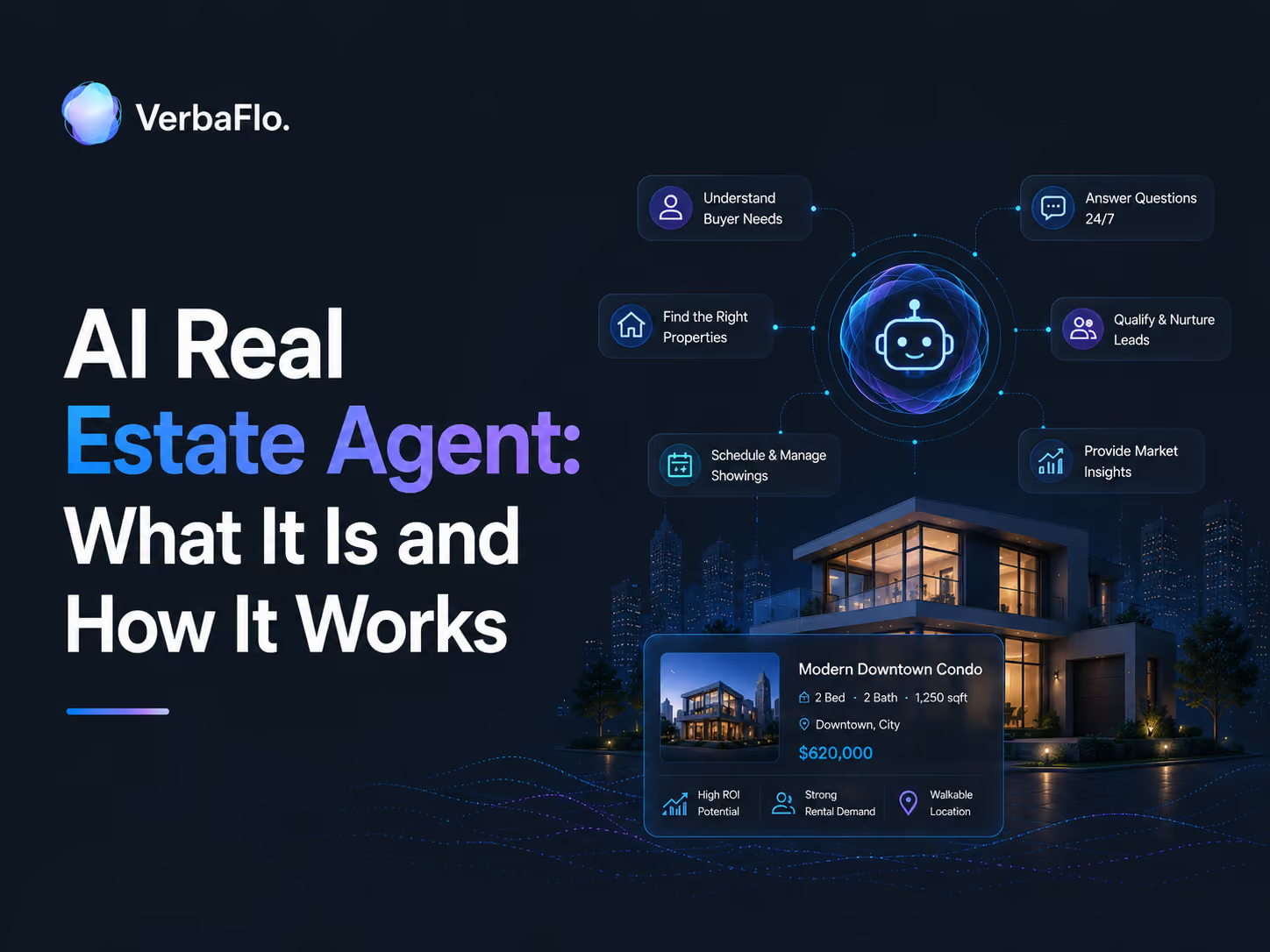
An AI agent understands what the prospect wants and acts on it, booking the tour and following up when they go quiet rather than leaving the rest to a person. It works across the channels renters use, from web chat to voice, at any hour.
How AI Agents Handle Enquiries, Qualify Leads and Book Tours
The work happens in a sequence that mirrors a good leasing agent, only faster and without the gaps:
- Responds in seconds: It answers the moment an enquiry arrives, on whichever channel the prospect used, so nobody waits for office hours.
- Answers the real question: It reads what the prospect actually asked, about availability, pricing or pets, and replies from live data.
- Qualifies the lead: It asks what matters, move-in date, budget and unit type, and records the answers so your team can read intent at a glance.
- Books the tour: It checks real availability and schedules the viewing in your system, rather than handing over a link and hoping.
- Follows up: It reaches back out when a prospect goes quiet instead of letting a warm lead drift.
AI Agent vs Virtual Leasing Agent: Is There a Difference?
In most marketing, the two terms point at the same thing: software that handles leasing conversations remotely, and vendors reach for whichever reads better.
The difference that matters is capability rather than the label, and it shows the moment a prospect goes off-script:
The right-hand column is the agent with a brain and a memory rather than a script. When comparing products, ignore the term and ask what the system does once the conversation leaves the script.
What an AI Agent Can and Cannot Do
Knowing the limits is how you deploy it well, so be clear about both.
What it does reliably is the high-volume, repeatable early stage of leasing:
- Handles scale: It manages hundreds of simultaneous enquiries without a queue, at any hour.
- Stays consistent: It gives every prospect the same accurate answer, which also matters for fair housing.
- Acts, not just answers: It qualifies, books and follows up inside your systems.
What it does not do is replace your team:
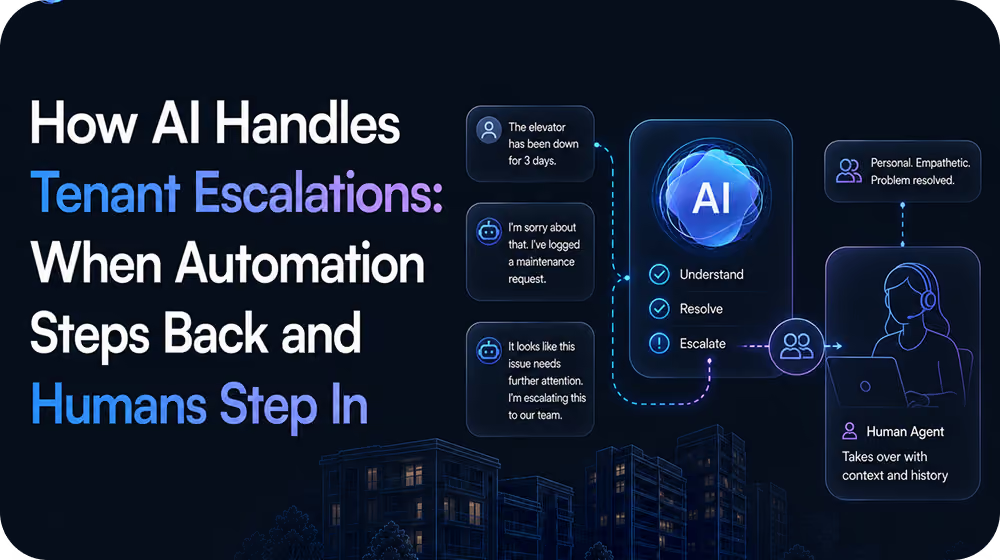
- Judgement calls: A complex objection or a frustrated resident needs a person, and a good agent hands those over with the full history attached.
- Relationship and closing: The tour, the rapport and the final push to sign are human work.
- Anything outside its data: It is only as accurate as the integrations behind it, so a poorly connected one gets things wrong.
How to Set Up an AI Leasing Agent for Your Property Portfolio
Rolling this out across a portfolio is less a software install and more an operations project. A workable sequence:
- Start with the data: Connect it to your property management system (PMS) and CRM first and keep that data clean, since the agent answers from it.
- Set the guardrails: Decide what it can say and do on its own, where it must escalate, and how it handles questions that touch fair housing.
- Pick the channels: Turn on web chat and text first, then voice once the basics are solid.
- Pilot on a few properties: Run it on one or two communities against your current numbers before going wider.
- Review and expand: Read the logged conversations, fix the gaps, and extend across the portfolio once it has earned the trust.
Treating the rollout as a pilot rather than a switch separates the deployments that stick from those that quietly get shelved.
The Platforms That Power AI Real Estate Agents
An AI leasing agent is only as good as the platform underneath it. A capable one brings together a few layers:
- A language engine: It understands intent rather than keywords, so it can handle a question the script never anticipated.
- Deep integrations: They read and write to your CRM and PMS, so the agent can act rather than only talk.
- Every channel, including voice: An enquiry is caught wherever it lands, not only in a web chat box.
- Orchestration and guardrails: They set what the agent does alone, when it escalates and how it stays compliant.
- A complete record: Every conversation is logged and auditable, ready to hand to a person.
More than any single feature, these layers decide whether the agent earns its place.
ROI: What to Realistically Expect in Year One
Be honest about returns, because the hype outpaces the results. Gartner expects more than 40% of agentic AI projects to be cancelled by the end of 2027, undone by unclear value and underestimated cost, and advises pursuing it only where the return is clear. The lesson is to deploy it where the value is obvious and measure honestly.
In a leasing operation, the year-one return comes from three places. Speed is clearest: an agent that answers in seconds rather than hours wins leads a slow reply would lose and captures the after-hours enquiries that otherwise reach voicemail.
Staff time is next, as the agent absorbs repetitive early-stage work and frees your team for tours and closing. Recovered demand is third, from leads followed up rather than forgotten.
It will not deliver a fixed percentage lifted from a vendor's homepage. The return depends on your enquiry volume and how cleanly it is integrated, measured against your own baseline. Expect a measurable lift in response speed and tour bookings where it is set up well.
How VerbaFlo Works as an AI Leasing Agent
VerbaFlo is one platform within this category, a conversational AI platform for real estate operators built for leasing rather than adapted from generic support. It works as the AI leasing agent described above, across every channel from web chat to voice:
- Understands and qualifies: It reads what a prospect actually wants and asks the questions that establish intent.
- Acts in your systems: It books tours by working two-way with the systems you already run, rather than handing back a link.
- Hands over cleanly: When a conversation moves past what an agent should handle alone, it passes to a person with the full history attached.
- Follows up: Outbound re-engagement runs on WorkFlo, its workflow automation product, so a quiet lead is not lost to a slow second touch.
Because every interaction is consistent and logged, the record stands up to fair housing scrutiny, with the controls set out in the Trust Centre. The same platform serves multifamily operators alongside Build-to-Rent and student housing teams.
Book a demo to see VerbaFlo handle your enquiries.