Why Conversational AI Is Not Just a Chatbot
Almost every property website now has a chat bubble in the corner. It greets the prospect and answers a question or two, so it looks like a leasing agent on duty.
Then a prospect asks something slightly off-script, a pet fee on a specific unit, or a tour on a date the script does not hold, and the bubble stalls or sends them to a form. That bubble is a chatbot, a set of scripted answers waiting for the right keyword.
Conversational AI looks the same from the outside, the same bubble and the same opening message, but it works in a different way underneath, and that difference decides whether a prospect books a tour or leaves. Chatbot and conversational AI are not the same category of tool.
This article explains what separates them, where the old kind quietly costs you leases, and what to look for if you are ready to upgrade.
The Old-Style Chatbot: What It Could and Couldn't Do
The first wave of leasing chatbots ran on rules. A prospect typed a question, the bot matched a keyword to a scripted answer, and within a narrow lane that worked. A rule-based chatbot can answer where the gym is, what the pet policy says, and whether parking is included, at any hour and without staff. The limits show the moment a prospect goes off-script.
- It loses the thread: Ask two things at once or phrase a question oddly, and the bot misses the intent and falls back to a generic reply.
- It cannot qualify: It captures a name but cannot weigh context or read how ready a prospect is to sign.
- It stops at a form: When the script runs out, it hands the prospect a contact form instead of moving the conversation forward.
For a prospect comparing communities and ready to move, that dead end is where they leave.
What Conversational AI Does Differently
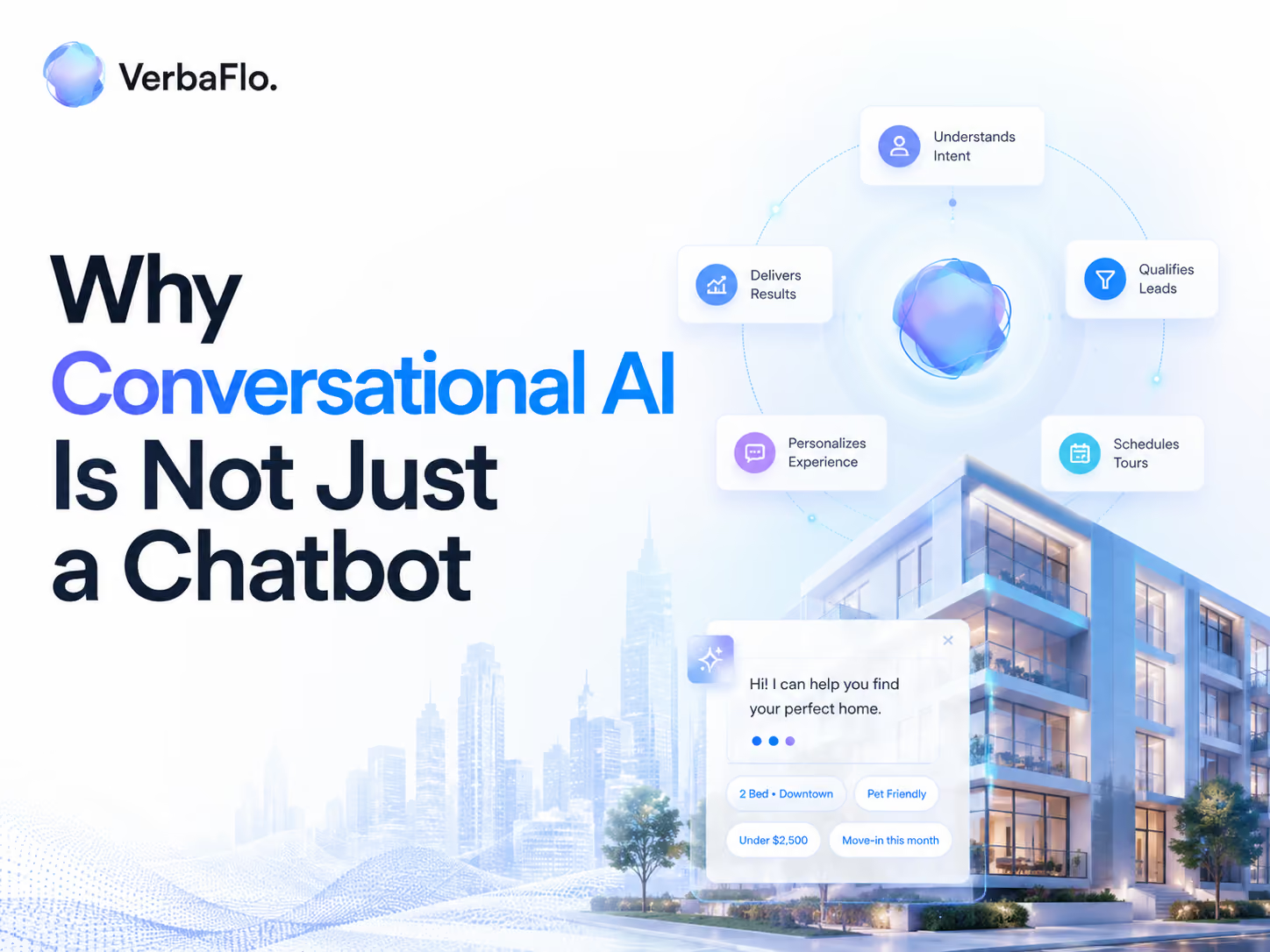
Conversational AI starts from intent rather than keywords. It reads what a prospect means rather than the exact words they used, so an oddly phrased or multi-part question still lands. Three things change as a result.
- It holds context: A prospect can refer back to an earlier message and the system keeps up, so the conversation builds instead of resetting.
- It uses live data: It checks real availability and pricing in the moment rather than reciting a fixed answer.
- It takes action: It qualifies the lead, books the tour, and starts follow-up rather than passing the prospect to a form.
The same chat bubble now does the work a leasing agent would do on a first contact, and it does it on every channel at once.
The 5 Capability Gaps That Cost Leasing Teams Deals
The gap between the two tools is easiest to see where leases are actually won or lost. Five capabilities separate a chatbot from conversational AI, and each one maps to a deal a leasing team can lose.
- Voice and phone: Conversational AI answers calls, not only chats. A large share of leasing enquiries still come by phone, and a chatbot cannot take them, so after-hours and overflow calls go to voicemail and the lead cools.
- Lead qualification: It asks about move-in date, budget, and unit preference, scores the lead, and writes structured data straight into your CRM, where a chatbot captures a name and leaves the qualifying to staff.
- Multi-channel follow-up: It keeps a sequence running across email, SMS, and chat when a prospect goes quiet, rather than waiting for the next visit to the website.
- Context and handover: It carries the full conversation and hands a human the whole history at the right moment, so the prospect never starts over.
- Live property data: It pulls real availability and pricing at the moment of the question, so a prospect is never quoted a unit that is already gone.
Side-by-Side Comparison With Real Leasing Examples
Set against the same leasing moments, the difference is concrete. The table below contrasts how each tool handles a typical enquiry.
Take a weekend enquiry from a prospect with a dog who needs covered parking and wants to move in 6 weeks. A chatbot answers the pet question, misses the parking and the timing, and offers a form.
Conversational AI answers all three, confirms a pet-friendly unit with parking, and books a tour before the prospect closes the tab. One conversation kept the lead. The other handed it to whichever community replied properly first.
Why 'Adding AI' to a Chatbot Is Not the Same Thing
Many chatbot vendors now advertise AI. Often that means a language model bolted onto the same decision tree, generating friendlier wording for answers the script already controls. The phrasing improves. The underlying limits do not.
A genuine conversational AI platform is built the other way round. Intent recognition, context, and live data sit at the core, and the conversation is generated from them rather than from a fixed flow. The test is simple.
Ask whether the system can handle a request the script never anticipated, qualify the prospect, and take an action in your leasing stack. A chatbot with an AI label still cannot. A platform built for conversation can.
What to Look For When Upgrading From a Chatbot
Upgrading is less about switching widgets and more about choosing a platform that closes the gaps above. A few criteria matter most.
- Channel coverage: Confirm it handles voice, webchat, SMS, and email, so no enquiry route is left to voicemail or an unread inbox.
- Integration depth: Check that it writes to your PMS and CRM directly, creating guest cards and updating records, rather than sitting beside them.
- Qualification logic: Look at how it scores leads and what it asks, since weak logic books bad tours and wastes agent time.
- Handover quality: Test how it passes a conversation to a human, and whether the prospect has to repeat themselves.
- Control and compliance: Ask how it stays within fair housing rules and whether it keeps an audit trail of what it said and did.
Mystery-shop any platform before you sign. The demo shows the best case. A test enquiry from a prospect's point of view shows what your renters will meet.
The Real Cost of Getting This Wrong
The cost of staying on an old chatbot is rarely a single dramatic failure. It is the steady leak of leads that hit a dead end and quietly go elsewhere. Each off-script question that ends in a form is a prospect a competitor may answer properly.
Adoption is climbing, which sharpens the stakes. The National Apartment Association reported that AI use rose to 34% of operators in 2025, up from 21% a year earlier.
As more communities answer instantly and qualify around the clock, an old chatbot stops being neutral and becomes a gap a prospect can feel. There is a reputational cost too. A bot that traps a renter, or keeps messaging after a human has stepped in, does more harm than no bot at all. The real cost of vacancy is measured in the leases these gaps quietly cost you.
How VerbaFlo Replaces the Chatbot With Conversational AI
Everything above describes what conversational AI should do. VerbaFlo is built to do it for residential operators, across multifamily, Build-to-Rent (BTR), and Purpose-Built Student Accommodation (PBSA). It replaces the chat bubble that stalls with one that carries the conversation. A few parts of the platform do the heavy lifting.
- Conversational engagement across channels: VerbaFlo answers queries across webchat, WhatsApp, email, and voice in seconds, reads intent rather than keywords, and qualifies the lead in the same conversation.
- Live data and action: It checks real availability, books the tour, and writes clean records back to your PMS, so a prospect is never quoted a unit that is gone.
- WorkFlo for follow-up: WorkFlo keeps proactive sequences running across channels, so quiet leads stay warm instead of going cold.
A human stays in control throughout, and VerbaFlo hands any conversation to your team the moment it needs one. To see the difference against your current chatbot, book a demo.