%2520(1).avif)
Leasing conversations have shifted from contact forms and emails to real-time messaging on renters' devices. Once dismissed as a personal app with little relevance to US real estate, WhatsApp now drives this digital shift. It is now a channel that multifamily operators cannot afford to ignore, with over 124 million monthly active users in the US and an audience that strongly leans toward active renters. This article explores why and what it truly looks like to accomplish it well.
WhatsApp Is No Longer Just a Consumer App
WhatsApp remained solidly in the personal sector for the most of its existence in the US market. It was used for informal discussions, family group chats, and keeping in touch with acquaintances abroad. The majority of companies still use email for business marketing and SMS for transactional notifications. That boundary has quietly vanished.
WhatsApp has more than 3.3 billion users worldwide as of 2026, with over 124 million monthly active users in the US. The demographic breakdown matters here. Millennials (those born between 1981 and 1996) account for 36.4% of WhatsApp users in the US, with Gen Z coming in second at 23.6%. In the current multifamily housing market, these two segments also make up the majority of active tenants.
It's not a coincidence. It is a signal.
Multifamily WhatsApp communication is moving from an experiment into a functional leasing strategy for operators who want to meet prospects and residents where they already spend their time. This article covers why that shift is happening now, how operators are putting it into practice, and what a practical WhatsApp-led leasing setup actually looks like.
The Shift in Renter Communication Expectations
The way that customers expect to interact with organizations has changed significantly over the last several years. It goes beyond simple generational preferences. It illustrates the evolution of communication itself.
Phone calls require both parties to be available simultaneously, while email has become slow and cluttered. In business settings, the average email open rate is about 20%, which means that most messages are either ignored or postponed. Prospects who submit evening inquiries and wait until morning for a reply have usually already moved on to competitors.
According to Velocify research, there is a 391% boost in conversion likelihood when an online lead is responded to within a minute. That percentage reduces to 36% after just one hour of waiting. The channel that facilitates the quickest and most organic interchange wins the conversation in a setting where tenants choose between options quickly.
Messaging platforms bridge this critical communication gap perfectly. The SatisFacts Biennial Online Renter Study highlights that text messaging is now the number-one preferred communication channel across all renter generations, with 68% to 76% favorability. Conversely, traditional community portal messaging ranks the lowest at just 8.4% to 12.8%. Phone calls and crowded email inboxes are no longer feasible defaults for Gen Z and Millennials, the two main active leasing market segments, who demand quick, mobile-first responsiveness.
The majority of the active leasing market consists of Gen Z and millennial tenants, who consistently and strongly favor messaging over phone calls. Most Gen Z tenants prefer texting and online chat to phone calls, according to a study reported by The First. According to the National Apartment Association, these tenants seek digital tools as a standard and expect them throughout their lease.
After a lease is signed, these expectations remain. They carry over into talks about renewal, upkeep, and residency.
Why WhatsApp Works for Multifamily
Several properties of WhatsApp make it particularly suited to the multifamily leasing channel use case, beyond its raw user numbers.
- Familiarity and low friction. The platform already has renters. There is no site to access, no new application to download, and no strange interface to use. The barrier to contacting a leasing team is lowered because a prospect can message them in the same manner that they message a friend.
- Rich media within a single thread. Without switching platforms, a WhatsApp lease discussion can include text, pictures of particular apartments, floor plans, video walkthroughs, documents, and voice remarks. A prospective buyer who asks about unit availability at 9 p.m. can receive a floor plan, a brochure, and a photo gallery. That necessitates several steps across email and is not feasible in an SMS discussion.
- Two-way, real-time conversation. WhatsApp is designed for conversation, in contrast to broadcast channels. The interaction feels more natural than transactional when a prospect asks a follow-up question, requests a reschedule of the tour, or confirms a showing time.
- Verification and trust signals.Operators can create verified business profiles with easily accessible property names, descriptions, and contact information using the WhatsApp Business API. Instead of seeing an unknown number, prospects see a verified corporate identification, which increases trust from the outset.
- Scheduling and document sharing. Operators can share tour confirmations, leasing documents, and application checklists directly within the chat. This condenses what normally calls for multiple email threads into a single, searchable conversation history that can be consulted by both parties.
- Automation at scale. AI assistants, property management software, and CRM systems can all be integrated with the WhatsApp Business API. Given this, operators may manage large amounts of incoming communications without having to perform human labor for each routine encounter.
How Operators Are Using WhatsApp Across the Leasing Journey
The WhatsApp for property managers use case is not limited to a single part of the process. Operators who have integrated it properly are seeing it contribute across several stages.
Lead Capture and Initial Response
A click-to-WhatsApp button can take a prospect straight into a discussion when they click through from an ILS listing, a social media advertisement, or a property website.This removes the form-fill process and connects the prospect to the property in a couple of seconds.
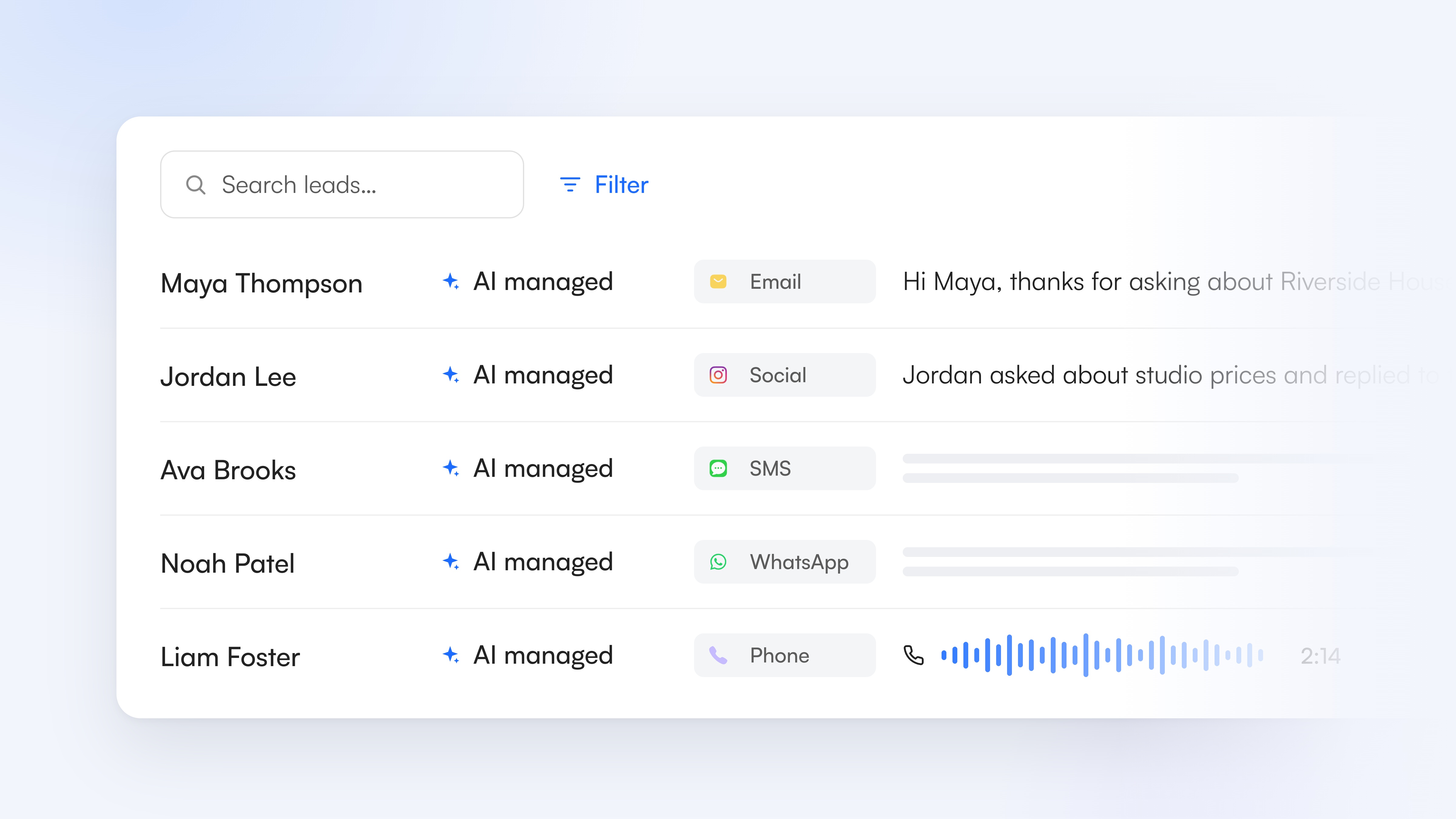
An AI-assisted chatbot then handles the initial exchange, answering questions about prices, confirming availability, and gathering basic information. The renter's WhatsApp inbox is where the conversation continues, and it has significantly less competition for attention than an email would.
Properties that respond within five to eighteen minutes capture twice as many conversions as those that do not, according to analysis by Zuma. The WhatsApp-plus-automation combination directly addresses this window.
Tour Scheduling
Scheduling friction is one of the most common points where leasing conversations drop off. If a potential customer is unable to contact someone during business hours, they move on.
With WhatsApp-based tour scheduling, prospects may request, confirm, and reschedule viewings at any time via a message thread. By automating calendar links, confirmation messages, and reminder nudges, it is feasible to lower the number of no-shows and ensure that every valid lead gets a response. This eliminates the need for a leasing agent to be present at the time of inquiry.
Since its 98% message open rate, SchedulingKit data demonstrates that WhatsApp appointment reminders reduce no-shows by 52% when compared to other reminder channels.
Document Sharing and Application Support
Content that works well in a WhatsApp exchange includes move-in checklists, lease agreements, application forms, and instructions for ID verification. Operators can insert papers into the chat at the appropriate time rather than sending prospects to a different portal or waiting for an email attachment to arrive.
This is especially helpful at the application stage, where prospects frequently decline due to uncertainty or delays regarding next steps. A straightforward "here is what you need to submit" message, sent with an attached document and a link, keeps the process moving.
Resident Communication and Maintenance
After the lease is signed, the WhatsApp leasing channel remains open. Throughout their lease, residents can use the same message channel for maintenance requests, amenity inquiries, and notification submissions.
AI-assisted WhatsApp handling can automatically categorize incoming messages, direct maintenance requests to the appropriate team or vendor, and provide a status update after work is finished for operators handling large amounts of resident communication. Up to 300 WhatsApp messages might be sent to a property manager overseeing 200 apartments per month. The manual workload moves to the interactions that actually need attention when 80% of those are regular inquiries that can be completed automatically.
Lease Renewal and Retention
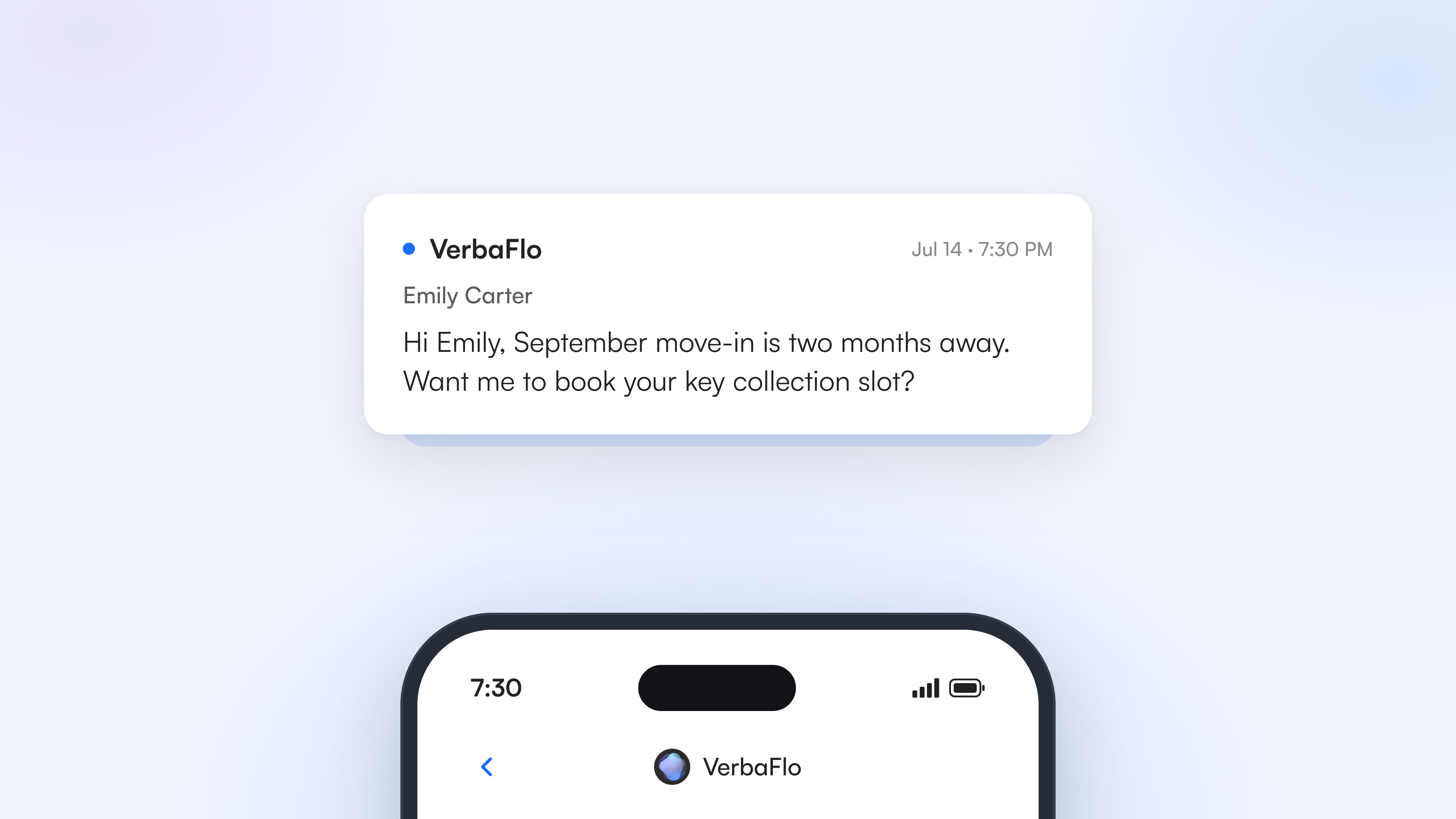
WhatsApp is also a practical channel for renewal outreach. An email is much less likely to be seen and responded to than a message sent via WhatsApp to a resident whose lease is about to expire in three months. A pleasant touchpoint that doesn't require staff time per resident is created via an automated message that confirms their forthcoming renewal window, provides alternatives to schedule a talk, and links to available units for upgrades.
WhatsApp vs Email vs SMS: A Channel Comparison
Operators can make better decisions regarding integration rather than complete replacement by knowing how WhatsApp fits into the existing channels.
The picture that emerges is not that WhatsApp replaces email or SMS. It is that each channel has a different function. Email handles formal documentation. SMS handles time-critical single-direction notifications. WhatsApp handles the conversational, back-and-forth work that drives lead-to-lease conversion and resident satisfaction.
The most effective setups use all three in a coordinated way. Initial outreach and continuous live WhatsApp communication. Notices and formal lease agreements are sent by email. SMS serves as a backup for urgent building-wide alerts. Nothing is missed thanks to their coordination, which is overseen via a CRM integration.
Setting Up WhatsApp as a Leasing Channel
Understanding the distinctions between the two tiers of WhatsApp Business access is crucial for operators considering their options.
The free version of the WhatsApp Business App is intended for small enterprises. It enables a single phone number to handle a small number of chats, create fast replies, and run a business profile. For a solo property manager handling one or two buildings, this may be sufficient to start. The limitation is that it runs on one device and one number, which does not scale to portfolio operations.
The tier designed for larger organizations is the WhatsApp Business API. Multiple users, automated flows, verified company profiles, CRM connectivity, and message template management are all supported. This is the infrastructure layer that enables large-scale multifamily WhatsApp communication.
Operators collaborate with a WhatsApp Business Solution Provider, also known as a Business Service Provider or BSP, to have access to the API. These vendors, who have been approved by Meta, manage the technical setup and offer the layer of connection between WhatsApp and other systems.
The following actions are usually included in a multifamily operator's basic setup:
Step 1: Set up a specific business number. This is the number prospects and residents will message. From listing websites to email signatures, it should be the same at every touchpoint.
Step 2: Choose a Business Solution Provider. Providers vary in terms of pricing, CRM compatibility, and integration opportunities. Selecting one that easily interfaces with your existing property management software reduces implementation friction.
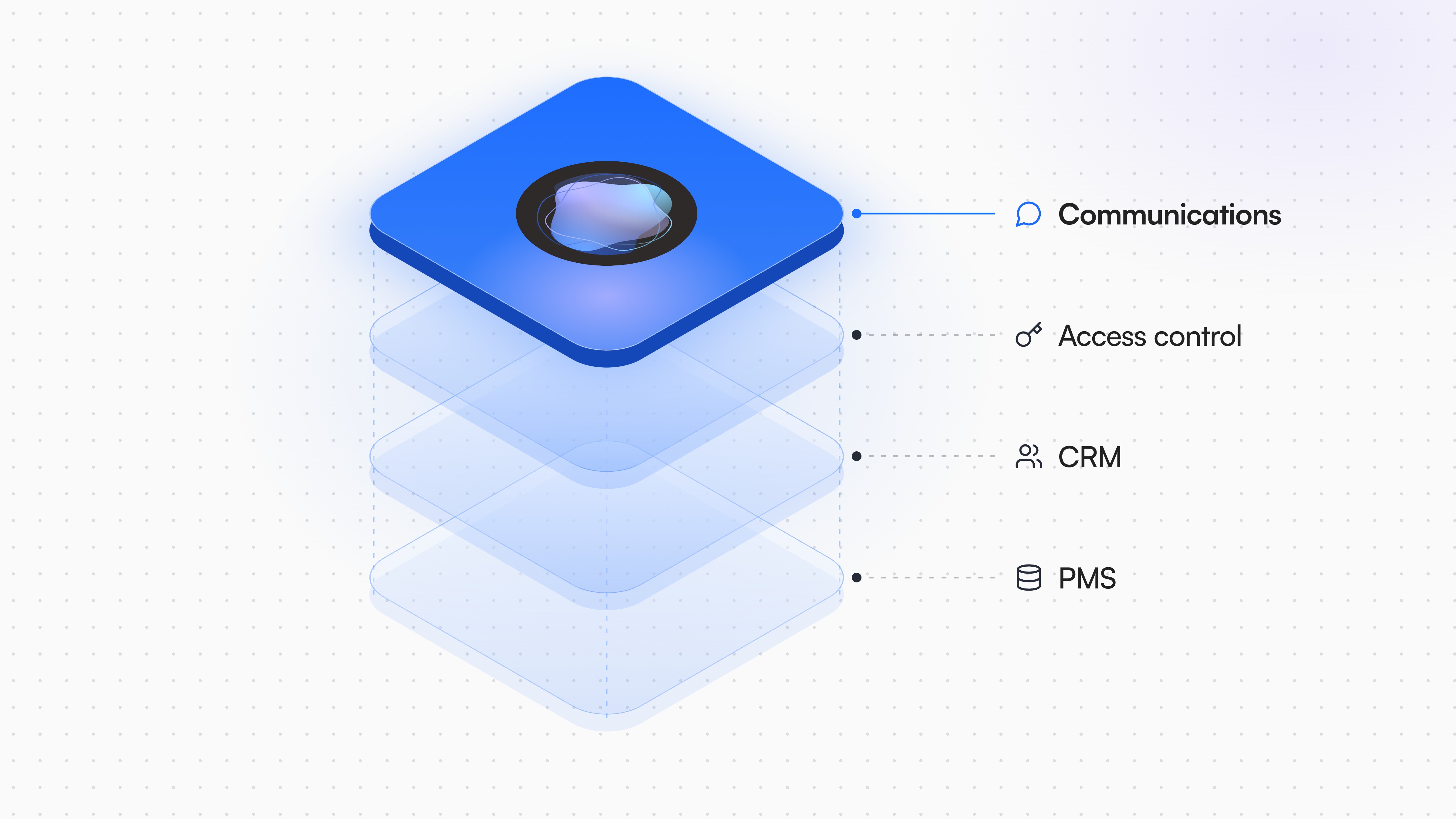
Step 3: Connect to your CRM or property management system. This ensures that every WhatsApp conversation is documented, connected to the relevant lead or resident data, and available to the leasing personnel. CRM-connected WhatsApp solves the usual problem of conversations in one system and lead data in another.
Step 4: For significant use cases, create dialogue flows. Describe the automated responses to commonly received messages, including availability queries, price inquiries, tour scheduling, and maintenance reports. When the conversation calls for it, these processes escalate to a human and manage routine volume without user input.
Step 5: Establish unambiguous team procedures. Identify the conversation kinds that are assigned to leasing agents, those that are handled by automation, and those that call for property management involvement. Without clear routing logic, WhatsApp volumes can create their own disorganisation.
Step 6: Pay close attention to the opt-in requirements. Contacts must have given their permission to receive business messages, per WhatsApp's messaging guidelines. This usually refers to an explicit declaration on the listing page or a checkbox on the inquiry form in the context of leasing. This serves as a signal of trust for potential residents as well as a compliance obligation.
Challenges to Adoption and How to Address Them
Using WhatsApp in a multifamily environment is not without its difficulties. Operators who are thinking about it should be ready for a few particular difficulties.
Challenge: Staff are already managing too many channels.
The team has an additional place to check and respond by adding WhatsApp as a stand-alone inbox. The answer is integration, not addition. When WhatsApp conversations flow into the same CRM dashboard, they become an integral part of the team's existing process rather than an extra requirement.
Challenge: Residents may feel that AI responses are impersonal.
The problem is typically the reverse in practice. Prompt, accurate automated responses are generally well received by residents who used to have to wait hours or days for a response to a regular issue. It's crucial to ensure that, when necessary, the transfer to a human is seamless and that the tone of automated messaging reflects the property's style rather than using generic templates.
Challenge: Compliance and data handling.
WhatsApp communications may be subject to data protection regulations in some situations since they contain personal information. The storage, retention, and security of message data should be verified by operators with their WhatsApp Business Solution Provider. The sensible course of action in this case is to select an enterprise-grade service instead of a consumer workaround.
Challenge: Proving ROI internally.
Like many communication investments, the return from WhatsApp Business API property management integration is not always immediately visible in a single metric. The strongest case is built by tracking: inquiry-to-tour conversion rate before and after, average response time, resident satisfaction scores related to communication, and time spent per leasing interaction. Over a quarter, these data points build a clear picture.
Enter Verbaflo.ai: The Missing Link in Multifamily WhatsApp Strategy
If setting up an enterprise-grade WhatsApp channel sounds like a massive operational puzzle, that is because it usually is. Most property management platforms can send a basic text notification, but they fail completely when a prospect wants to have an actual conversation. This is the exact gap Verbaflo.ai fills.
Instead of forcing your leasing agents to monitor another chaotic screen, Verbaflo.ai acts as an intelligent layer that sits directly between your CRM and your renter's favorite messaging app. It goes beyond the basic "if-this-then-that" chatbots that frustrate prospects. The platform is built to handle the heavy lifting of the initial leasing journey, like answering granular pricing questions, confirming current unit availability, and instantly serving up floor plans at midnight.
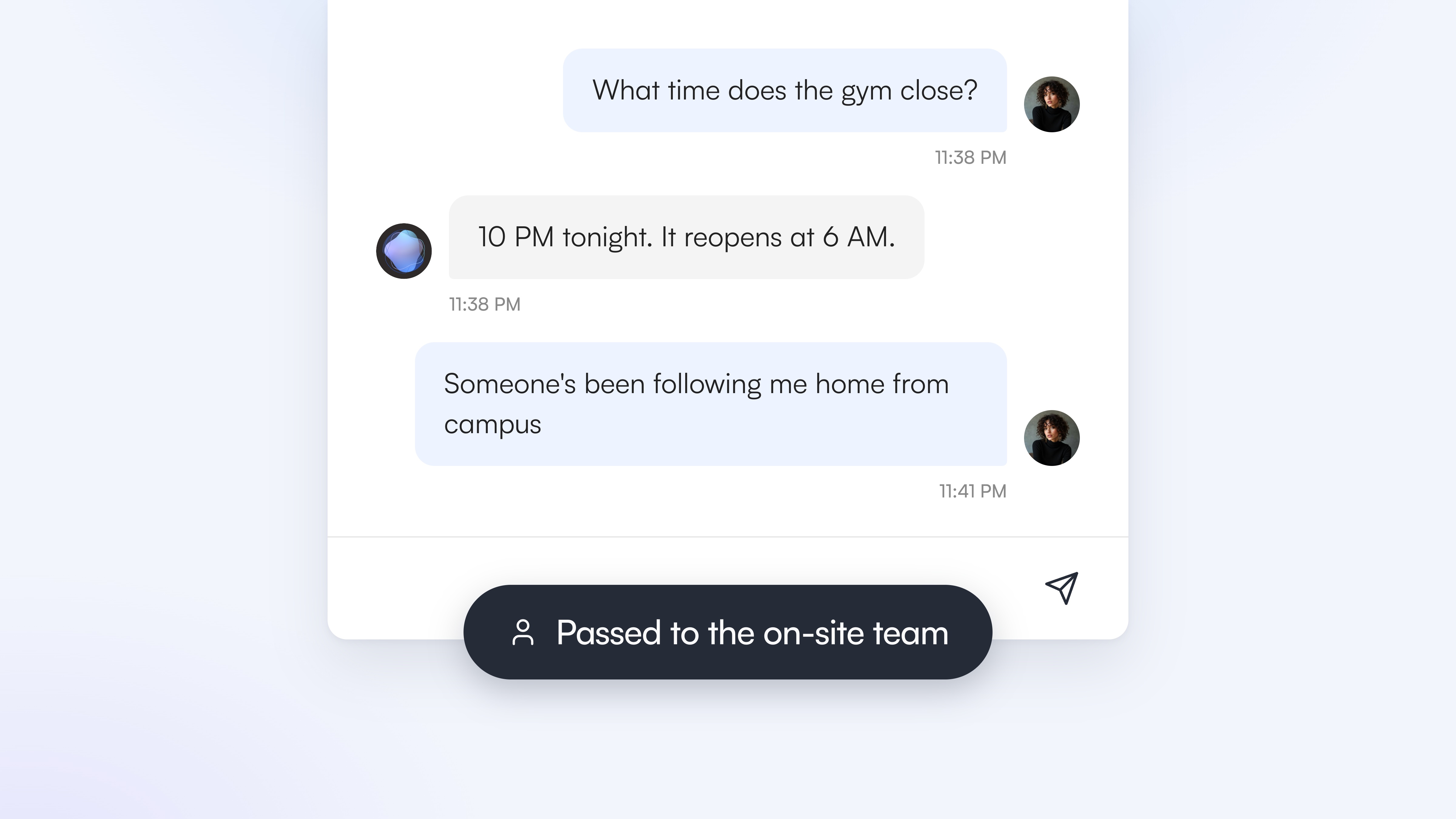
The real magic happens during the transition from machine to human. When a conversation requires a personal touch, such as a nuanced concession negotiation or a complex resident dispute, Verbaflo.ai passes the entire chat history over to your on-site team seamlessly. Your leasing agents get the full context in their existing dashboard, and the resident never feels like they are repeating themselves to a robot. It turns WhatsApp into a high-converting asset without adding a single task to your property manager's plate.
What Operators Who Get This Right Do Differently
Adoption alone does not produce results. The operators seeing measurable impact from WhatsApp for property managers share a few consistent patterns.
Integration rather than adding. The WhatsApp channel is connected to their CRM, their property management software, and their maintenance workflows. Conversations, lead records, and actions live in one place. Nothing requires manual copying between systems.
Automating the routine and preserving the human where it counts. Tour scheduling, FAQ responses, maintenance request intake, and document delivery are automated. Sensitive conversations, complex queries, and renewal negotiations involve a person. The boundary between the two is clearly defined and easy to cross from the resident's side.
Using conversation data actively. WhatsApp generates a detailed record of every exchange: what questions come up most often, where conversations stall, which messages convert and which do not. Operators who review this data regularly use it to adjust their automation scripts, improve their FAQ content, and identify training gaps for their leasing teams.
Treating WhatsApp as a resident experience channel, not just a lead channel. Multifamily WhatsApp communication is used by the operators with the best retention metrics not just during the leasing phase but throughout the tenancy. The resident already uses the same channel for maintenance updates, community announcements, renewal discussions, and move-out instructions.
Setting consistent expectations. Clear auto-replies eliminate the frustration of silence by confirming receipt and setting a response timeframe. Prospects and locals who are aware of when to anticipate a response are much more patient than those who receive no answer at all.
The Cost of Not Having a WhatsApp Strategy
The decision not to build a WhatsApp leasing channel is not a neutral one. It has real effects on leasing performance.
Slower response times in a speed-sensitive market. Research consistently shows that response time is the single most influential variable in lead-to-lease conversion. Teams relying on email for initial outreach are operating at a structural disadvantage relative to those who respond in minutes. Responding late means losing the lead entirely. This operational lag is costly; AppFolio benchmark data reveals that 28% of standard multifamily leasing calls go completely unanswered, representing a massive revenue leakage.
Misalignment with where renters want to communicate. When a prospect's preferred channel is unavailable, they move on. Not waiting, not calling, and rarely emailing first if messaging is their default mode. Properties that do not offer a multifamily WhatsApp communication option are invisible to a growing proportion of active renters.
Increased pressure on leasing teams. Without automated handling of routine inquiries, every message requires a person. As portfolio size grows, that workload scales linearly. Teams stretched across email, phone, and in-person demands are less likely to respond quickly to any single channel, which compounds the conversion problem.
Lost context across channels. The leasing team might not identify a prospect as the same person if they send one email, one phone call, and one SMS. WhatsApp centralizes that history so that all of the interactions are available in a single thread when it is linked with a CRM. Without it, fragmented communication creates confusion and missed follow-up.
The competitive picture in 2026 is one where leasing automation and channel strategy have moved from differentiators to baseline expectations. Operators who have not yet built a WhatsApp Business API property management workflow are not maintaining a stable position. They are falling behind the operators who have.
Bringing It Together
WhatsApp is not a substitute for the current instruments. It is an addition that falls into the area of the lease and resident communication process where two-way communication, familiarity, and quickness are most important.
The WhatsApp leasing channel is successful because it connects tenants in a setting they are already familiar with and in a format that is more casual than professional. It handles the volume that leasing teams cannot efficiently manage manually. It creates a conversation history that feeds into leasing intelligence. And it extends into residency and renewal in a way that reinforces the experience renters want from the communities they choose.
For multifamily operators who are still relying primarily on email and phone, the question is no longer whether WhatsApp belongs in the leasing strategy. It is how quickly it can be integrated in a way that actually improves outcomes rather than just adding another inbox.
The operators who get there first will not just see better conversion numbers. They will build communication habits with their residents that are harder for competing properties to replicate.