Vertical vs General AI in Real Estate: What Property Teams Need
Property teams are managing higher enquiry volumes and faster leasing cycles. The response time and expectations are increasing across every communication channel. At the same time, many operators are working with smaller teams and limited resources.
AI adoption across real estate has accelerated as businesses look for ways to automate repetitive workflows without slowing down leasing operations. Deloitte’s 2024 commercial real estate outlook reported that Equity Residential generated an additional US$15 million in net operating income after using AI across leasing workflows.
General AI platforms have become a common starting point for automation processes. They help teams write content, summarise information, and handle basic queries with ease. But real estate operations depend on organised workflows, live property data, and consistent communication across the leasing journey.
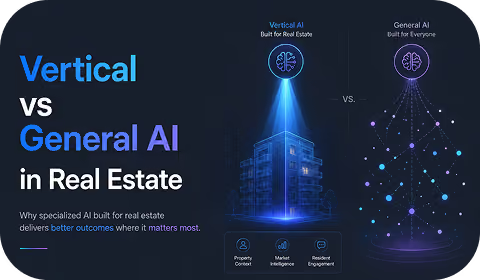
That is where the difference between vertical vs general AI in real estate becomes important. More teams are moving towards AI management systems that are designed specifically for real estate.
Vertical vs General AI in Property Operations
General AI systems handle broad language and reasoning tasks. Property operations need different AI requirements. Leasing workflows depend on live property data, internal processes, and communication across multiple channels. Property teams are focusing more on systems built for their daily workflows.
General AI in real estate
General AI platforms are commonly used for:
- Drafting marketing content
- Summarising documents
- Handling basic customer queries
- Internal productivity support
- Research and knowledge retrieval
Many teams also use general AI for support tasks such as drafting resident communication, summarising meeting notes, and organising documentation. These use cases improve productivity without directly affecting operational workflows.
Problems usually appear when general AI systems are used in leasing operations and resident-facing communication. Real estate workflows depend on accuracy and property-specific context, which generic AI systems are not always designed to handle.
Vertical AI in real estate
Vertical AI systems are designed around industry-specific workflows and data. In real estate, that includes:
- Leasing and lead qualification
- Viewing coordination
- Resident communication
- Multi-channel enquiry handling
- Property and availability context
- Workflow automation across CRM and leasing systems
This change is already visible across leasing and resident communication workflows. AI is past experimentation and into operational use across the sector, showing broader changes across real estate AI adoption.
Property teams do not check AI only on output quality. They are also evaluating whether the system can function within real estate workflows.
Why Real Estate Needs Specialised AI
Real estate workflows are operational. Most conversations lead to an action like booking a viewing, qualifying a lead, updating availability, or resolving a client request.
Those interactions depend on accurate property data and consistent communication. A delayed response or incorrect availability update can badly affect the leasing performance.
This becomes difficult during high-volume leasing periods. In Purpose-Built Student Accommodation (PBSA) and Build-to-Rent (BTR) environments, teams often manage enquiries across WhatsApp, calls, email, and listing platforms at the same time.
Property data also changes constantly. Pricing, unit availability, viewing schedules, and leasing status can change throughout the day. AI systems operating in these settings need access to live operational data rather than static information.
Leasing workflows also have multiple stages that need coordination between systems and teams. A prospective resident may move from an enquiry to a viewing, then into follow-ups, documentation, and onboarding within a short period of time. Maintaining continuity across those stages becomes difficult without workflow-aware systems.
Communication volume is another challenge. As more businesses adopt conversational AI, teams are managing enquiries across more platforms and touchpoints than before. This workflow is also shaping how businesses approach AI voice assistants for operational communication.
Where General AI Breaks in Real Estate
General AI performs well in broad language tasks. Real estate operations are more structured and depend on live operational context. That can create challenges for general AI in real estate.
Limited operational context
A general AI model may generate fluent responses while missing important details. Leasing enquiries consist of live availability, booking stages, pricing updates, or escalation rules related to a specific property or resident journey.
Inconsistent communication across channels
Property teams manage conversations across many platforms simultaneously. Without a system designed around multi-channel operations, maintaining consistent responses and workflow continuity can become difficult.
Weak workflow integration
Most general AI platforms operate outside leasing and CRM systems unless additional integrations are introduced. This can create issues in follow-ups, booking coordination, lead qualification, and escalation management. Property teams often end up relying on manual intervention to fix those errors.
Static responses in dynamic environments
Property information updates constantly. Availability, pricing, and viewing schedules may change throughout the day. General AI systems relying on simple prompts or incomplete context can create friction for both leasing teams and prospective residents.
What Vertical AI Looks Like in Practice
Vertical AI systems are designed around the workflows of a specific industry. In real estate, that means working with live property data, leasing processes, and operational rules across multiple channels.
This changes how vertical AI in real estate supports property teams in day-to-day operations. Instead of generating isolated responses, these systems are built to manage structured workflows from enquiry to conversion. In leasing environments, that can include:
- Qualifying inbound leads
- Answering availability questions
- Coordinating viewings
- Managing follow-ups
- Routing conversations to on-site teams
- Maintaining communication across channels
These workflows are useful during busy leasing periods. In Purpose-Built Student Accommodation (PBSA), teams often manage large volumes of enquiries within short booking windows. Delayed responses or inconsistent communication can directly affect conversions.
Managing large enquiry volumes during those periods requires faster response times. This is changing how teams approach the PBSA booking journey as AI becomes more involved in leasing workflows.
Similar challenges are growing across Build-to-Rent (BTR) operations as resident communication volumes increase.
Vertical AI systems are also built to work within operational environments, integrating with CRM platforms, leasing systems, and communication channels already used by property teams.
Why Vertical AI Fits Real Estate Better
Real estate operations rely on consistency and operational accuracy. Teams are managing leasing journeys across channels and systems within a short period of time.
Vertical AI systems are designed around those workflows. Instead of operating just as a conversational layer, they support the processes already used by leasing teams. In practice, that often includes:
- Multi-channel enquiry management
- Lead qualification and routing
- Viewing coordination
- Automated follow-ups
- Resident communication workflows
- CRM and leasing system integrations
This operational structure is important as communication grows across leasing support workflows. AI systems need to maintain context in conversations while supporting existing processes.
Platforms such as VerbaFlo are examples of conversational AI systems designed specifically for real estate operations. The focus is moving beyond basic automation and towards systems that can support leasing and resident communications.
The Next Phase of AI in Real Estate
The next phase of AI adoption in real estate will depend on how it fits operationally. Property teams are now checking if AI systems can support leasing workflows, resident communication, and multi-channel operations without adding weight to existing processes.
This shift is also changing how teams measure general vs vertical AI in real estate. The focus is moving towards systems designed around real estate operations rather than just broad AI tasks.
As AI adoption continues across the sector, the difference between broad AI functions and operational reliability will become more evident. Teams are heavily prioritising systems that can support day-to-day leasing operations without disrupting existing workflows.
Teams exploring conversational AI for leasing and resident communication workflows can book a demo with VerbaFlo to see how workflow-focused AI systems are being deployed across real estate operations.