Every maintenance request, landscaping project, unit turnover or capital improvement depends on a network of trusted vendors. For multifamily operators, these relationships influence far more than day-to-day operations. They directly impact resident satisfaction, compliance, operating costs and property performance.
As portfolios expand, managing dozens or even hundreds of contractors across multiple communities becomes increasingly complex. Property teams must verify licences and insurance, assign work orders, monitor job progress, process invoices and evaluate vendor performance, all while meeting resident expectations for faster service and maintaining regulatory compliance.
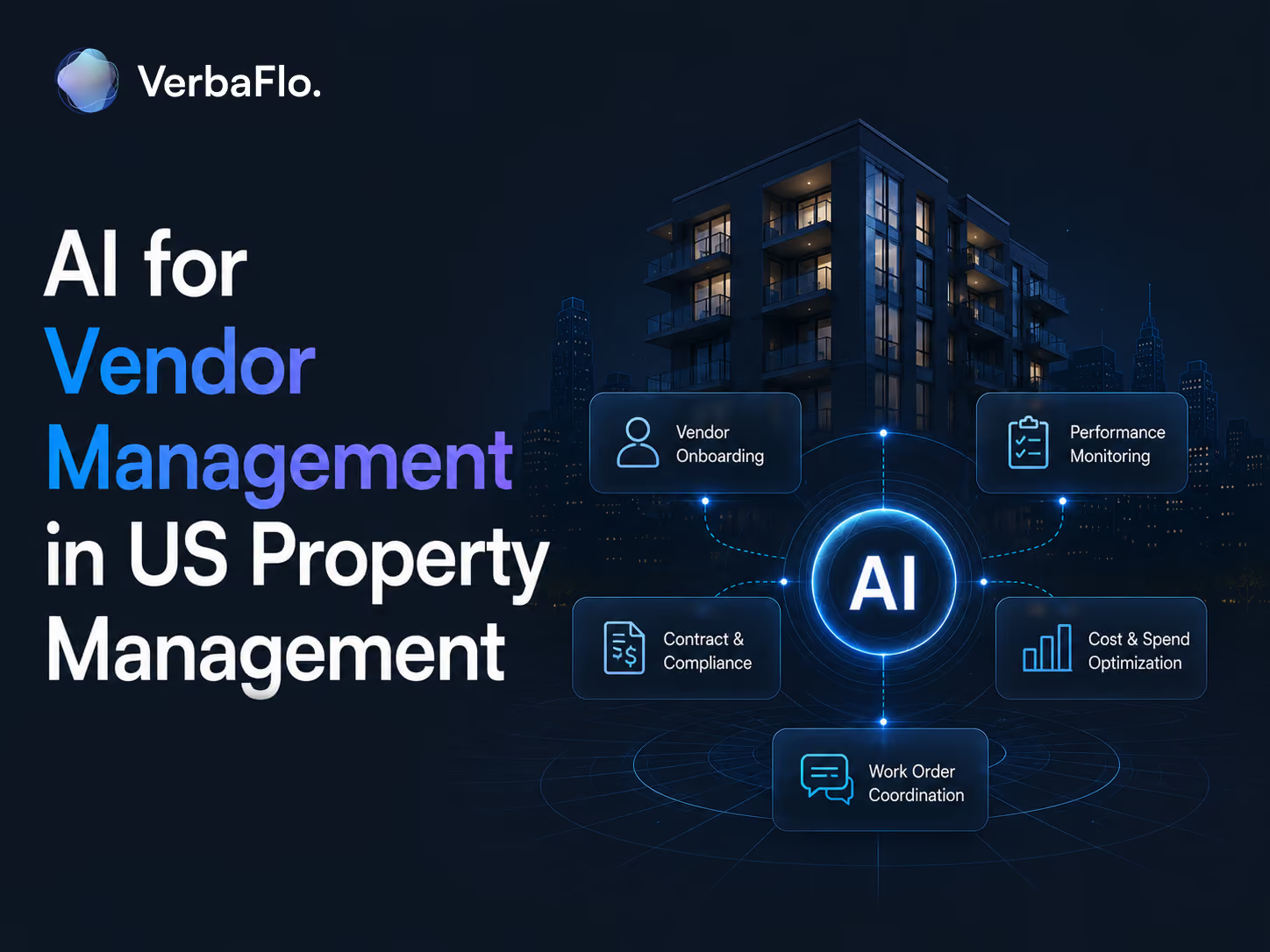
Artificial intelligence is helping multifamily operators bring greater consistency and visibility to this process. Rather than replacing vendor relationships, AI streamlines administrative workflows, improves compliance monitoring and provides data-driven insights that enable property teams to make better decisions. In 2026, AI-powered vendor management is emerging as an essential capability for operators looking to scale efficiently without compromising service quality.
The Vendor Management Challenge in Modern Multifamily Operations
Vendor management is one of the most operationally demanding aspects of property management. A single maintenance request may involve multiple stakeholders, including residents, onsite teams, contractors and accounting departments. Managing these interactions manually often results in delays, inconsistent documentation and increased administrative effort.
Common challenges include:
- Compliance tracking: keeping vendor licences and insurance renewals current across the network.
- Contractor matching: assigning the right trade and vendor to each work order.
- Scheduling: coordinating availability across multiple properties.
- Job monitoring: tracking completion and keeping residents updated.
- Invoicing: processing payments accurately and on time.
- Performance evaluation: assessing vendors objectively rather than by familiarity.
The financial impact of these inefficiencies can be significant. According to the Institute of Finance & Management (IOFM), manual invoice processing continues to consume substantial time and resources, while delayed approvals often affect both operational efficiency and vendor relationships.
At the same time, resident expectations continue to evolve. Maintenance responsiveness remains one of the strongest drivers of resident satisfaction, making reliable vendor coordination a critical component of successful property management. As multifamily portfolios continue to grow, traditional vendor management processes built around spreadsheets, email chains and manual follow-ups are becoming increasingly difficult to scale.
How AI Qualifies and Vets Vendors Before They Arrive Onsite
Vendor qualification is the first step in reducing operational and compliance risk. Before assigning work, operators must verify that contractors hold appropriate licences, maintain active insurance coverage and satisfy community-specific requirements. Managing this information manually becomes increasingly difficult as vendor networks expand.
AI simplifies this process by automatically reviewing uploaded documentation, extracting key information, identifying missing records and flagging expired certifications before work begins.
Modern platforms can verify information such as insurance policy status, coverage limits, licence validity, contract requirements and required documentation.
Rather than relying on manual reminders or periodic audits, AI continuously monitors compliance and alerts property teams when action is required. Some vendor management platforms also maintain pre-qualified contractor networks, reducing onboarding time while helping operators identify vendors that already meet established compliance standards.
Although AI significantly reduces manual effort, human oversight remains important for reviewing complex insurance requirements, contractual exceptions or unusual compliance scenarios. AI handles routine verification efficiently, while experienced teams continue making higher-risk decisions.
AI-Powered Work Order Dispatch
Selecting the right vendor is about more than availability. Property managers must consider the contractor's trade, certifications, location, response time, workload and past performance before assigning work. AI enables these decisions to happen automatically and consistently.
When a resident submits a maintenance request through a resident portal or conversational assistant, AI can categorise the issue, determine its urgency, identify the appropriate trade and recommend the most qualified vendor based on predefined criteria.
Instead of manually calling contractors or reviewing spreadsheets, property teams receive intelligent recommendations supported by real-time operational data. Key factors AI evaluates include vendor availability, trade specialisation, geographic proximity, response time commitments, compliance status and historical performance.
This intelligent routing improves operational efficiency while helping operators reduce response times and maintain service consistency across larger portfolios.
Another important advantage is continuous compliance. If a contractor's insurance expires or required documentation becomes outdated, AI can automatically prevent work orders from being assigned until compliance requirements are met. This reduces operational risk while helping operators maintain consistent governance across every property.
Rather than replacing the judgement of property managers, AI equips them with better information, faster workflows and greater confidence when coordinating vendors across an expanding portfolio.
Real-Time Job Tracking: Improving Visibility for Residents and Property Teams
Dispatching a vendor is only the beginning of the maintenance journey. Residents also want visibility into what happens next, while property teams need confidence that work is progressing as planned. AI-powered vendor management platforms provide real-time updates throughout the service lifecycle. Once a work order is assigned, the system can automatically notify residents when a contractor accepts the request, is en route, begins work and completes the job.
This level of transparency offers benefits for both residents and operators. Residents stay informed without having to contact the leasing office for updates, while property teams gain a centralised view of every work order across their portfolio.
AI also creates a detailed audit trail for every job, recording assignment times, status updates, completion timestamps and communication history. If questions arise about service delivery or response times, operators can quickly access a complete record instead of piecing together information from emails or phone calls.
AI for Invoice Approval and Payment Automation
Vendor management does not end when a job is completed. Accurate invoice processing and timely payments are equally important for maintaining strong contractor relationships. Manual invoice approvals often involve multiple stakeholders, making the process time-consuming and susceptible to errors. AI helps streamline these workflows by automatically extracting invoice data, matching invoices with completed work orders, identifying discrepancies and routing approvals based on predefined business rules.
Rather than manually reviewing every invoice, property teams can focus their attention on exceptions that require further investigation. AI can also identify duplicate invoices, unusual billing amounts or mismatches between approved work orders and submitted invoices before payments are processed, helping operators reduce administrative effort and strengthen financial controls.
For vendors, faster approvals and predictable payment timelines contribute to stronger business relationships, encouraging contractors to prioritise future work for the communities they serve.
Performance Scoring: Measuring Vendor Performance With Data
Choosing vendors based solely on familiarity or availability often limits operational efficiency. AI enables property managers to evaluate contractor performance using objective, measurable data. Instead of relying on anecdotal feedback, AI continuously analyses operational metrics such as average response time, job completion time, resident satisfaction, repeat service requests, work order completion rates and invoice accuracy.
These insights create a comprehensive performance profile for every contractor. Over time, operators can identify high-performing vendors, recognise recurring service issues and make more informed decisions when assigning future work.
Performance scoring also supports stronger vendor relationships. Contractors receive clear performance expectations, while operators gain a transparent framework for evaluating service quality across their entire vendor network. Rather than simply tracking completed jobs, AI helps build a preferred vendor ecosystem based on measurable performance and long-term reliability.
Building a Vendor Intelligence Database
Every vendor interaction generates valuable operational data. Qualification records, work order history, compliance documentation, invoice approvals, response times and resident feedback together create a comprehensive picture of vendor performance.
Instead of storing this information across multiple systems, AI brings it together into a centralised vendor intelligence database. This enables operators to answer important business questions, including which contractors consistently meet service-level expectations, which vendors perform best for specific trades or property types, where recurring delays are occurring, which vendors require additional compliance monitoring, and how costs compare across similar service providers.
These insights help transform vendor management from a reactive administrative function into a strategic operational capability. As AI continues to connect leasing, maintenance, finance and resident communications, operators gain a more complete understanding of how vendor performance influences overall property operations.
VerbaFlo supports this connected approach by streamlining communication between residents, property teams and vendors within a unified workflow, reducing manual coordination while improving visibility throughout the maintenance process.
As the multifamily industry continues to embrace digital transformation, AI is shifting vendor management from a reactive administrative task to a strategic capability. Operators that combine trusted vendor relationships with intelligent automation will be better positioned to improve service quality, strengthen resident satisfaction and scale their operations with confidence. Book a demo to see how it works.