
Staffing has become one of the most pressing challenges in the US multifamily industry. Property teams are expected to manage more residents, respond to higher service expectations and oversee increasingly complex operations, often without proportional increases in headcount. Leasing consultants, maintenance technicians and property managers are balancing growing workloads while trying to deliver the level of responsiveness residents now expect.
This pressure extends beyond hiring. As portfolios expand, routine administrative work consumes a larger share of every employee's day. Responding to resident enquiries, scheduling tours, coordinating maintenance requests, updating records and following up on outstanding tasks all compete for time that could otherwise be spent building resident relationships or resolving higher-value issues.
Artificial intelligence is helping multifamily operators address this challenge by automating repetitive workflows rather than replacing employees. From handling routine resident conversations to streamlining maintenance coordination and administrative tasks, AI enables teams to spend less time on manual work and more time on activities that directly improve resident satisfaction and operational performance.
As operators continue investing in technology, the conversation is shifting from whether AI should be adopted to where it creates the greatest productivity gains across multifamily operations.
The Staffing Pressure in US Multifamily Right Now
Today's multifamily teams are managing more responsibilities than ever before. Leasing professionals are expected to respond to enquiries across multiple channels, maintenance teams are under pressure to resolve work orders quickly, and property managers are responsible for balancing resident communication, compliance, vendor coordination and financial oversight.
At the same time, resident expectations continue to rise. According to the National Multifamily Housing Council (NMHC), convenience, responsiveness and digital experiences are increasingly influencing how residents evaluate their communities. Meeting these expectations while operating with lean teams requires a different approach to managing day-to-day work.
Many of the tasks occupying property teams are repetitive rather than complex. Answering common questions, scheduling appointments, sending reminders, updating work order statuses and processing routine requests consume valuable hours every week.
This is where staff efficiency with AI is creating measurable value in property management. Rather than replacing onsite teams, AI helps eliminate repetitive administrative work so employees can focus on problem-solving, resident engagement and operational decision-making.
Where AI Saves the Most Time for Leasing Teams
Leasing teams often experience the highest volume of repetitive interactions across the resident journey. Prospective renters expect immediate answers about pricing, availability, floor plans, pet policies, amenities and application requirements. Delayed responses can reduce engagement and increase the likelihood of prospects choosing another community.
AI helps leasing teams recover valuable time by automating many of these routine interactions. Common tasks include answering frequently asked leasing questions, qualifying prospective residents, scheduling property tours, sending appointment confirmations, following up with prospective renters and responding to enquiries outside business hours.
Instead of manually responding to every enquiry, leasing consultants receive better-qualified prospects and can focus on conducting tours, building relationships and guiding applicants through the leasing process.
Rather than introducing another communication channel, VerbaFlo fits into existing property operations, helping leasing teams automate routine conversations while maintaining a consistent experience for every prospective resident.
Where AI Saves the Most Time for Maintenance Teams
Maintenance operations generate a constant flow of administrative work alongside the repairs themselves. Before a technician even begins a repair, property teams often spend time receiving requests, collecting information, prioritising urgency, assigning work orders, coordinating vendors and updating residents throughout the process.
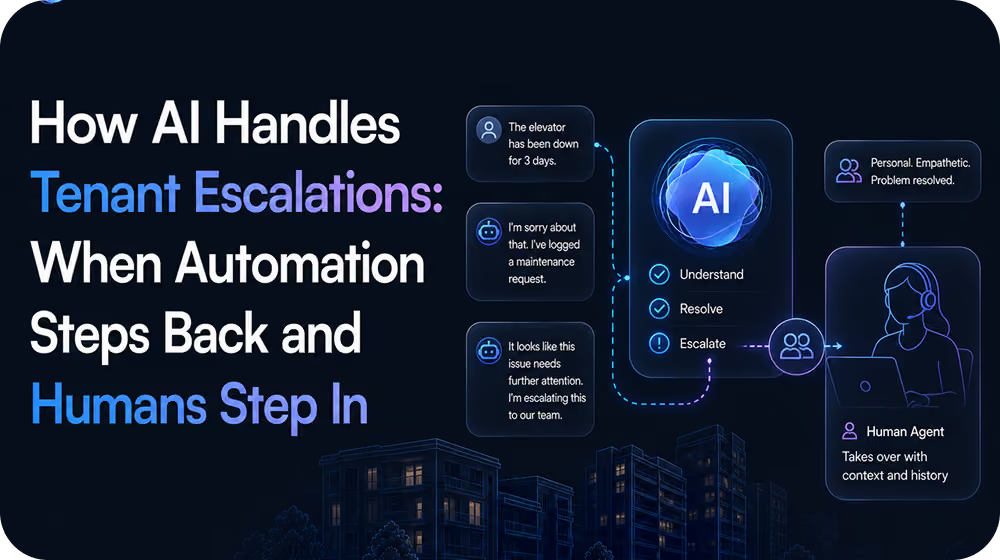
AI helps streamline many of these workflows automatically. When residents submit maintenance requests through digital channels, AI can categorise the issue, capture relevant details, assess urgency and route the request to the appropriate team or vendor. Residents receive automated updates as the work progresses, reducing uncertainty and minimising calls to the leasing office requesting status updates.
These efficiencies allow maintenance teams to spend more time resolving issues and less time managing administrative coordination.
According to the National Apartment Association (NAA), maintenance responsiveness remains one of the most important contributors to resident satisfaction. By reducing the administrative burden surrounding each work order, AI helps property teams improve both operational efficiency and the resident experience.
As portfolios continue to grow, VerbaFlo helps reduce operational complexity by automating routine maintenance conversations while keeping residents informed throughout the service process, allowing maintenance teams to focus on delivering timely, high-quality repairs.
Where AI Saves the Most Time for Property Managers
Property managers oversee far more than resident communication. They coordinate vendors, monitor occupancy, manage compliance, review financial reports, oversee resident concerns and keep day-to-day operations running smoothly across one or more communities. Much of this work involves administrative coordination rather than strategic decision-making.
AI helps reduce this workload by automating routine tasks such as summarising resident conversations, organising maintenance updates, sending reminders, tracking follow-ups and consolidating operational information from multiple sources.
Instead of switching between emails, spreadsheets and property management systems to gather updates, property managers can quickly access the information they need to make informed decisions.
This shift allows managers to spend more time supporting onsite teams, strengthening resident relationships and addressing operational priorities that require experience and judgement.
How to Measure AI's Impact on Staff Productivity
Measuring AI success requires looking beyond the number of automated conversations or completed workflows. The real value lies in how much productive time property teams recover and how that time is reinvested.
Operators should evaluate improvements across operational and service metrics such as:
When employees spend less time on repetitive work, they gain more capacity to solve problems, build relationships and improve service delivery.
The Change Management Challenge: Getting Teams to Actually Use AI
Technology alone does not improve productivity. Adoption does. One of the biggest barriers to successful AI implementation is helping employees understand how the technology supports their work rather than replacing it. Property teams are more likely to embrace AI when it removes repetitive administrative tasks instead of adding another system to learn.
Successful implementation often includes:
- Gradual rollout: introducing AI through high-volume workflows first.
- Training: providing clear staff onboarding and support.
- Human oversight: keeping complex decisions with experienced staff.
- Measurement: tracking productivity improvements and sharing results.
- Feedback: encouraging onsite teams to help refine workflows.
Where AI Delivers the Greatest Time Savings Across Different Portfolio Sizes
The operational impact of AI grows as portfolios become larger and more complex. Smaller operators often benefit from faster communication and reduced administrative work, while enterprise portfolios see additional value through standardised processes, centralised visibility and greater operational consistency.
As portfolios expand, AI becomes less about saving a few minutes on individual tasks and more about enabling teams to manage significantly greater operational complexity without proportionally increasing staffing levels.
Staff productivity has become one of the defining challenges for multifamily operators. As resident expectations continue to rise and portfolios become more complex, simply adding more staff is not always a sustainable solution.
AI is helping property teams work more efficiently by reducing repetitive administrative work across leasing, maintenance and day-to-day operations. Rather than replacing employees, it enables them to focus on the responsibilities that create the greatest value, including supporting residents, solving operational challenges and improving community performance. Book a demo to see where your team could recover the most time.