The moving truck has not even arrived yet. Boxes are stacked in the living room. School records are being transferred. A spouse is coordinating movers while a service member prepares for a new assignment hundreds, sometimes thousands, of miles away.
For military families, a Permanent Change of Station (PCS) move is more than relocating to a new home. It is a complete life transition that often unfolds under tight timelines and plenty of uncertainty. When will the new home be ready? Can the keys be picked up before the movers arrive? Who do they call if something changes?
Behind every one of these questions is a housing team working to make the transition as smooth as possible. Unlike traditional apartment communities, military housing operators are not simply leasing homes. They are coordinating inspections, maintenance, documentation, resident communication and government reporting while preparing one family to move out and another to move in, often within days of each other.
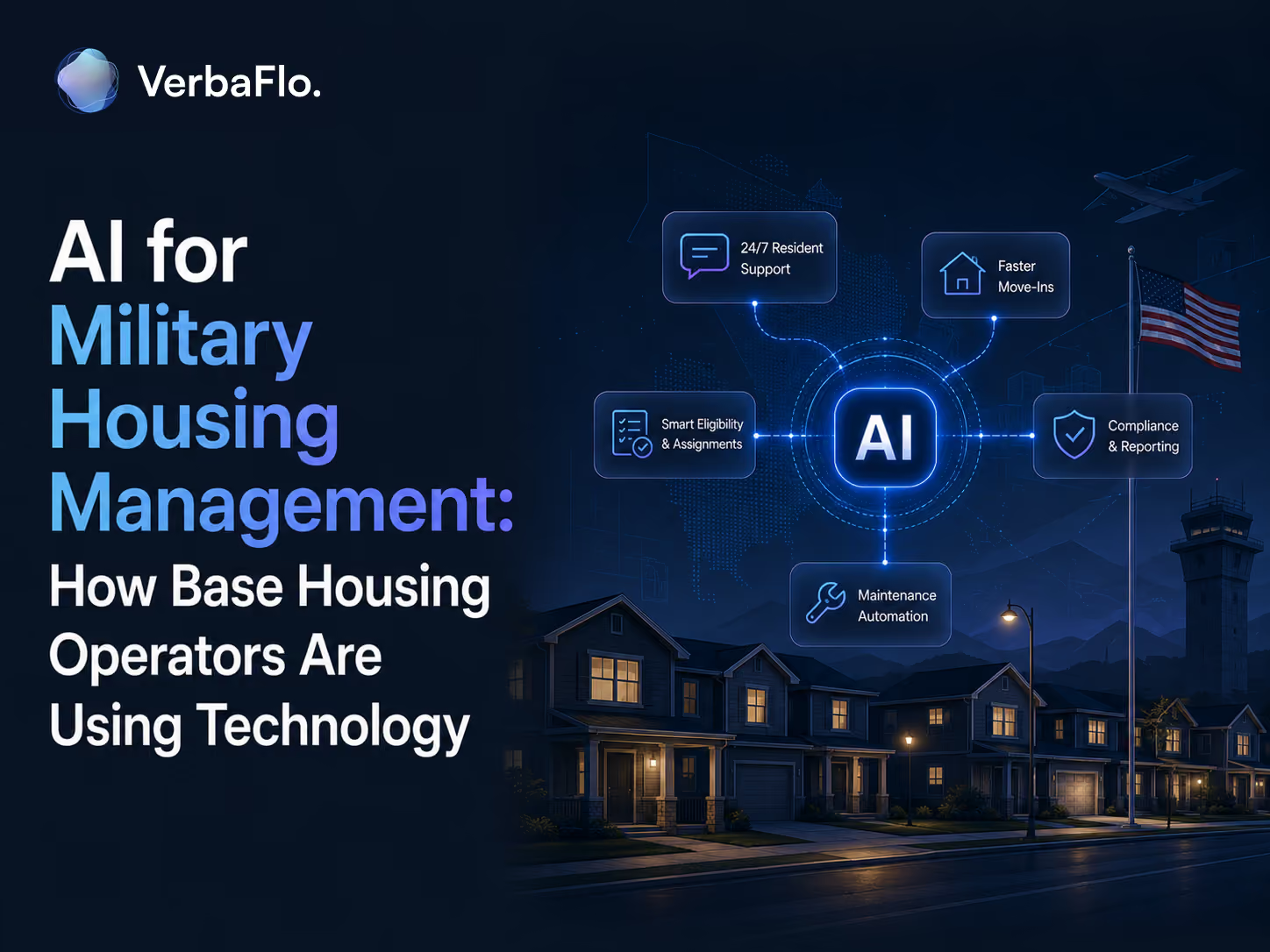
Artificial intelligence is helping simplify these behind-the-scenes operations. By automating routine workflows and keeping information flowing between residents and housing teams, AI allows staff to spend less time managing administrative tasks and more time supporting the people at the heart of every PCS move. After all, while military orders may dictate when families move, technology can help make the experience far less stressful.
How Military Housing Management Differs From Standard Multifamily
At first glance, military housing may seem similar to any other residential community. Homes are leased. Maintenance requests are submitted. Residents move in and eventually move out. But the similarities end there.
In conventional multifamily housing, residents often choose when they relocate. Military families do not always have that flexibility. Their timelines are driven by official orders, deployments, training schedules and PCS assignments, leaving little room for delays. That means housing teams are working within fixed deadlines that cannot simply be pushed back because an inspection ran late or paperwork is still pending.
Military housing also serves a unique resident population. Families may be arriving from another state or another country. Many are navigating unfamiliar schools, healthcare providers, local services and new communities, all while trying to settle into a home before reporting dates arrive. Providing housing is only part of the responsibility. Helping families feel prepared before they arrive is equally important.
The Unique Challenges: Rapid Turnover, PCS Moves, and Government Oversight
Imagine receiving this notification on Monday morning: the Ramirez family has received PCS orders, and their move-out date is now two weeks away.
That single update sets several processes in motion. The home needs a move-out inspection. Maintenance must identify and complete any repairs. Cleaning crews need to be scheduled. Documentation has to be updated. Meanwhile, another military family may already be preparing to move into that same home. Every task depends on another being completed first. If one step falls behind, the entire schedule can quickly begin to slip.
On top of these operational demands, military housing providers are responsible for maintaining detailed records and meeting contractual and government reporting requirements. Every inspection, repair, resident communication and move-related activity must be properly documented. It is a level of coordination that is difficult to manage through spreadsheets, emails and phone calls alone, especially across large housing portfolios.
AI for High-Volume Move-In and Move-Out Coordination
Military housing teams rarely have the luxury of managing one move at a time. They may be coordinating dozens, or even hundreds, of move-ins and move-outs simultaneously, each with its own schedule, maintenance needs and resident questions. Now imagine one family's travel plans suddenly change.
Their movers arrive a day early. A repair takes longer than expected. The final inspection has to be rescheduled. Immediately, multiple teams need the same updated information. Without connected workflows, even a small scheduling change can trigger a series of phone calls and emails just to keep everyone aligned. AI helps bring these moving parts together.
Instead of manually tracking every inspection, repair and appointment, housing teams can monitor progress through a centralised workflow that keeps tasks connected. When timelines change, updates can be reflected across the move process, helping maintenance teams, inspectors and resident-facing staff stay on the same page.
For incoming families, this means fewer surprises. Instead of wondering whether their home will be ready on arrival, they receive timely updates throughout the process, making an already stressful move feel far more predictable.
AI for Resident Communication With Military Families
Ask any military housing office what they spend the most time answering, and the response is often the same. Questions. Lots of them. Has the home assignment been finalised? When can the keys be collected? Where do families report when they arrive? Who can help if household goods are delayed?
These are not complicated questions. But answering hundreds of them every week takes time, particularly during peak PCS season. AI helps by providing families with immediate access to routine information whenever they need it, whether they are preparing for a cross-country move or arriving at their new installation after normal office hours.
Rather than searching through emails or waiting for someone to return a call, residents can quickly find answers, receive status updates and understand their next steps. Solutions like VerbaFlo make these conversations feel natural by keeping military families informed throughout the moving journey while giving housing teams full visibility into every interaction. Routine enquiries are handled more efficiently, allowing staff to focus on situations where personal support makes the greatest difference.
How AI Handles the Short-Notice Departures Common in Military Housing
Not every PCS move follows the original timeline. Orders can change. Reporting dates can move up. Deployments may be extended or shortened. A family that expected several weeks to prepare may suddenly have only a matter of days. For housing operators, that one change affects far more than a single move-out date. Inspections may need to be rescheduled. Maintenance priorities shift. Cleaning crews have to be reassigned. Another family's move-in timeline could also be impacted.
In traditional workflows, these changes often trigger a chain of phone calls, emails and manual updates across multiple departments. AI helps reduce that operational scramble.
When schedules change, connected workflows can automatically update task lists, notify the appropriate teams and ensure everyone is working from the latest information. Instead of relying on staff to manually communicate every adjustment, routine updates happen much faster and with greater consistency.
Military families also benefit from knowing exactly what is happening. Rather than wondering whether their move-in date has changed or if their home will be ready on arrival, they receive timely updates that reduce uncertainty during an already demanding relocation.
Government Compliance and Reporting: How AI Streamlines the Paperwork
Behind every successful move is an enormous amount of documentation. Inspections need to be recorded, maintenance activities must be logged, resident communications have to be documented, and move-in and move-out records must remain accurate.
Many military housing communities also operate under government contracts that require detailed reporting and consistent operational standards. For housing teams, keeping up with these responsibilities can take almost as much time as serving residents themselves. AI helps simplify the administrative side of housing management by organising information as work is completed rather than requiring teams to piece everything together later.
Inspection reports, maintenance updates, resident interactions and completed tasks can all be captured within a connected workflow, making records easier to retrieve when reporting deadlines or audits arise. Importantly, AI does not make compliance decisions or replace contractual obligations. What AI does provide is a more organised operational foundation, reducing duplicate data entry, improving record accuracy and making documentation significantly easier to manage across large housing portfolios.
What the Major Military Housing Operators Are Using in 2026
The most forward-thinking military housing providers are not looking for technology that replaces people. They are investing in technology that removes friction. Instead of managing leasing, maintenance, inspections and resident communication as separate processes, they are connecting them into one continuous resident journey. That approach reflects how military families actually experience housing.
They do not think in terms of departments. They simply want answers. Is the home ready? Have the repairs been completed? When can they move in? What is the next step?
Modern AI platforms help bring those answers together by connecting operational workflows with resident communication. Instead of requiring families to contact multiple offices for updates, information flows more seamlessly between housing teams and residents, creating a simpler and more transparent experience from assignment through move-in.
The biggest transformation is not that AI completes more work. It is that staff spend less time tracking information and more time helping military families settle into their new homes with confidence. Military housing has always been about more than managing properties. It is about helping families navigate one of the most significant transitions in military life.
Every PCS move brings deadlines, uncertainty and countless moving parts, all of which must come together before a new family can truly feel at home. Artificial intelligence is making that process easier by supporting the people behind it. Book a demo to see how it works.