
A prospect messages a leasing team at nine in the evening, gets an instant answer about pet policy and availability, and books a viewing before bed. The experience is smooth.
What the prospect may not know is whether they were talking to a person or an artificial intelligence (AI) system. Increasingly, both the law and the renter expect to be told.
AI disclosure in leasing has moved from a courtesy to a requirement. This article sets out what the law now demands, what renters actually want, where in the leasing journey disclosure belongs, and the specific wording an operator can use to do it well.
The Legal Picture: EU AI Act, Utah and California
The rules on disclosing AI are a patchwork rather than a single standard, and the patchwork is the reason to treat disclosure as a consistent practice rather than a jurisdiction-by-jurisdiction calculation.
In Europe, the EU AI Act sets the clearest duty. Its transparency provision requires that people are informed when they are interacting with an AI system, unless that is obvious from the context.
The Act entered into force on 1 August 2024, with this general application arriving on 2 August 2026, so operators with any European exposure are already inside its scope.
In the United States, the rules vary by state. Utah's Artificial Intelligence Policy Act, in force since May 2024 and amended in 2025, requires a business to disclose that a consumer is dealing with generative AI when the consumer asks, and proactively in regulated professions or higher-risk interactions.
California's longer-standing bot disclosure law prohibits using an automated system to mislead a person about its non-human identity in order to incentivise a transaction.
Several other states are considering similar measures, and the frameworks differ in their triggers. Some require disclosure only when a consumer asks, others proactively in defined situations, while the EU standard applies whenever the interaction is not obviously automated.
The direction is consistent even where the detail differs. If a reasonable person might think they are talking to a human, the expectation is to tell them otherwise.
An operator running properties across jurisdictions is better served by a single clear standard than by tracking the minimum in each one, since disclosing AI at first contact everywhere satisfies the strictest of these regimes.
What Renters Want, and Why Disclosure Builds Trust
The legal case is reinforced by a commercial one, because renters have been clear about what they expect.
A 2025 Rently survey of 800 US adults, reported by Multifamily Executive, found that 74% are less comfortable when AI use is not disclosed during the leasing journey. The same survey found 57% want human support available at any time, and 47% want the ability to opt out of AI features.
Renters welcome AI that makes the process faster; what they object to is not knowing. Undisclosed automation reads as something being hidden, and in a transaction as significant as signing a lease, hidden reads as untrustworthy.
The survey also mapped where renters want a person. It found that 71% would contact a person first when a problem arises, particularly for rent negotiations, lease renewals and payment issues.
Disclosure and easy human handover are two sides of the same expectation. AI can handle the routine as long as a person is reachable when it matters.
For an operator, that turns disclosure from a compliance chore into a trust signal. Telling a prospect plainly that they are speaking with an AI assistant, and that a person is available, tends to increase confidence rather than reduce it.
There is a risk in not disclosing, too. A prospect who discovers late that they were dealing with AI, particularly around a decision that affected them, may feel misled even where no rule was broken.
What to Disclose at Each Stage of the Leasing Journey
Disclosure works best as a running thread rather than a one-off. The leasing journey has several stages, and the right approach is to make the AI's role clear at the first point of contact and keep it clear wherever the interaction could be mistaken for a person.
- First contact: the moment an AI assistant answers a webchat, message or call is the moment to disclose. A prospect should know from the first reply that they are speaking with an AI assistant and how to reach a person.
- Qualification and questions: as the assistant answers questions about availability, pricing or policy, the disclosure made at first contact carries through. If the conversation moves to a new channel, disclose again on that channel.
- Tour booking: scheduling is low-risk, but the handover matters. If a person will conduct the tour, the prospect should know the switch from AI to human has happened.
- Application and sensitive steps: when the interaction touches money, identity documents or the application decision, disclosure should be explicit and a human route obvious. These are the high-stakes moments renters most want a person for, and the moments some laws treat as higher-risk.
The application stage deserves particular care, because the survey signal and the legal signal converge there. The finding that 71% would contact a person first over payment and lease matters describes exactly this point in the journey, and it is where higher-risk disclosure rules are most likely to bite.
The safer design keeps AI on the information and scheduling, with a clear disclosure and an easy route to a person, and puts a human on the decision itself.
The principle across all four stages is that the prospect should never have to wonder. Where there is any doubt about whether they know, the answer is to tell them again.
Sample Disclosure Language and Opt-Out Wording
Good disclosure is short, plain and early. It names the AI, explains what it does, and offers a person. The following examples can be adapted to a brand's voice.
Opening disclosure, first message:
Hi, I'm the [Property] virtual assistant, an AI tool that can help you with availability, pricing and booking a viewing. If you'd prefer to speak with a member of the team at any point, just say "speak to a person" and I'll connect you.
Channel handover disclosure:
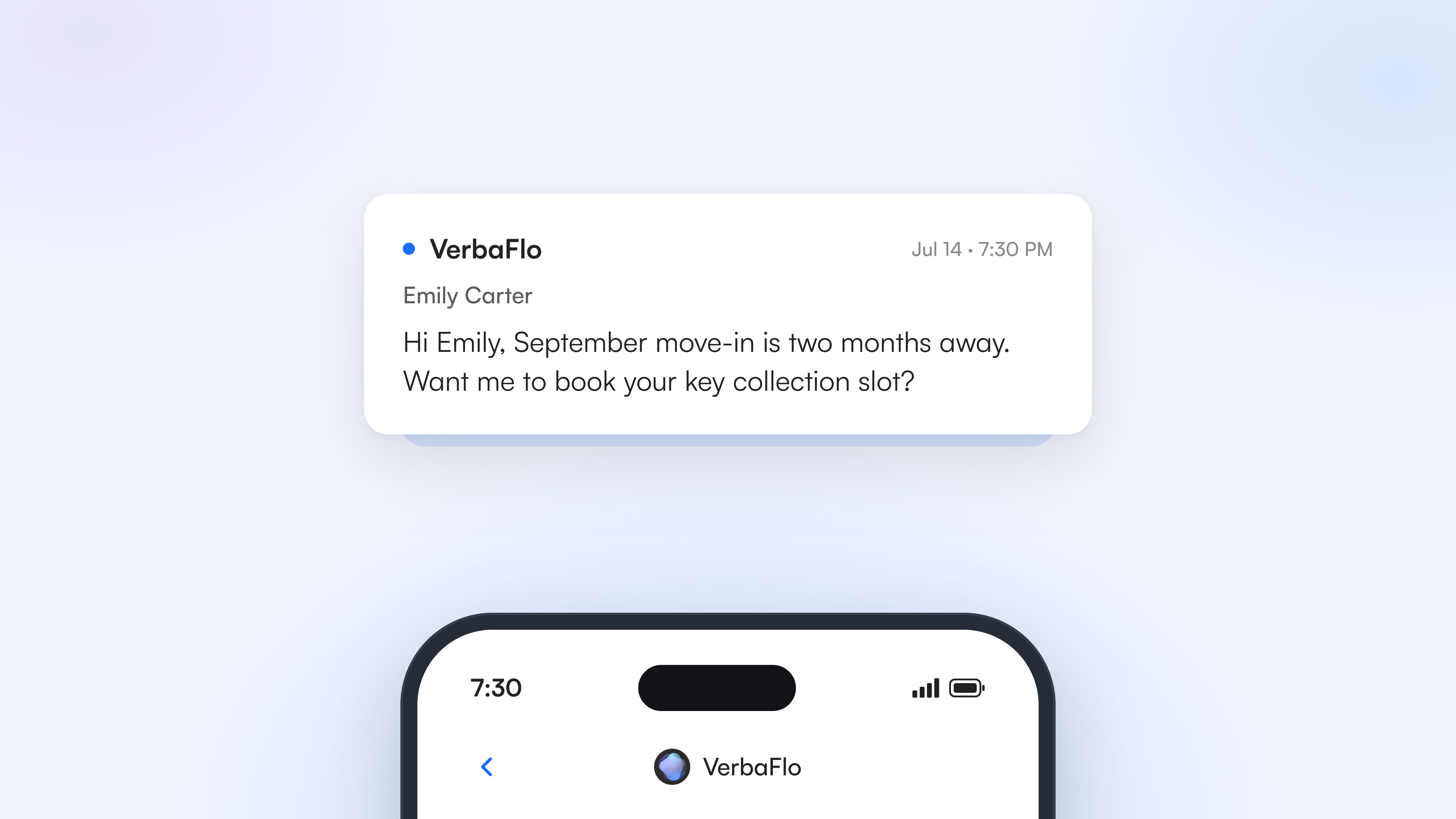
You're now chatting with our AI assistant by WhatsApp. It can pick up where your enquiry left off. Ask for a person whenever you'd like one.
Opt-out and human handover:
No problem, I'll pass you to a member of the leasing team. They'll have everything we've discussed, so you won't need to start again.
When the AI reaches its limit:
That's something our team should help with directly. I'm connecting you to a person now, and I'll share the details you've given me so far.
Voice opening, for a phone assistant:
Hello, you've reached the [Property] virtual assistant. I'm an AI system and I can help with availability and viewings. Say "agent" at any time and I'll put you through to the team.
Three principles make these work. The disclosure is active rather than buried in a privacy notice, since a renter should not have to go looking for it.
The opt-out is genuine, because an option to reach a person that does not actually connect them undermines the trust the disclosure was meant to build. And the language is plain, because a disclosure a renter has to decode does little to inform them.
How VerbaFlo Handles Disclosure and Human Handover
The thread through this article is that disclosure and human handover form a single expectation. Renters accept AI when they know it is AI and can reach a person, and the law is moving the same way.
VerbaFlo is a conversational AI platform for residential real estate operators, built around that expectation:
- Disclosure by design: it is configured to identify itself as an AI assistant, so prospects know from the first message what they are speaking with rather than discovering it later.
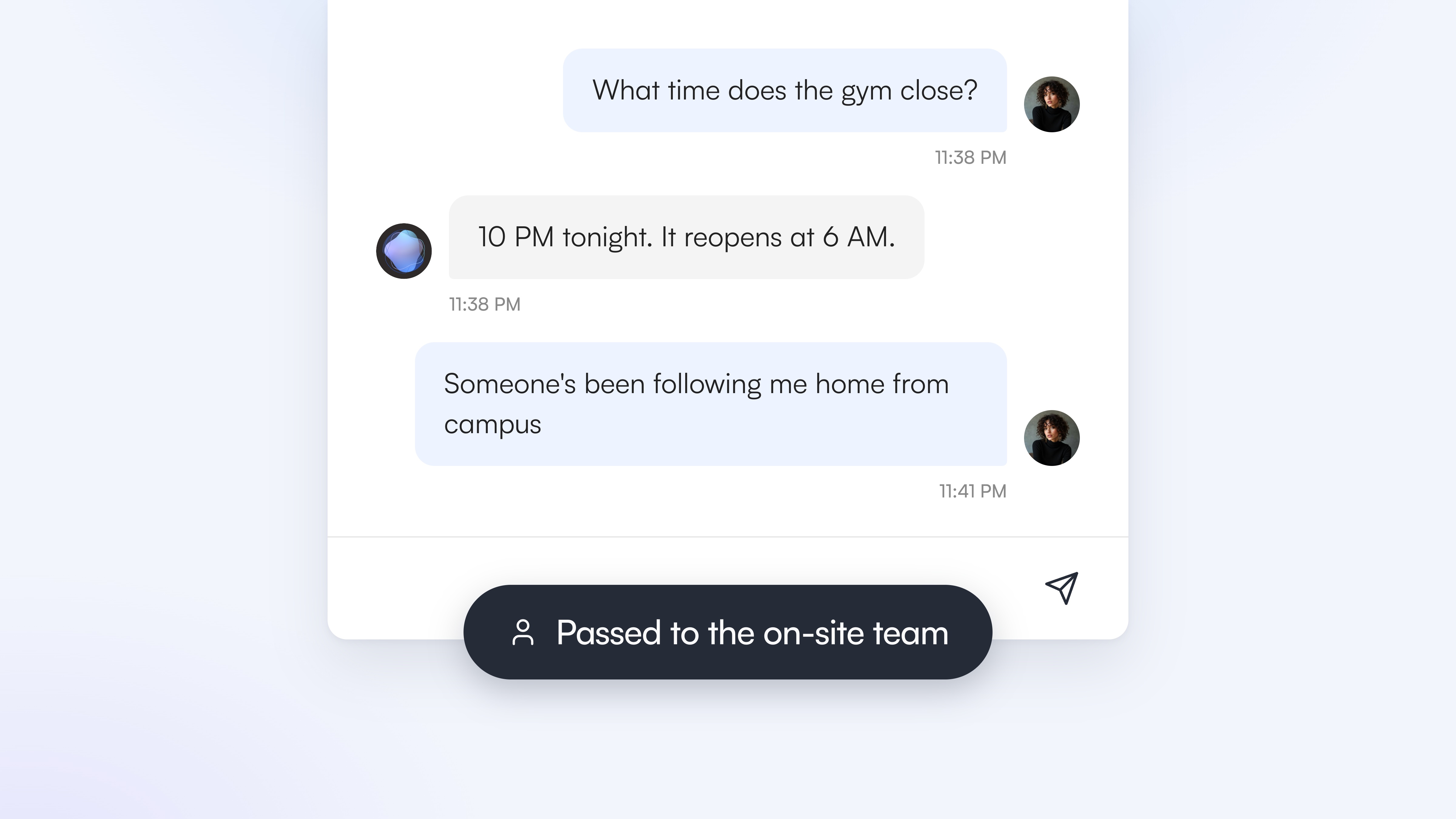
- A person on request: it hands over to a member of the team when a prospect asks or a situation needs judgement, carrying the conversation history so no one has to start again.
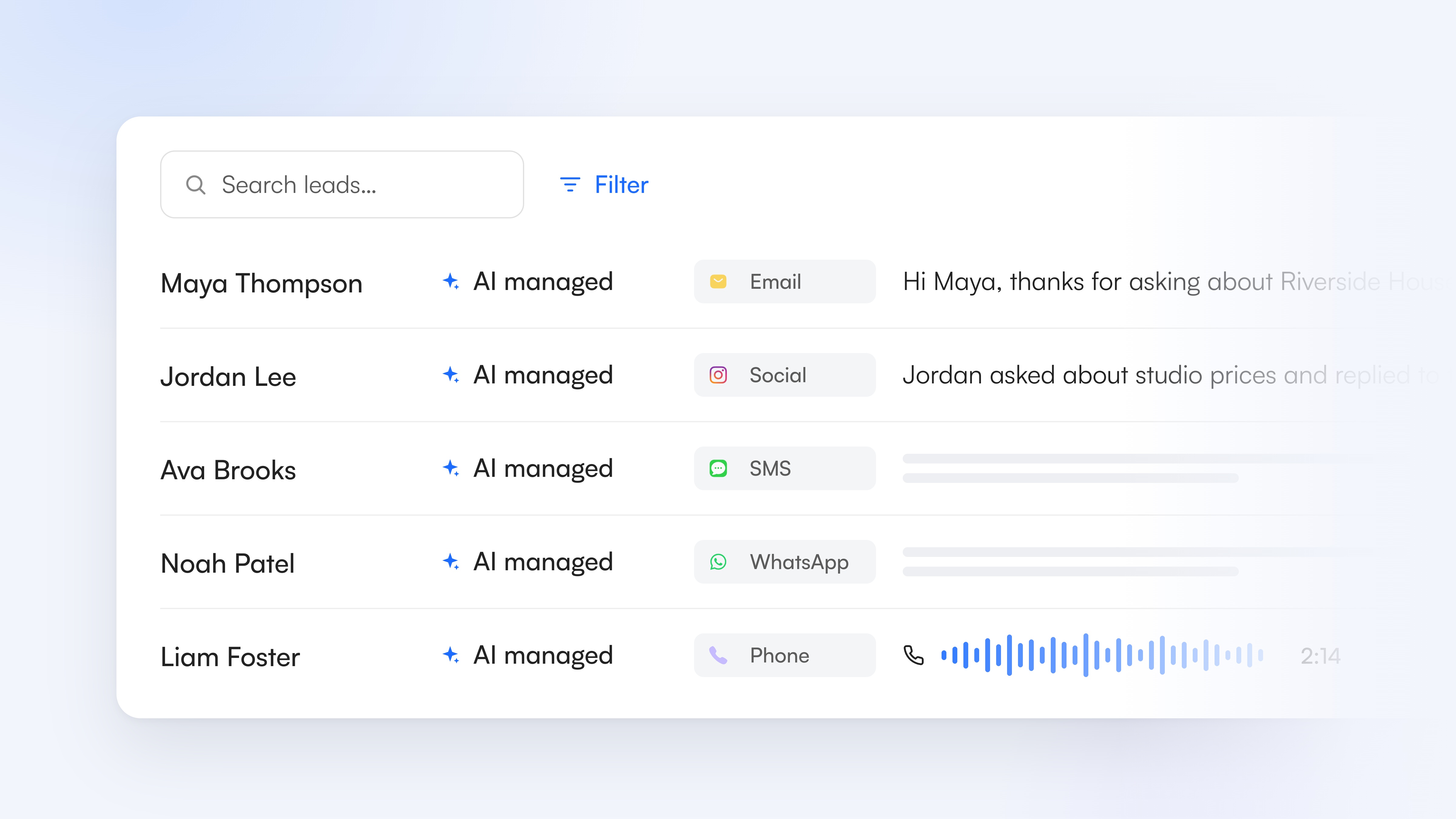
- Consistent across channels: it runs the same disclosed, handover-ready experience across webchat, WhatsApp, email and voice, so the standard holds wherever the prospect reaches out.
That combination is what the survey data and the law both point towards. It is automation that is open about being automation, with a real person a sentence away. See how it fits your leasing journey. Book a demo.