Property management plays a central role in the real estate industry, ensuring that residential, commercial, and specialised properties operate smoothly and profitably. Whether you own a single rental unit or manage a large portfolio, understanding property management is essential to protecting your investment and delivering a strong experience for tenants.
This complete guide explains what property management is, what property managers do, the different types of property management, and how technology is reshaping the industry in 2026.
What Is Property Management?
The property management definition refers to the administration, maintenance, operation, and oversight of real estate on behalf of property owners. It covers tenant administration, rent collection, maintenance coordination, budgeting, financial reporting, and making sure that applicable laws and lease agreements are followed.
In simple terms, property management is the day-to-day running of a property so that it stays occupied, well-maintained, compliant, and profitable. Owners rely on property management to protect the value of their asset while removing the operational burden of running it themselves.
What Does a Property Manager Do?
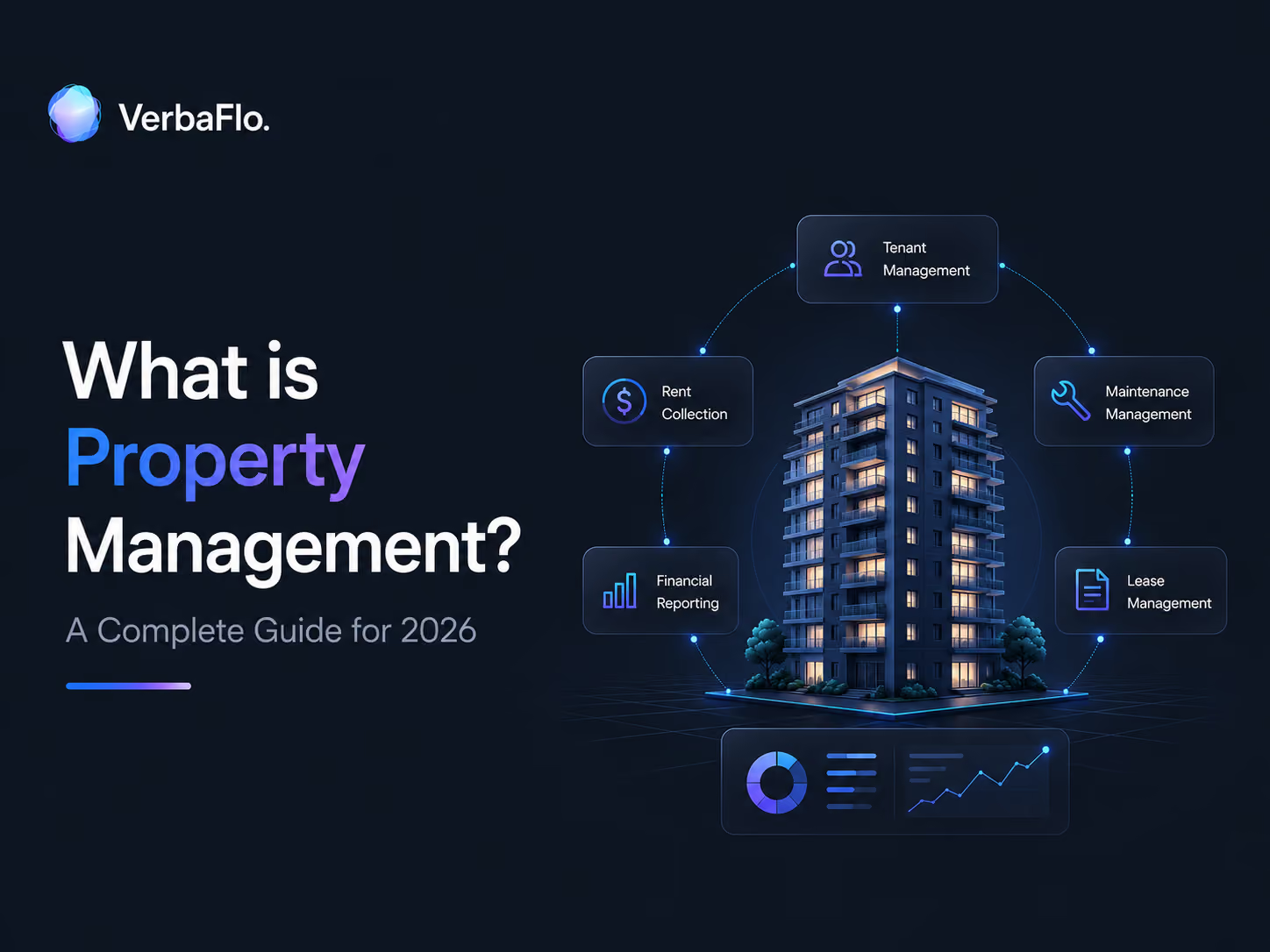
A property manager oversees the daily operations of a rental property. Their responsibilities span leasing, tenant relations, maintenance, finances, and legal compliance.
Core responsibilities include:
- Collecting rent and managing arrears
- Coordinating maintenance and repairs
- Communicating with tenants and handling requests
- Managing leases, renewals, and move-outs
- Conducting inspections
- Preparing financial reports for owners
- Hiring and supervising contractors
- Ensuring compliance with housing laws
Much of this work is communication-heavy and repetitive, which is why technology is increasingly used to support it.
The Main Types of Property Management
Property management is not a single discipline. Different property types demand different skills, systems, and regulatory knowledge.
Residential Property Management
Residential property management covers single-family homes, apartments, and multifamily communities. It focuses on tenant relationships, leasing, and maintenance across large numbers of individual units.
Commercial Property Management
Commercial property management involves offices, retail spaces, and mixed-use developments. Lease structures are typically more complex, and tenant relationships often run over longer terms.
Industrial Property Management
Industrial property management covers warehouses, distribution centres, and manufacturing facilities. It places greater emphasis on infrastructure, safety, and specialised maintenance.
Build-to-Rent and Student Accommodation
Build-to-Rent (BTR) and Purpose-Built Student Accommodation (PBSA) are fast-growing sectors. Both are managed at scale and depend heavily on responsive communication and efficient leasing operations.
Key Responsibilities in Detail
Beyond the headline duties, property management breaks down into several ongoing functions.
Each of these functions is essential, and weakness in any one of them can undermine the performance of the property as a whole.
Is Hiring a Property Management Company Worth It?
Professional property management offers significant advantages for many owners. By reducing administrative duties, improving tenant retention, minimising vacancies, planning maintenance, and helping properties comply with local regulations, a good management company can protect and grow the value of an asset.
Whether it is worth it depends on the owner's circumstances. Key factors include:
- The size of the portfolio
- The time the owner has available
- The complexity of the properties
- The owner's investment goals
- Local regulatory requirements
For owners with growing portfolios or limited time, professional management often pays for itself through better occupancy and fewer costly mistakes.
How Technology Is Changing Property Management in 2026
Technology is transforming property management, turning what was once a paperwork-heavy discipline into a data-driven one. The main shifts include:
- Cloud-based software: Centralising leasing, accounting, and maintenance in one place.
- AI-powered automation: Handling enquiries, follow-ups, and routine communication at scale.
- Online payments: Making rent collection faster and more reliable.
- Digital inspections: Replacing paper checklists with documented, timestamped records.
- Predictive maintenance: Using data to fix problems before they escalate.
- Smart building integration: Connecting access, energy, and monitoring systems.
Among these, conversational AI is having the most immediate impact on day-to-day operations, because so much of property management is communication.
How VerbaFlo Supports Modern Property Management
VerbaFlo is a conversational AI platform built for real estate operators, designed to carry the communication load that runs through every function above.
It handles prospect and resident conversations across web chat, WhatsApp, email, and voice, and connects into the CRM and property management systems operators already use. In practice, it:
- Answers and books instantly: responding to leasing enquiries at any hour and scheduling tours.
- Supports residents: resolving routine questions and logging maintenance requests.
- Automates follow-up: through its WorkFlo layer, so renewals and quiet leads are not forgotten.
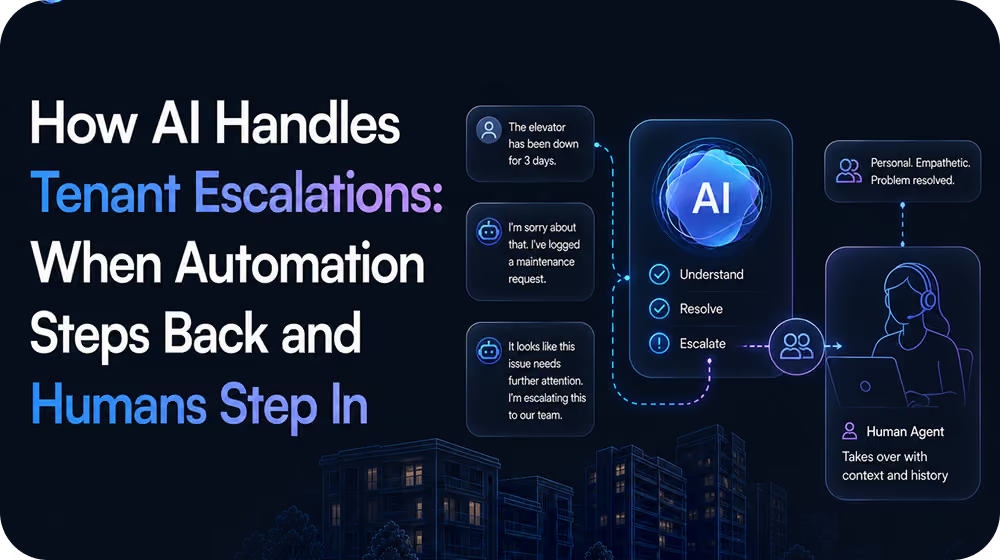
- Escalates cleanly: passing anything that needs judgement to your team with full context.
It serves residential operators alongside Build-to-Rent and student accommodation teams, helping them operate more efficiently at scale.
Discover how VerbaFlo helps property management teams automate communication and deliver better experiences across the entire resident lifecycle.