What Is a Real Estate CRM? A Complete Guide
In real estate, relationships drive results. Whether you're an agent managing buyers and sellers or a property operator handling prospects and residents, staying organised and responsive is essential. This is where a real estate CRM becomes invaluable.
A CRM helps real estate professionals manage contacts, track interactions, automate follow-ups, and close more deals. But real estate has specific needs that generic CRMs often fail to address.
This guide explains what a real estate CRM is, how it differs from a general CRM, and how to choose the right one for your business.
What Is a Real Estate CRM?
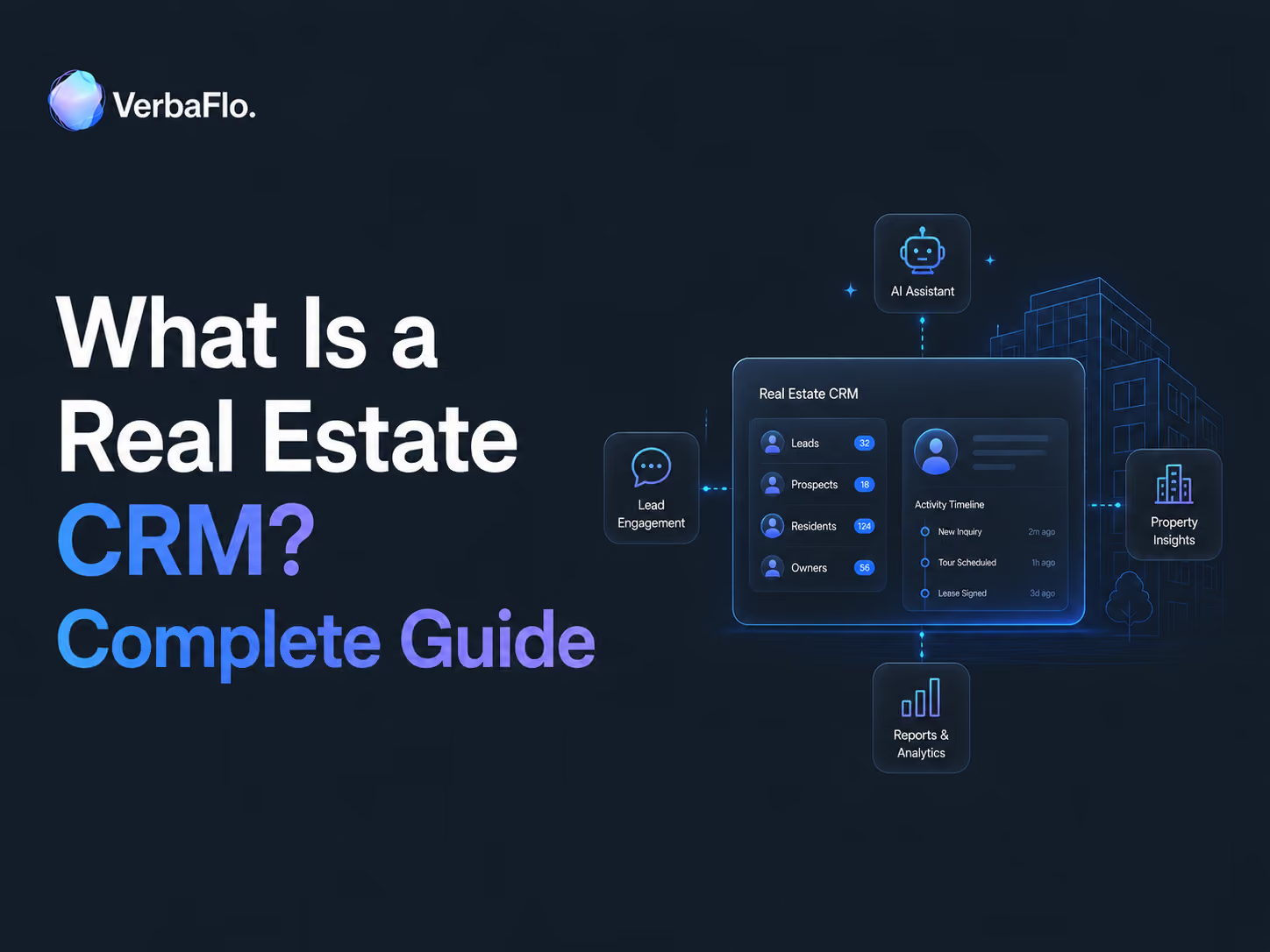
A real estate CRM (customer relationship management) is software that helps agents, brokers, and property managers manage relationships, communications, and workflows in one centralised system. It acts as a single source of truth for every contact and interaction.
A real estate CRM typically helps users:
- Store and organise contact information
- Track leads and deals through a pipeline
- Manage communication across channels
- Automate follow-ups and reminders
- Schedule tours and appointments
- Report on performance
By centralising this information, a CRM ensures that no lead is forgotten and every relationship is managed consistently.
How a Real Estate CRM Differs from a Generic CRM
While all CRMs manage contacts and communication, real estate CRMs include industry-specific features that generic tools lack.
Real estate CRMs typically add:
- Lease and property tracking: Linking contacts to specific units and leases.
- Tour scheduling: Built-in booking for viewings and appointments.
- MLS integration: Connecting to listing data where relevant.
- Resident communication: Managing the full lifecycle beyond the initial sale.
A generic CRM can store contacts, but it rarely understands the specific workflows of leasing, property management, and resident relationships. That gap is why industry-specific tools exist.
Key Features to Look For in a Real Estate CRM
Choosing the right CRM means focusing on the features that support how your business actually works.
- Lead management: Capturing, organising, and prioritising leads from every source.
- Pipeline tracking: Visualising where each deal or prospect sits in the journey.
- Communication tools: Managing email, SMS, and messaging in one place.
- Automation: Automating follow-ups, reminders, and routine tasks.
- Integrations: Connecting with property management systems and communication channels.
- Reporting and analytics: Measuring performance and conversion.
- Mobile access: Managing relationships on the move.
The best CRM is the one that fits your workflow and integrates with the tools you already use, rather than the one with the longest feature list.
How Real Estate Professionals Use CRMs
Different roles use CRMs in different ways, but the goal is always the same: stronger relationships and more conversions.
Agents and brokers use CRMs to:
- Manage buyer and seller leads
- Schedule showings and follow-ups
- Track deals through to close
- Maintain long-term client relationships
Property managers and operators use CRMs to:
- Manage prospect and resident communication
- Track leasing activity
- Automate renewals and follow-ups
- Improve resident retention
In both cases, the CRM provides structure and consistency that manual methods cannot match.
The Role of AI in Modern Real Estate CRMs
AI is increasingly built into real estate CRMs, adding intelligence on top of organisation. Useful AI features include:
- Automated follow-ups: Reaching out to leads at the right time without manual effort.
- Conversation summaries: Capturing the key points of interactions automatically.
- Lead scoring: Prioritising the prospects most likely to convert.
- Sentiment analysis: Understanding how contacts feel about their experience.
- Response automation: Answering routine enquiries instantly.
These capabilities help teams respond faster and focus their attention where it matters most.
How VerbaFlo Complements Your CRM
A CRM organises your relationships, but it does not, on its own, hold the conversations. VerbaFlo is a conversational AI platform built for real estate operators that complements a CRM by automating communication across every channel.
Rather than replacing your CRM, VerbaFlo works alongside it. In practice, it:
- Handles conversations: engaging prospects and residents across web chat, WhatsApp, email, and voice.
- Feeds the CRM: capturing enquiries, qualification data, and bookings so records stay current.
- Improves responsiveness: answering instantly at any hour, so no lead waits.
- Automates follow-up: keeping leads and renewals warm without manual chasing.
By pairing a CRM's organisation with VerbaFlo's conversation handling, operators get both structure and speed across the resident lifecycle.
Discover how VerbaFlo complements your CRM by automating conversations and improving responsiveness across every channel.