What Is Lead Reactivation? (And Why It Is Underused)
Every real estate agent and property team has a version of the same problem: a CRM full of leads that went quiet. Some enquired months ago and never responded after the first follow-up. Others toured a property, asked questions, and then disappeared. The pipeline looks full, but most of it is cold.
Lead reactivation is the process of systematically re-engaging dormant contacts to identify which ones are now ready to act. It is one of the highest-ROI activities available to real estate teams, and one of the most consistently underused. Doing it manually is time-consuming, response rates on cold outreach are low, and agents with active pipelines naturally prioritise warm leads. The result is a growing database of contacts that represent real pipeline value but receive no attention.
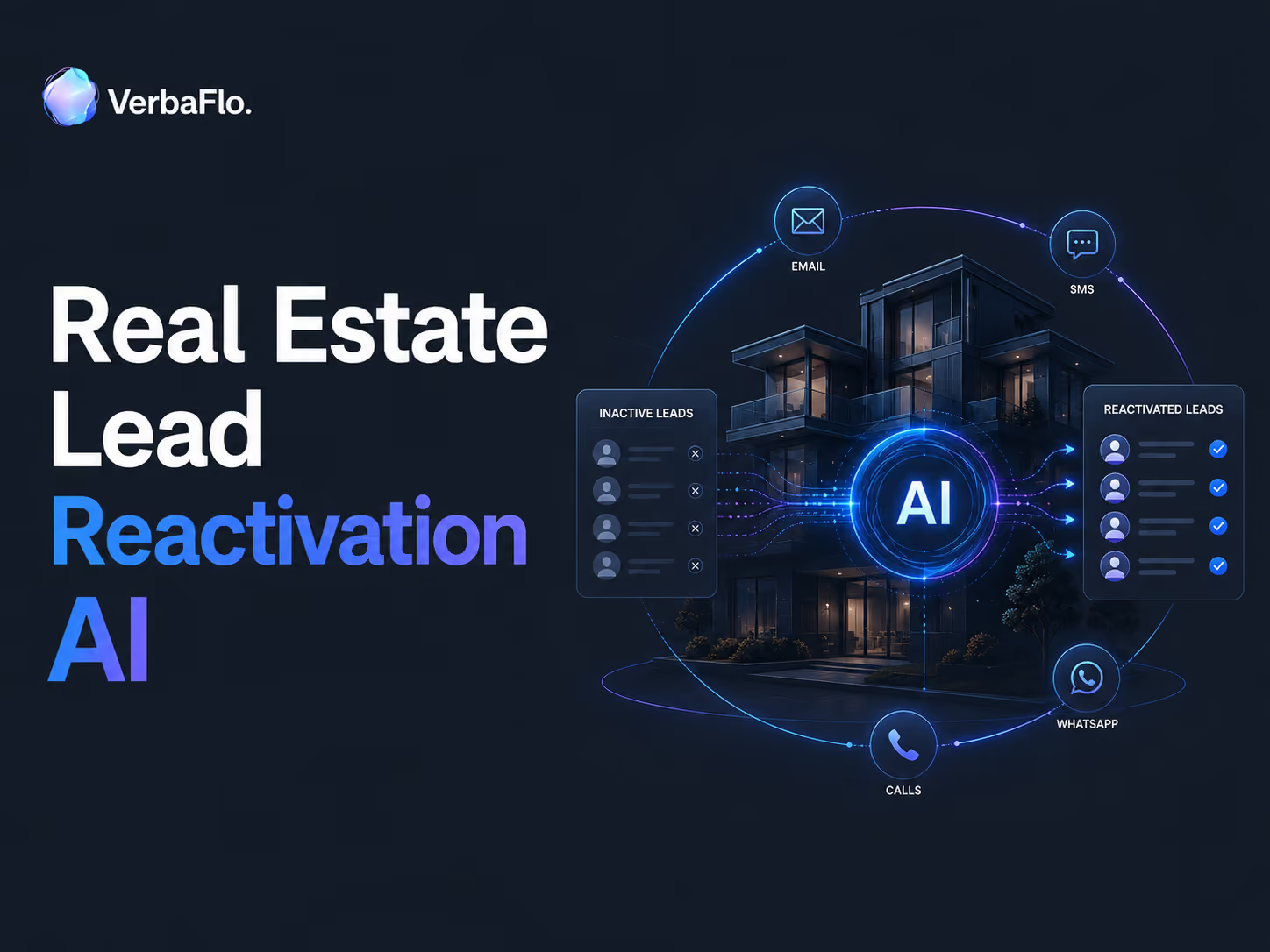
AI changes this entirely. AI lead nurturing for stale pipelines automates the reactivation process by identifying which leads to target, crafting personalised outreach, executing multi-channel sequences, and routing responses to a human agent the moment a cold lead re-engages. The agent stops chasing and starts closing.
Why Real Estate Leads Go Cold (The Real Reasons)
The most common assumption is that a cold lead is a lost lead, someone who bought elsewhere or simply changed their mind. In reality, the picture is more varied.
Timing is the most underappreciated factor. A significant proportion of cold leads did not go elsewhere; they simply were not ready at the time of initial contact. Job situations change, lease renewals extend timelines, or family decisions get delayed. The lead that went quiet four months ago may be actively searching again today, and without a reactivation system, there is no mechanism to surface that.
Response lag is another major contributor. Leads that received a slow first response convert at dramatically lower rates, and many go cold before a meaningful conversation begins. These leads are lost because the window of engagement closed before it was opened properly.
Channel mismatch also plays a role. A prospect who primarily uses WhatsApp but received only email follow-ups may never have seen the outreach. Reactivating on their preferred channel, rather than repeating the approach that failed initially, produces materially better results.
How AI Identifies Leads Worth Reactivating
AI re-engagement tools score dormant contacts based on historical behaviour and profile data, then prioritise outreach to segments most likely to convert.
The signals include time since last engagement, nature of the original enquiry, how far along the prospect was before going quiet, stated budget and timeline, and behavioural data from website visits or email opens. A lead who toured and asked about move-in dates is a very different reactivation candidate than one who submitted a general enquiry and never responded.
Different reactivation strategies apply to different segments: recent cold leads in the one-to-three-month window, older dormant leads in the six-to-twelve-month range, and long-dormant contacts each require different message framing, timing, and channel selection. AI handles this segmentation automatically, without requiring agents to manually categorise their database.
The Reactivation Sequence: Timing, Channel, and Message
A well-structured reactivation sequence follows a defined pattern that balances persistence with respect for the prospect's timeline.
The first touchpoint goes out within the first week, referencing the original enquiry specifically. The second follows five to seven days later on a different channel, providing new value: a market update, a recently listed property matching their criteria, or relevant content. The third touchpoint, sent roughly two weeks after the first, is a simple, low-pressure message asking whether their search is still active.
After three unanswered touchpoints, the cadence shifts to monthly or quarterly touches that maintain visibility without over-communicating. The goal is to remain present so that when the lead's timing shifts, the agent is the first contact they think of.
SMS, WhatsApp, Voice, and Email: Which Channel Works Best?
Multi-channel reactivation consistently outperforms single-channel outreach. The question is not which channel to use, but which to lead with and how to sequence the others.
- SMS offers a direct communication channel for reconnecting with dormant leads. Personalising messages with details from a prospect's original enquiry, such as the property type or previous interaction, helps make follow-up communication more relevant and consistent. It is often used alongside email, voice, and messaging apps as part of a broader lead reactivation strategy.
- WhatsApp is increasingly important, particularly for leads who originally engaged via WhatsApp or in markets where it is a primary communication channel. Response rates are significantly higher than email in these segments.
- Voice performs best for leads who were furthest along before going cold. A prospect who toured and asked questions is more likely to re-engage on a call than via text. AI voice platforms deliver this at scale, routing only re-engaged contacts to a human agent.
- Email performs best for detailed content. It can involve a curated property list, market report, or renewal offer where the prospect needs something to review rather than a prompt to respond immediately.
Message Templates That Re-Engage Cold Leads
The most common mistake is generic outreach that ignores the prior relationship. A message that reads like a mass broadcast will not get a response. One that references the original enquiry, acknowledges the time that has passed, and leads with value consistently outperforms.
A strong first reactivation message: "Hi [Name], you enquired about [property type] in [area] a few months back. The market has shifted, and there are a few new options worth a look. Still searching, or has your timing changed?" Short, specific, low-pressure, and easy to respond to.
For automated voice reactivation, the script follows the same logic: acknowledge the prior contact, reference the original criteria, offer something new, and make it easy to re-engage or step away. AI voice platforms deliver this at scale, routing only re-engaged contacts to a human agent.
How to Measure Reactivation Performance
Reactivation campaigns require their own metrics, separate from new lead conversion tracking. The key indicators are re-engagement rate, qualified re-engagement rate, time to re-engagement, and reactivation-to-close rate.
Re-engagement rate measures the percentage of dormant contacts that respond to a reactivation campaign. It is one of the primary indicators of campaign performance because it shows how effectively outreach reconnects with inactive leads. Monitoring this metric over time can help identify trends and evaluate whether adjustments to messaging, timing, or channel are improving engagement.
Qualified re-engagement rate filters to responses where the prospect confirmed they are still actively searching. This most directly predicts revenue impact from the campaign.
Time to re-engagement tracks how quickly most re-engagements occur, which is useful for identifying which touchpoint and channel is doing the most work.
How VerbaFlo Handles Real Estate Lead Reactivation
VerbaFlo is built for the high-volume, multi-channel lead reactivation that real estate teams cannot sustain manually. Its AI operates across voice, WhatsApp, SMS, chat, and email simultaneously, executing sequences automatically and routing re-engaged leads to human agents in real time with full conversation context attached.
VerbaFlo manages the full conversation, responds to replies, handles objections, and qualifies leads before a human team member steps in. This means dormant contacts can be reactivated at scale without losing the personal context needed to convert them. For operators with large dormant databases, VerbaFlo turns a static CRM asset into an active pipeline source. Leads dormant for months are systematically worked, and those that re-engage are routed immediately to the team member best positioned to close them.