Property Management Automation: What It Is and How to Implement It
Property management is becoming more complex. Rising tenant expectations, growing portfolios, and increasing operational demands are putting pressure on property teams to do more with less. Automation has emerged as one of the most effective ways to meet these challenges.
By automating repetitive tasks and streamlining workflows, property management companies can improve efficiency, reduce costs, and deliver better experiences for tenants and owners alike.
This guide explains what property management automation is, where it delivers the most value, and how to implement it successfully.
What Is Property Management Automation?
Property management automation is the use of software and technology to handle repetitive operational tasks with minimal manual effort. Instead of relying on staff to perform every routine action, automation uses rules, workflows, and AI to complete work automatically.
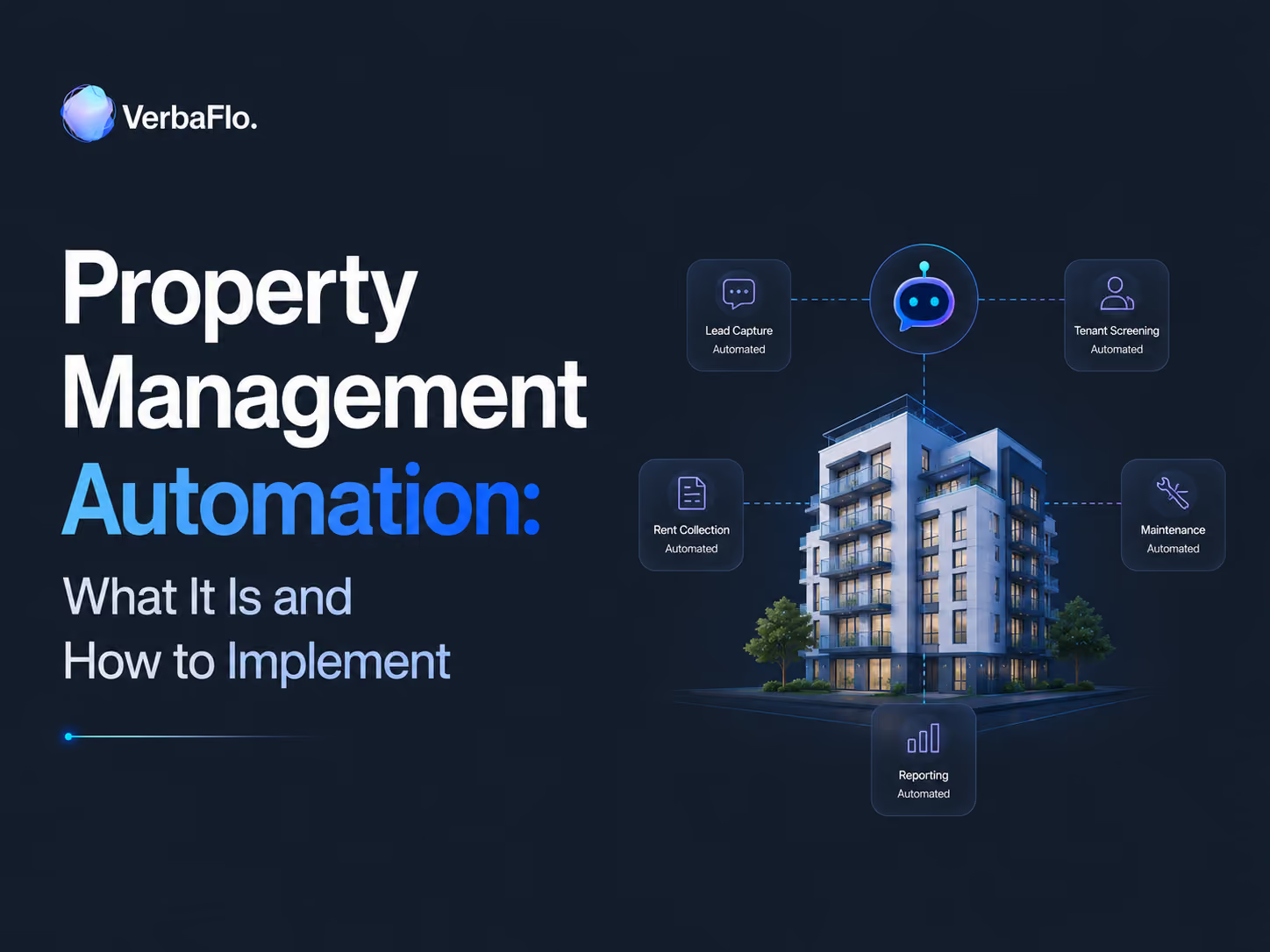
Automation can support a wide range of functions, including:
- Tenant communication and enquiries
- Rent collection and reminders
- Maintenance request handling
- Lease renewals
- Reporting and data entry
The goal is not to remove people from property management, but to free them from repetitive work so they can focus on higher-value activities.
Automation vs Artificial Intelligence: What's the Difference?
Automation and AI are often mentioned together, but they are not the same thing.
Automation follows predefined rules. It performs a set action when a specific condition is met, such as sending a rent reminder on a certain date. It is predictable and reliable for repetitive, rules-based tasks.
Artificial intelligence goes further. It analyses data, recognises patterns, and can generate responses or recommendations. AI can understand a tenant's question and reply naturally, rather than simply following a fixed script.
The most powerful property management systems combine both: automation to handle routine actions, and AI to manage more complex, conversational tasks.
Where Automation Delivers the Most Value
Automation is most effective where tasks are repetitive, high in volume, and rules-based. In property management, several areas stand out.
- Tenant communication: Answering common enquiries and sending updates automatically.
- Rent collection: Taking payments and issuing reminders and late notices on schedule.
- Maintenance workflows: Logging, categorising, and routing requests without manual sorting.
- Lease renewals: Triggering renewal conversations and reminders ahead of expiry.
- Reporting: Generating owner statements and performance reports automatically.
Starting with these high-impact areas delivers quick wins and builds momentum for broader automation.
How to Implement Property Management Automation
Successful automation is a phased process, not a single switch. A structured approach reduces risk and improves adoption.
Step 1: Identify Repetitive Tasks
Start by mapping the tasks that consume the most staff time and follow predictable patterns. These are the strongest candidates for automation.
Step 2: Prioritise High-Impact Areas
Focus first on areas such as rent collection, tenant communication, and maintenance workflows, where automation delivers immediate, measurable benefits.
Step 3: Choose the Right Tools
Select platforms that integrate with your existing property management system rather than forcing a full replacement. Integration depth is critical to success.
Step 4: Integrate, Don't Replace
Many operators worry that automation means overhauling their entire technology stack. In most cases, modern solutions integrate with existing systems, adding capability without disruption.
Step 5: Monitor and Optimise
Track performance after implementation, gather feedback, and refine workflows. Automation should be treated as an evolving system that improves over time.
Common Risks and How to Avoid Them
Automation delivers strong returns, but poorly planned projects can fail. The most common risks include:
- Poor data quality: Automation built on inaccurate data produces poor results, so clean data first.
- Inadequate oversight: Automated systems still need monitoring and clear escalation paths.
- Weak change management: Staff need training and buy-in for automation to succeed.
- Over-automation: Automating tasks that need human judgement can damage the tenant experience.
Avoiding these pitfalls comes down to starting small, maintaining oversight, and keeping people involved where judgement matters.
Measuring the ROI of Automation
To justify investment, it's important to measure the impact of automation. Many operators begin seeing time savings within the first month, with broader operational benefits emerging within three to six months.
Key metrics to track include:
- Time saved on repetitive tasks
- Response times to enquiries
- Rent collection rates
- Maintenance resolution times
- Tenant satisfaction and retention
- Cost per unit managed
Tracking these metrics against a baseline shows the real return and highlights where further automation can add value.
How VerbaFlo Supports Property Management Automation
Communication is one of the most time-consuming and repetitive parts of property management, which makes it a natural starting point for automation. VerbaFlo is a conversational AI platform built for real estate operators that automates this layer.
It handles prospect and resident conversations across web chat, WhatsApp, email, and voice, and connects into the property management systems operators already use. In practice, it:
- Automates communication: answering enquiries and resident questions around the clock.
- Streamlines workflows: logging maintenance requests and booking tours automatically.
- Runs follow-up: through its WorkFlo layer, so renewals and leads are never dropped.
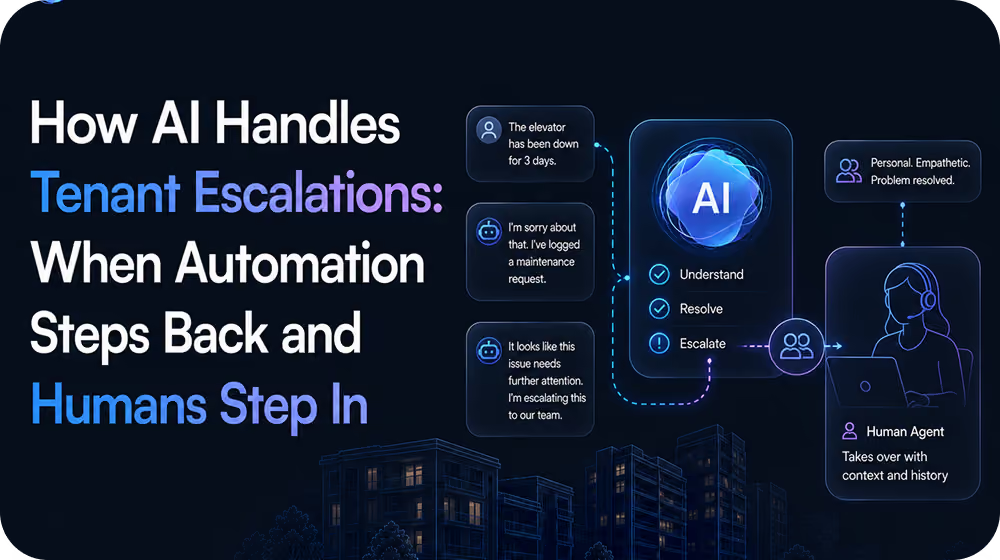
- Keeps humans in control: escalating complex conversations with full context.
By combining automation and AI, VerbaFlo helps property teams reduce workload and improve responsiveness across leasing, tenant communication, and maintenance operations.
Discover how VerbaFlo helps property management teams automate conversations and operate more efficiently at scale.