
A student submits an enquiry about a room. They are interested, actively comparing accommodation, and may be ready to book. But the response does not arrive until hours later. By then, they may have contacted another property, booked a viewing elsewhere or simply moved on to the next option.
For PBSA operators, lead follow-up is particularly challenging because student demand is highly seasonal and enquiry volumes can rise sharply around key points in the academic cycle. A process that works when teams have manageable enquiry volumes can quickly break down when hundreds of prospective residents need attention at once.
The issue is not always a lack of leads. It is what happens after the enquiry arrives. This is where a structured PBSA lead follow-up strategy, supported by AI, can help operators keep prospective residents engaged from first enquiry through to booking.
Why Student Housing Leads Go Cold
A student enquiry rarely arrives in isolation. Prospective residents may be comparing several accommodation providers simultaneously, checking room types, reviewing prices, speaking with parents and friends, and trying to decide within a limited timeframe.
That creates a very different follow-up environment from many other forms of residential property.
Common reasons PBSA leads go cold include:
- Slow responses to initial enquiries
- Follow-ups that are inconsistent or forgotten
- Generic messages that do not address the student's questions
- No response outside normal working hours
- Students receiving different information from different team members
- Prospects being contacted too frequently or at the wrong stage
- No clear next step after the initial conversation
As a result, a lead can remain technically active in a CRM while becoming practically disengaged.
Speed to Lead Matters, But Context Matters Too
Response speed is one of the clearest factors in lead follow-up. Older lead-response research from InsideSales.com and Dr James Oldroyd, originally conducted in 2007 and subsequently reported in later InsideSales studies, found that the odds of contacting a lead were 100 times higher when the first call was made within five minutes rather than 30 minutes. The research also found that the odds of qualifying a lead were 21 times higher within the five-minute window.
This research predates the current PBSA market and should therefore be treated as general lead-response evidence, not a student housing benchmark.
For PBSA operators, however, speed alone is not enough. A fast response that simply acknowledges the enquiry and promises to be in touch does little to move the student forward. The better approach is to combine speed with useful information and a clear next step.
The Student Accommodation Follow-Up Journey
A strong follow-up process should reflect where the student is in their decision-making journey. Consider a prospective resident who asks about an ensuite room for the next academic year. The first response could answer the availability question and provide relevant information about the room. The next interaction might address pricing, what is included, location or facilities.
Once the student shows stronger intent, the conversation can move towards a viewing, application, or booking.
This creates a progression that runs from enquiry to qualification, then information, engagement, viewing, application and booking.
The mistake is treating every stage as though it requires the same message. A student who has just discovered a property needs information. A student who has already viewed the property needs reassurance and a reason to take the next step. A student who has started an application may need practical support rather than another promotional message.
How AI Can Improve PBSA Lead Follow-Up
AI can help operators maintain this continuity without requiring leasing teams to manually monitor every conversation.
At the enquiry stage, AI can respond to common questions about:
- Room types
- Availability
- Pricing
- Facilities
- Location
- Contract terms
- Booking processes
- Viewing arrangements
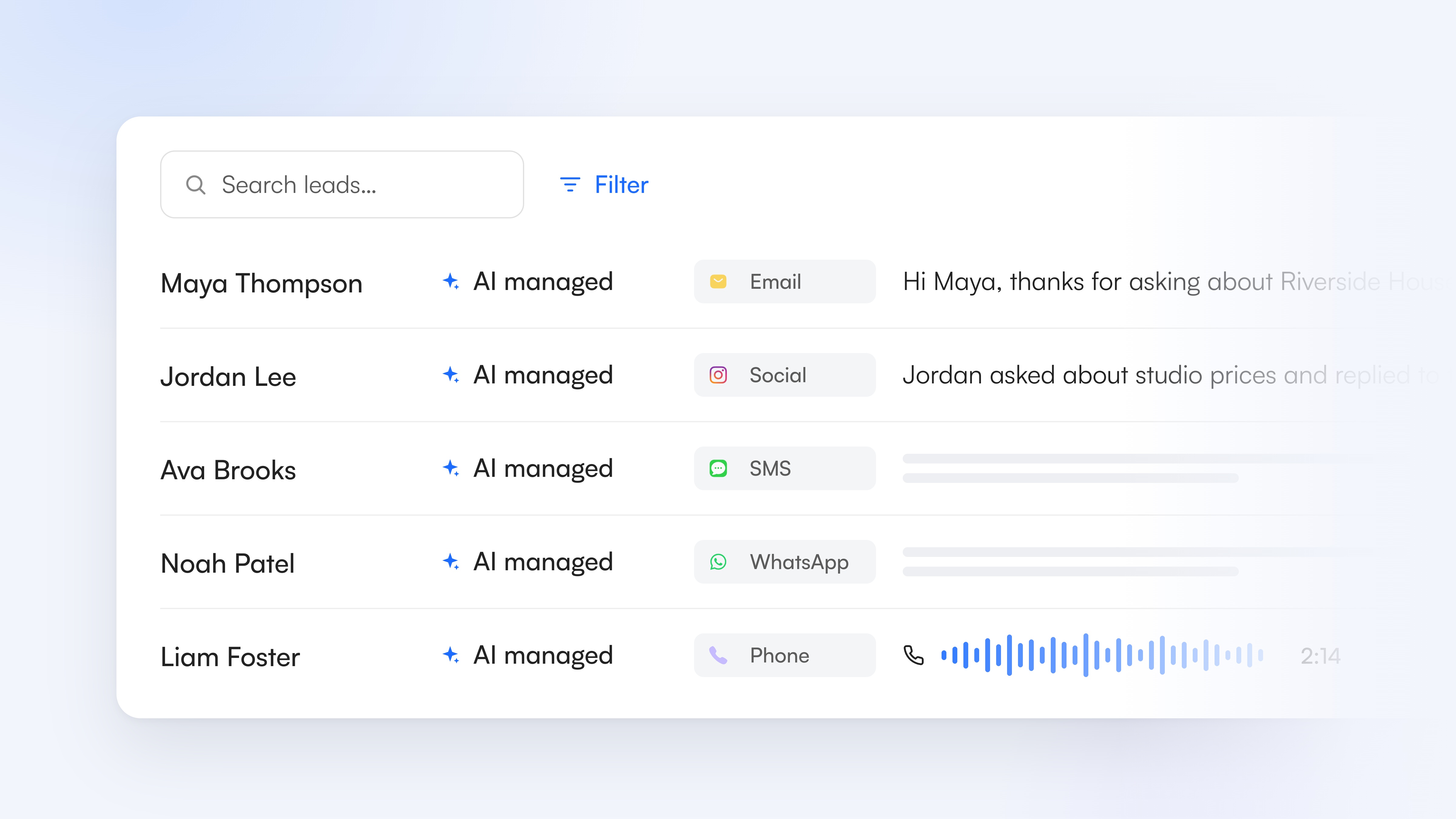
It can then capture information that helps determine the prospect's requirements, such as preferred room type, intended move-in period and other relevant preferences. This means the first interaction can do more than acknowledge the enquiry. It can begin the qualification process. For operators handling large enquiry volumes, this can significantly reduce the repetitive work accommodation teams handle manually.
Following Up When Students Are Actually Ready to Engage
Not every lead needs an immediate series of messages. A student who has asked one general question may not be ready to book. Another prospect may have returned several times, asked detailed questions and shown interest in a particular room type.
AI can use these interactions as signals to determine when additional engagement may be useful.
Potential signals include:
- Repeated conversations
- Questions about specific rooms
- Enquiries about availability
- Viewing requests
- Responses to previous messages
- Application activity
- Requests for booking information
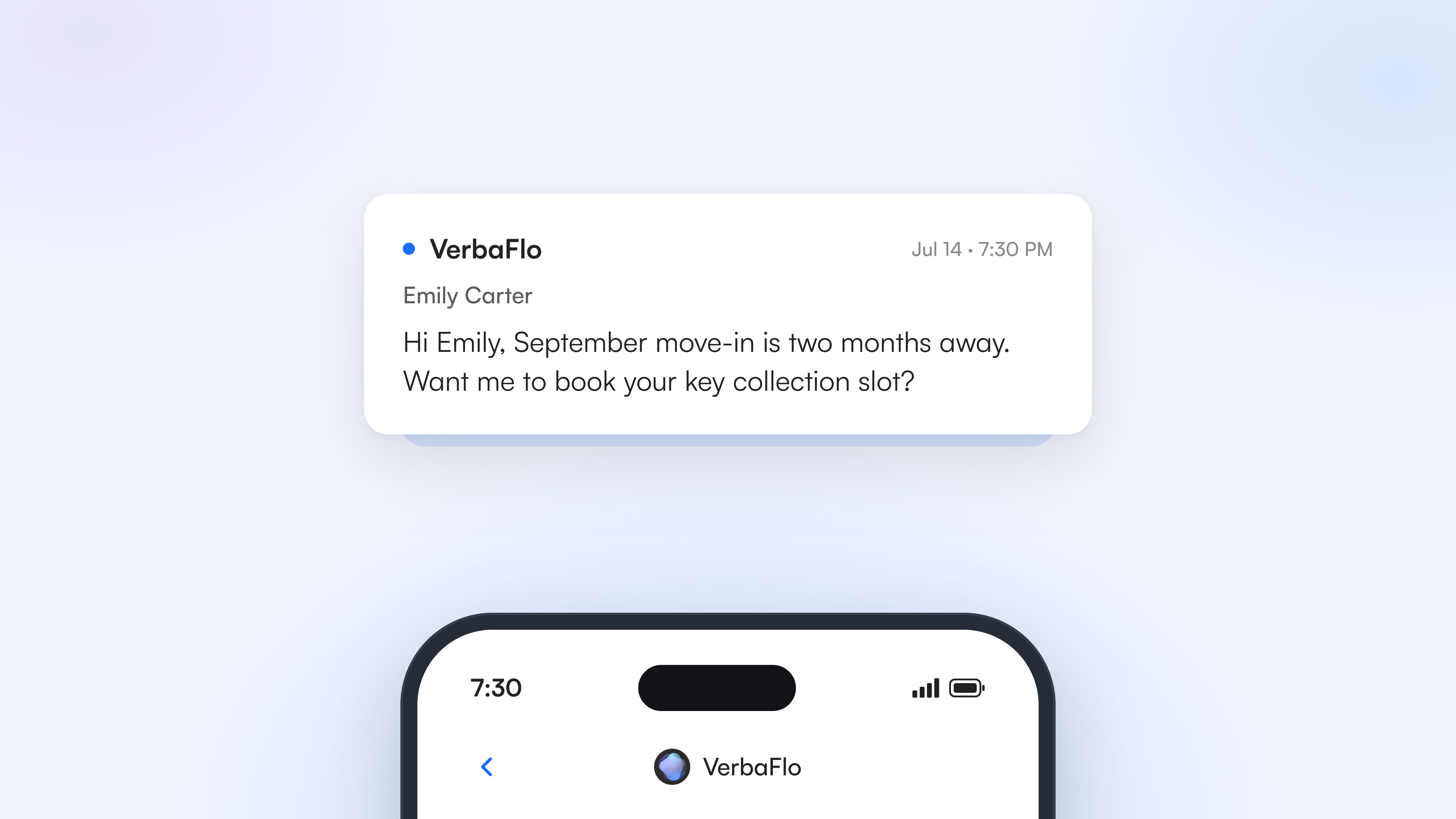
This makes follow-up more contextual rather than simply time-based. Instead of sending every student the same three-message sequence, the system can respond to what the student actually does.
Out-of-Hours Enquiries Are Still Active Leads
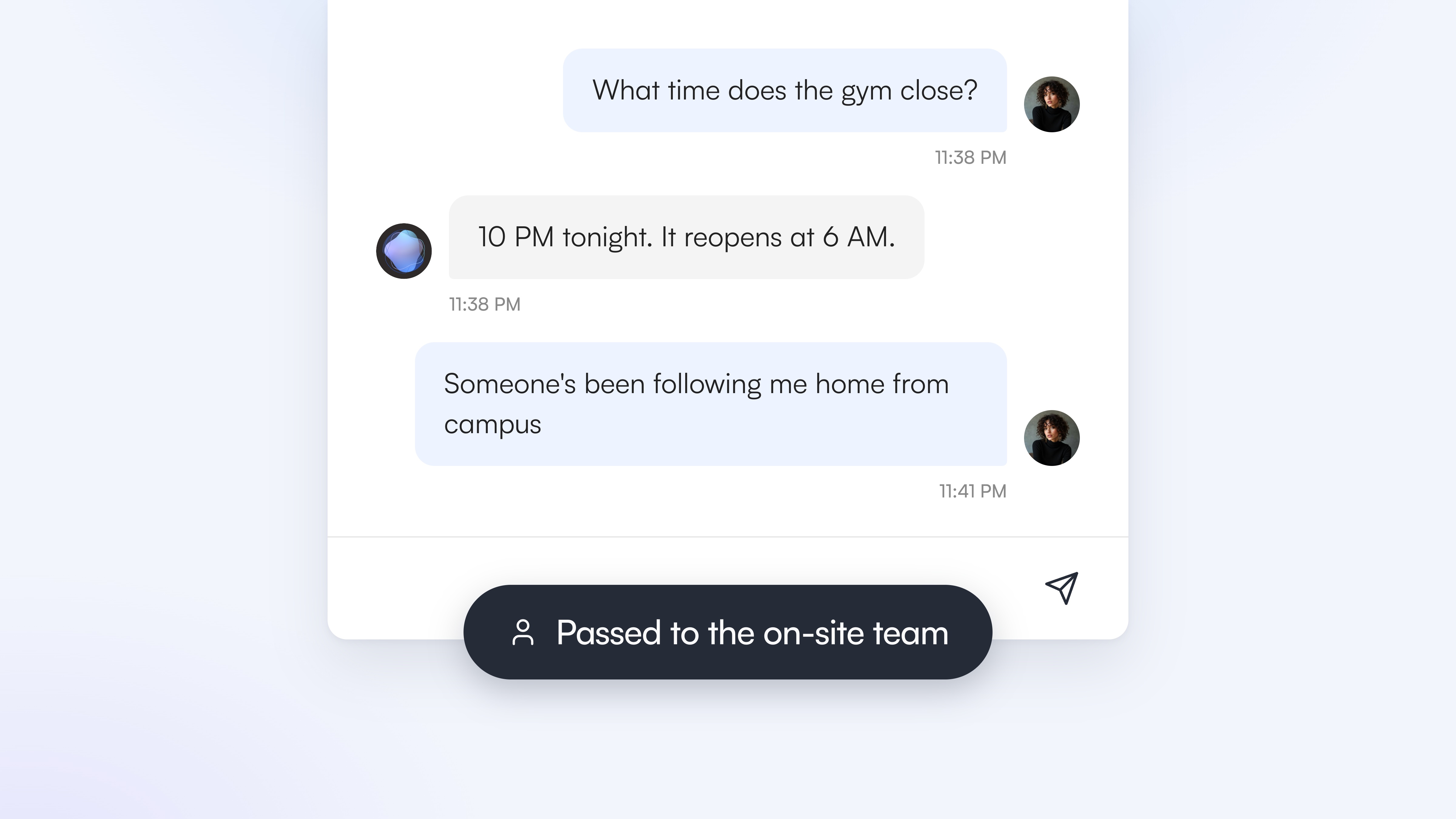
Student accommodation searches do not necessarily happen during standard office hours. Students may be researching accommodation after lectures, in the evening, during weekends or while travelling between home and university. If an enquiry arrives when the accommodation team is unavailable, the conversation does not necessarily stop. The student can continue comparing options.
An AI-powered student housing lead workflow can respond immediately, answer approved questions and capture the information needed for follow-up. This does not mean AI should make every decision independently.
If a student raises a complex contractual question, complaint, safeguarding concern or another matter requiring human judgement, the conversation should be escalated to the appropriate member of staff.
Turning Follow-Up Into a Two-Way Conversation
Traditional lead nurturing often relies on scheduled emails. For PBSA, conversational follow-up can be more useful because students frequently have specific questions before they are ready to book.
Imagine a student asks whether any studios are available for September. A useful response could answer the availability question, then ask whether they would like information about pricing, facilities, or viewing options. If the student asks what is included in the rent, the conversation can move naturally in that direction. This creates a two-way interaction rather than forcing the student through a predetermined marketing sequence.
What Should Be Escalated to a Human?
The strongest AI lead follow-up strategy needs clear boundaries. AI is well suited to routine, repeatable interactions. Human staff should remain involved when the conversation requires judgement, discretion or specialist knowledge.
Examples may include:
- Complex contract questions
- Complaints
- Requests for exceptions
- Financial or contractual disputes
- Safeguarding concerns
- Accessibility requirements
- Situations involving vulnerability
- Questions outside approved property information
AI can capture the conversation and provide relevant context to the team member taking over. This means staff do not necessarily need to restart the conversation from the beginning.
Measuring PBSA Lead Conversion
Follow-up should ultimately be measured by what happens to the lead, not simply by the number of messages sent.
Useful metrics include:
- Initial response time
- Enquiry-to-conversation rate
- Enquiry-to-viewing rate
- Viewing-to-application rate
- Application-to-booking rate
- Lead-to-booking conversion
- Percentage of enquiries receiving follow-up
- Out-of-hours enquiries converted
- Time from initial enquiry to booking
Operators can also compare these metrics across different periods of the student recruitment cycle. This is particularly useful for identifying where prospects are being lost.
For example, a strong enquiry-to-viewing rate but weak viewing-to-application performance suggests a different problem from a portfolio where many enquiries never receive a meaningful response.
Building a PBSA Lead Follow-Up Workflow
The technology should support the process rather than define it. A practical workflow can start with five steps:
1. Respond immediately
Acknowledge the enquiry and provide useful information rather than simply confirming receipt.
2. Understand the requirement
Capture relevant information such as room preference, timing and booking intent.
3. Continue the conversation
Answer follow-up questions and provide information based on the student's interests.
4. Identify the next action
Move the student towards a viewing, application or booking when they demonstrate the appropriate level of intent.
5. Escalate when required
Transfer conversations that require human judgement to the appropriate team member, with the conversation history attached.
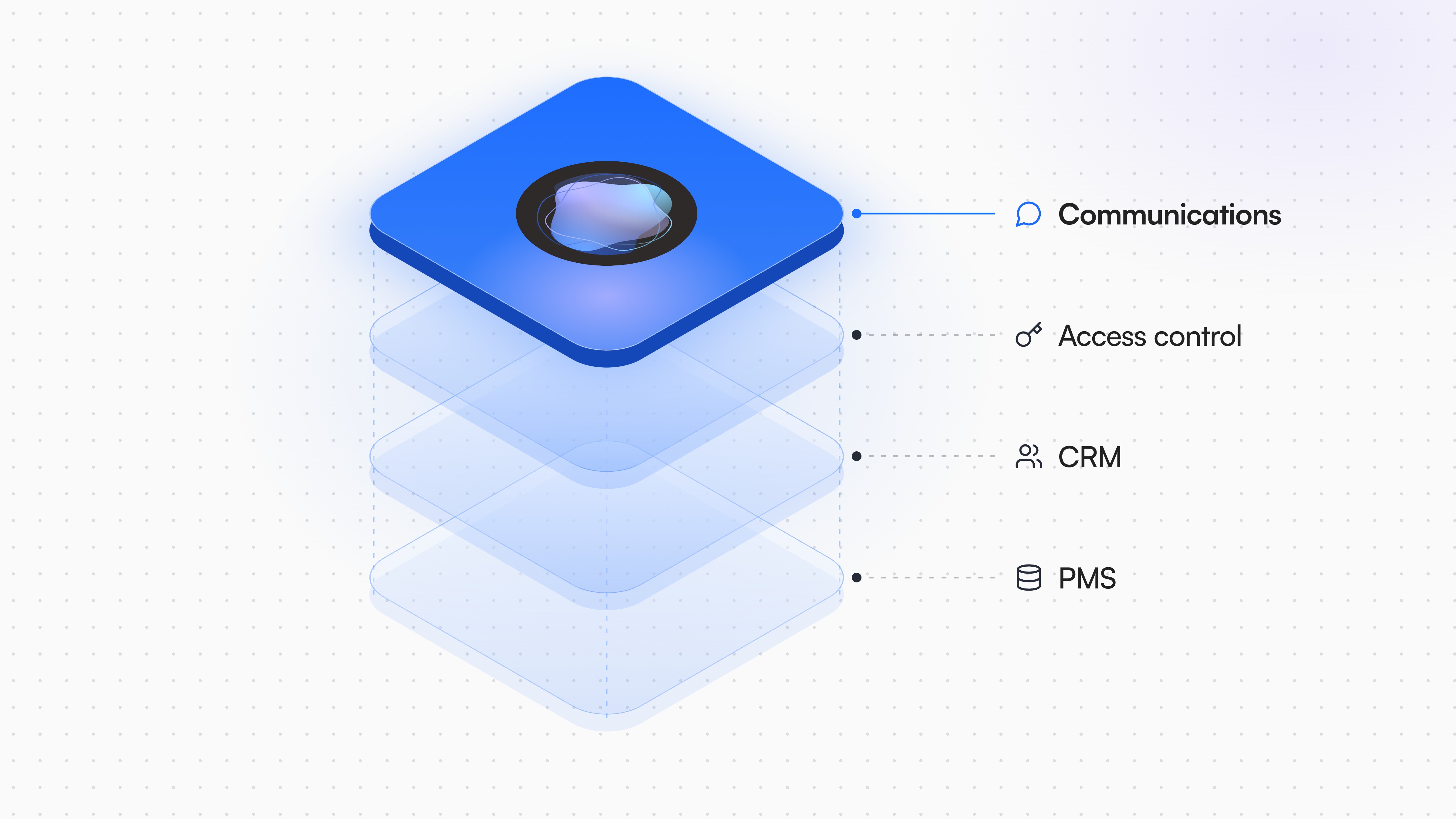
Platforms such as VerbaFlo can support this approach by keeping prospect conversations connected and helping PBSA teams automate routine engagement while maintaining human escalation.
The Goal Is Not More Follow-Ups. It Is Fewer Lost Leads.
PBSA operators do not necessarily need to send more messages. They need to make sure the right conversations continue. A student who receives a useful response quickly is more likely to remain engaged than one who has to wait for a team member to become available. A student who receives relevant follow-up is more likely to progress than one placed into a generic sequence. And a student with a complex question is better served by a clear handover to a member of staff than an automated response that cannot address their situation.
For PBSA, the real value of AI for student housing leads is not simply automating follow-up. It is ensuring a promising enquiry does not become a missed opportunity because nobody was available to continue the conversation. Book a demo to see how it works.