
Why are rent payments still getting missed? Rent collection has become a communication problem these days. Across the US multifamily portfolios, missed or delayed payments are not the result of tenants being unable to pay the rent. It is mostly because of inconsistent follow-up, no updates, single-channel outreach. Delinquency happens because of the gap between a due date and a reminder that never arrived.
Nowadays, there are multiple ways to do that. AI-driven communication workflows are designed to close the communication gaps. For property managers, looking after large portfolios, they offer a structured, and scalable alternative to manual processes
AI-driven communication workflows are designed to close that gap. For property managers with large portfolios, this is a simpler, more scalable way to replace manual processes that are tough to keep consistent.
The Delinquency Problem in US Multifamily
The problem of rent payments is a big deal. A report from the Consumer Financial Protection Bureau in January 2025 says that 14% of renters in the US had to pay a late fee in the year up to November 2024. This number was as high as 23% in 2023 but has come down some. However, renters are still feeling a lot of pressure.
For people who manage a lot of units this percentage means that a lot of renters are late with their payments every month. When these people have to be contacted it costs money and time. The teams have to spend a lot of time calling and emailing renters. They have to decide when to take further action. This can be a problem because it depends on who's available and who is not.
Where Manual Processes Break Down
Most teams that manage properties use email, phone calls and sometimes text messages to get in touch with renters who are late with their payments. These methods do not work together. The main problems are:
- Sending messages through one channel, which renters might ignore or miss
- Not having a plan for what to do next so problems get worse before anyone does anything
- Deciding when to send reminders based on who is available not on when it would be most effective
- Not being able to see what is going on with all the units, which makes it hard to figure out which renters need help right away
All these things together mean that teams are just reacting to problems instead of preventing them with a good plan. The Delinquency Problem in US Multifamily is still an issue because teams are not communicating with renters in a structured way. Whereas, this needs to be addressed with a system.
What AI Changes About Rent Collection
The value of Artificial Intelligence in managing delinquency is not about replacing the judgement of a being when it comes to complex cases. It is about removing the need for a human being to get involved in follow-ups, which is what most of the workload is made up of.
- Structured Reminder Sequences
Artificial Intelligence driven platforms make it possible for property managers to set up sequences of payment reminders that send out based on the rent cycle. These reminders are sent out on days before and after the due date at the right time and through the right channel all without a team member having to start each one.
The sequence can be adjusted to fit the way tenants pay their rent. For example a resident who always pays their rent on the third or fourth of the month will get a set of reminders than someone who has missed payments before.
Tenants who are at a higher risk of missing payments get reminders earlier and more often. This way we do not bother residents who pay their rent reliably. We can focus our efforts on the people who need it. Artificial Intelligence, in delinquency management helps to make this process smoother.
- Multi-Channel Delivery
Tenant engagement differs a lot depending on the channel used. A McKinsey & Company study on personalisation found that companies that send triggered messages across channels see a 5 to 15% increase in revenue and a 10 to 30 percent improvement in marketing efficiency. This idea works well for rent reminders too. For example a message that gets ignored in an email inbox might get a response if sent via SMS or WhatsApp.
Effective multi-channel delivery in a delinquency workflow means using channels for different purposes:
- SMS is good for urgent reminders close to or after the due date.
- Email works well for messages like payment instructions or support options.
- WhatsApp is useful for reaching tenants who mainly use their phones.
Each channel is used carefully in a sequence not to send out messages but as part of a planned communication flow, with specific timing and logic.
- Automated Escalation
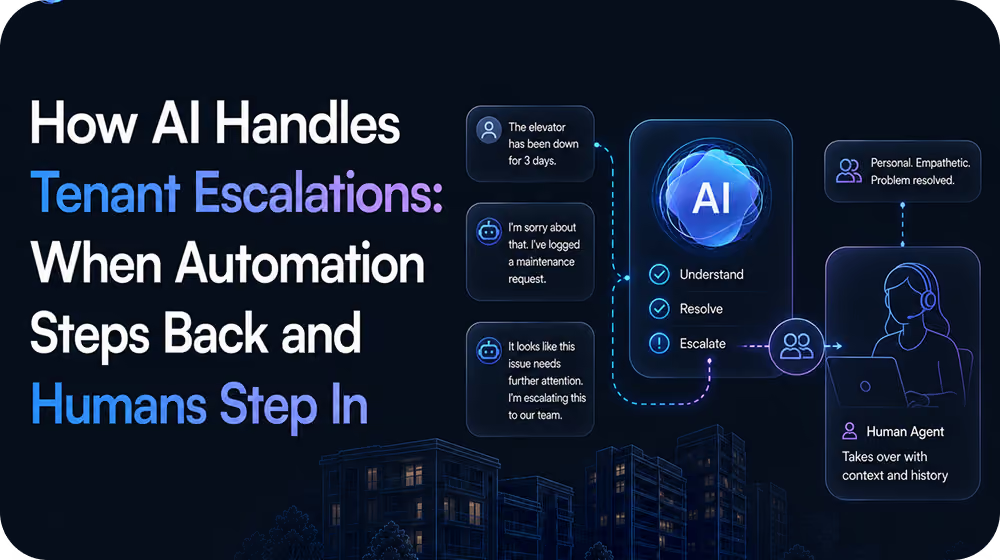
Manual escalation is a problem in delinquency management. Teams often put off moving a case to an urgent level. This happens because of a workload, uncertainty or because it means having a tough conversation. As a result it takes longer to recover.
Automated escalation changes this. It takes the decision out of the team's hands. We set up workflows to increase how often we reach out or make the outreach more urgent after a number of days, past due. If earlier messages didn't get a response we switch to a communication channel.
Once payment is confirmed all communication stops right away. This process follows -defined rules and doesn't need a team member to intervene at each step.
How VerbaFlo Structures Delinquency Workflows
VerbaFlo is an AI platform for people who run real estate properties, like student housing and rental homes and are now into the US market for apartments.
- WorkFlo: Centralised Workflow Management
VerbaFlo has a tool that helps property managers make a plan for talking to people who're late with payments. They can make a reminder schedule. Decide how to talk to people without having to check on each person individually. Everything is set up in one place. It all happens automatically.
This is important because it means that when things get busy the system keeps working. If a property does not have staff or if the leasing team is really busy the payment reminders still go out as planned. The system is set up to be consistent so it does not depend on people to remember to do things.
- Behaviour Based Personalisation
VerbaFlo also looks at how each tenant pays their rent and uses that information to decide how to communicate with them. If someone always pays their rent on time they get a reminder. If someone is always late they get a reminder earlier and more often based on their payment history.
This way of doing things makes sure that the reminders are relevant to each person and do not annoy them with messages that are not personalised. It also means that the property managers can focus on the people who really need help rather than spending time on everyone equally.
Moreover, it is easy to integrate in your systems, also enhances the customer experience, and streamline sales and operations with our AI-powered communication system. It helps in managing multiple calls in a span of a few minutes.
Operational Impact for Property Managers
When property managers use a system to handle delinquency management they can see the difference it makes in their daily work. Here are a few ways this system helps:
- Property managers and their teams do not have to spend much time making phone calls to remind people to pay their rent. This means they have time to do more important things.
- The system helps property managers follow up with people who have not paid their rent faster and in a consistent way. This reduces the time it takes to resolve the issue.
- Property managers can see what is going on with all of their properties at the time. They do not have to keep track of each property
- The system helps property managers communicate with their tenants in a professional way. This helps to keep the tenants happy.
The shift is structural. Instead of managing individual follow-ups, teams manage a system that handles follow-up on their behalf. The operational model moves from reactive to proactive, and the outcomes reflect that change.
Book a Demo to See It in Action!
For teams managing large multifamily portfolios in the US, communication makes a real difference. It cuts down manual work, speeds up collections, and creates a more consistent experience for residents.
To see how VerbaFlos WorkFlo can help make rent reminders and delinquency management across all the housing units you manage you can book a demo here.