
Why Lease Renewal Outreach Is Broken (And Costly)
For most multifamily and Build-to-Rent (BTR) operators, lease renewal outreach is still handled the same way it was a decade ago. The leasing agent checks a spreadsheet, identifies expiring leases, sends a templated email, and hopes for a response. When no response comes, they follow up manually. When that follow-up gets missed during a busy touring period, the resident quietly moves out, and the unit sits vacant.
The process is broken because it was never built to scale, not because teams are careless. A property manager handling a 300-unit building has dozens of renewals in motion at any given time, across different expiry dates, unit types, and resident circumstances. Tracking all of that manually, while managing everything else, is a system failure waiting to happen.
The cost of getting it wrong is significant. According to Zego's 2025 Resident Experience Management Report, cited by the National Apartment Association, the cost of a single unit turn now stands at $4,000, covering lost rent, concessions, and maintenance. It is a figure that compounds quickly across a portfolio. Multiply that across a handful of preventable move-outs per quarter, and the financial impact becomes hard to ignore. Automated lease renewal reminders powered by conversational AI exist precisely to close this gap.
How Conversational AI Automates the Entire Renewal Journey
Conversational AI transforms lease renewal outreach from a manual, reactive process into an automated, proactive one. Instead of waiting for a leasing agent to check a report, outreach triggers automatically based on lease expiry data pulled from the property management system.
The moment a resident enters the renewal window, typically 90 days out, the AI initiates contact, addressing them by name, referencing their unit, and delivering a message that feels personal rather than automated. It manages the entire conversation: answering questions, collecting intent signals, escalating to a human agent when hesitation surfaces, and logging every interaction back into the CRM.
What makes this powerful is continuity. The AI does not forget to follow up, go on holiday, or get pulled into a busy touring period. It works the renewal sequence from the first touchpoint to a signed agreement, or to a clear decision point, without gaps.
Building Your Renewal Sequence: Timing, Channels, and Message Cadence
The structure of the renewal sequence matters as much as the content of the messages. Getting the timing and cadence right significantly affects response rates and ultimately renewal outcomes.
A proven structure looks like this: first contact at 90 days via email, introducing the renewal and inviting the resident to confirm intentions. A follow-up via SMS at 75 days if no response has been received. Voice outreach at 60 days for residents who have not engaged through written channels. A final push at 45 days across all channels, with escalation to a human agent for any resident still unresponsive or expressing hesitation.
Within each touchpoint, the message should acknowledge where the resident is in their decision process. Early messages are informational and low-pressure. The 60-day window introduces urgency without being aggressive. Final-stage messages make the process as frictionless as possible, with direct links to sign, clear answers to common questions, and a warm handover to a team member if needed.
SMS vs Email vs Voice: Which Channel Converts Best for Renewals?
No single channel dominates across all resident profiles, which is why an omnichannel approach is essential for AI lease renewal in property management.
- SMS drives the fastest response times. Open rates sit well above those of email, and responses typically come within minutes. For time-sensitive follow-ups in the 45-to-60-day window, SMS is the highest-performing channel for initial engagement.
- Email performs best for detailed communication. When residents need to review renewal terms or receive a formal offer, email gives them space to do so at their own pace and creates a paper trail both parties can reference.
- Voice stands apart for complex conversations. A resident on the fence about renewing is unlikely to decide via text. An AI-led voice call that acknowledges hesitation and offers a connection to a team member converts at a significantly higher rate than a follow-up email for this segment.
The most effective sequences use all three in combination, letting resident behaviour guide which channel gets prioritised at each stage.
Personalising Renewal Outreach at Scale
Personalisation does not mean writing individual messages for every resident. It means using existing data to make automated messages feel relevant and specific, rather than generic.
At a minimum, every renewal message should reference the resident's name, unit number, and lease expiry date. AI can also draw on tenure data, since a three-year resident warrants a different tone and potentially a different offer than someone completing their first lease, along with payment history and maintenance frequency to shape both message and timing.
At scale, platforms built for BTR lease renewal automation classify residents automatically based on behavioural data, delivering the right message through the right channel at the right moment without manual intervention.
How to Handle Tenant Objections Automatically
Tenant objections during the renewal process fall into predictable categories: the rent increase feels too high, maintenance has not been addressed, or the resident wants more time. Conversational AI can be trained to handle each in a way that feels human and keeps the conversation moving forward.
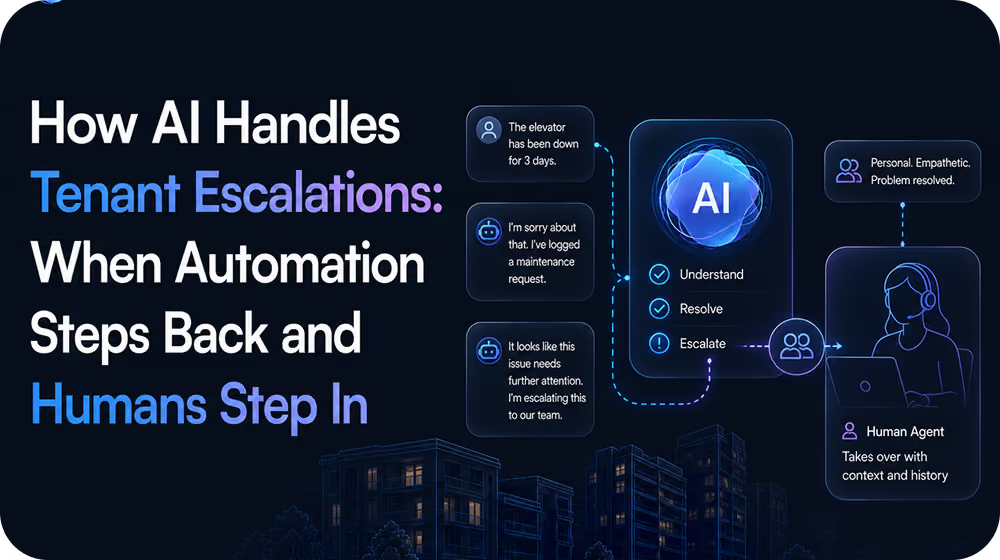
For rent-related objections, the AI acknowledges the concern, provides market context, and flags the conversation for a leasing agent to follow up with a retention offer if warranted. For maintenance concerns, it logs the issue, confirms escalation, and reassures the resident by addressing the hesitation without requiring immediate human intervention.
The key is knowing when to escalate. A resident who is frustrated, in financial difficulty, or considering leaving for serious reasons needs a human conversation. The AI handles the routine, surfaces escalation signals, and passes the conversation forward with full context intact.
Key Metrics to Track: Response Rate, Renewal Rate, NPS Impact
Measuring the effectiveness of AI-powered renewal outreach requires tracking metrics at each stage of the sequence, not just the outcome. Response rate to first outreach tells you whether your message and channel selection are working. A low rate at 90 days signals that something needs adjustment before it becomes a late-stage problem.
Renewal rate by segment, classified by tenure, unit type, and channel of first response, reveals which profiles are most and least likely to renew, and where human intervention adds the most value.
NPS impact is an often-overlooked metric. Residents who experience a smooth renewal process, with timely communication, quick answers, and minimal friction, are more likely to renew again and more likely to refer others. Tracking NPS before and after implementation reveals whether outreach is strengthening or straining the resident relationship.
Getting Live in Under a Week
Implementation timelines for modern conversational AI platforms have shortened considerably. Operators no longer need months of IT integration before running their first automated renewal sequence. Platforms like VerbaFlo connect directly to existing property management and CRM systems, pulling lease expiry data and resident contact details automatically. Renewal sequences, including message content, channel logic, timing rules, and escalation triggers, can be configured and tested within days, with most operators running live within a week of onboarding.
For teams managing large portfolios across multiple sites, every week without an automated renewal system is a week where leases expire with only manual follow-up in place.