Managing leads for a single apartment community is relatively straightforward. Managing them across ten, twenty or even fifty communities is a different challenge altogether.
In multi-site portfolios, prospective residents often enquire about properties that are fully leased, outside their budget or unavailable within their preferred move-in window. Without a connected lead distribution strategy, these enquiries frequently remain tied to the original property, even when another community within the same portfolio is a better fit. The result is missed leasing opportunities, inconsistent prospect experiences and unnecessary pressure on onsite teams.
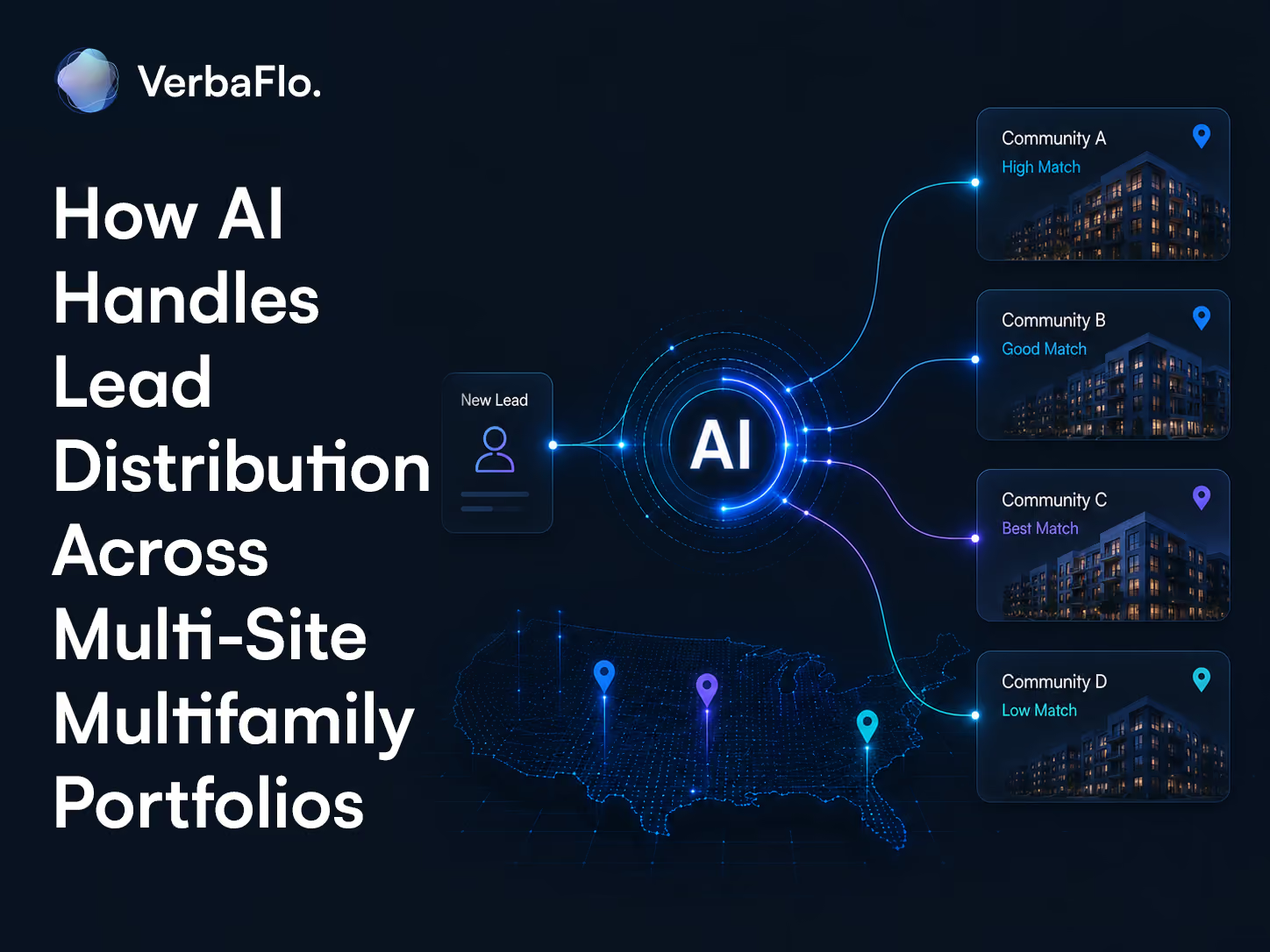
Artificial intelligence is helping multifamily operators rethink lead distribution by treating every enquiry as a portfolio opportunity rather than a property-specific transaction. Instead of manually transferring prospects between communities, AI evaluates availability, pricing, location preferences and prospect intent to match renters with the most suitable property across the portfolio.
Why Lead Management Becomes More Complex Across Multi-Site Portfolios
As portfolios grow, so does the complexity of managing prospective residents. Each community has its own inventory, pricing, leasing teams, availability and market dynamics. While many operators centralise enquiries through a single CRM, leads often remain associated with the first property they contacted, even if another nearby community offers a better match.
This creates several operational challenges:
- Lost prospects: enquiries end when preferred floor plans are unavailable.
- Manual transfers: leasing teams move enquiries between properties by hand.
- Inconsistent qualification: different communities follow different processes.
- Variable response times: speed depends on each site's workload.
- Limited visibility: little portfolio-wide insight into lead performance.
For operators managing dozens of communities, these inefficiencies compound quickly. A qualified prospect lost at one property is often a lost opportunity for the entire portfolio.
This growing complexity reflects a broader trend across commercial real estate. Deloitte Insights' 2026 Commercial Real Estate Outlook notes that real estate organisations are increasingly moving from isolated AI pilots towards targeted operational deployments that improve leasing, portfolio management and workforce productivity. For multifamily operators, intelligent lead distribution is one of the clearest examples of how AI can deliver measurable operational value across multiple communities rather than a single property.
Matching Prospects to the Right Community, Not Just the First One They Contact
Prospects rarely begin their apartment search with complete information. Someone may enquire about one community because it appears first in search results, only to discover later that another nearby property within the same portfolio offers a more suitable floor plan, price point or move-in date.
Without AI, identifying these opportunities often depends on the knowledge and availability of individual leasing consultants.
AI expands this process by evaluating multiple factors simultaneously, including preferred move-in date, budget range, unit type, community amenities, geographic preferences, current availability and previous interactions across the portfolio.
Instead of treating every enquiry as belonging to a single property, AI evaluates where the prospect is most likely to find a successful leasing outcome.
Smarter Lead Distribution Across a Multifamily Portfolio
The objective is not simply to distribute leads faster. It is to ensure that every qualified prospect has the greatest possible opportunity to find a suitable home within the operator's portfolio.
Keeping Prospects Within Your Portfolio Through Intelligent Recommendations
One of the biggest causes of lead leakage occurs when a prospect cannot find what they need at their first-choice community. Perhaps the desired unit type is unavailable. Perhaps the rent exceeds their budget. Or perhaps the preferred move-in date cannot be accommodated.
Traditionally, these prospects often exit the leasing journey altogether, continuing their search with competing operators. AI changes this by automatically identifying alternative communities that align more closely with the prospect's requirements.
Rather than presenting a dead end, operators can continue the conversation by recommending sister properties based on comparable floor plans, similar amenities, budget alignment, distance from the preferred location, upcoming unit availability and lifestyle preferences.
This approach helps retain demand within the portfolio instead of allowing qualified prospects to leave simply because one community could not meet their immediate requirements. According to JLL's Future of Work Survey 2026, organisations are increasingly prioritising connected technology ecosystems that enable faster, more informed operational decisions across distributed assets. Applying this principle to multifamily leasing allows operators to manage demand at the portfolio level rather than treating each community as an isolated destination.
Lead Routing Logic: Matching Every Prospect to the Right Opportunity
Effective lead routing goes beyond assigning enquiries to the next available leasing consultant. In a multi-site portfolio, it involves determining which community is best positioned to meet a prospect's needs while maximising the likelihood of conversion.
AI enables this by evaluating multiple variables simultaneously instead of relying on manual judgement or fixed routing rules. These variables can include real-time unit availability, rental budget, preferred floor plan, move-in timeline, geographic preferences, occupancy targets, leasing team availability and previous interactions across the portfolio.
For example, if a prospect enquires about a two-bedroom apartment at a fully occupied community, AI can immediately identify another nearby property with similar availability and pricing, allowing the conversation to continue without interruption. This creates a smoother experience for prospective residents while helping operators retain qualified demand within their own portfolio.
How AI Prevents Leads From Falling Through the Cracks at Scale
As the number of communities and enquiries grows, so does the risk of leads being overlooked. Manual transfers between leasing teams, delayed follow-ups, duplicate enquiries and inconsistent ownership can all contribute to lost opportunities. Even highly qualified prospects may disengage if they do not receive timely communication. AI helps reduce these risks by introducing greater visibility and accountability throughout the lead lifecycle.
Rather than treating every enquiry as a standalone interaction, AI continuously monitors lead activity across the portfolio. It can identify enquiries awaiting follow-up, flag inactive or stalled conversations, prevent duplicate lead records, reassign enquiries when required, notify leasing teams of high-priority opportunities and maintain a complete history of every prospect interaction.
This creates a more resilient leasing process where prospects remain visible regardless of which community they initially contacted. According to Deloitte's 2026 Commercial Real Estate Outlook, organisations are increasingly focusing on AI deployments that improve operational consistency rather than simply automating isolated tasks. Portfolio-wide lead visibility reflects this shift by enabling teams to make faster, more informed decisions while reducing operational friction across distributed communities.
Why Portfolio-Wide Visibility Matters More Than Centralisation Alone
For many years, centralising lead management was considered the primary solution for improving leasing operations. While bringing enquiries into a single CRM provides greater oversight, visibility alone does not improve leasing outcomes if teams still rely on manual decision-making. The real advantage comes from connecting data across every community and using it to support better operational decisions.
Portfolio-wide visibility enables operators to understand which communities receive the highest enquiry volumes, where qualified leads are being lost, which sister properties generate the strongest cross-referrals, how response times vary across communities, and which leasing teams consistently achieve higher conversion rates.
These insights help operators move beyond managing individual properties to optimising leasing performance across the entire portfolio. As AI becomes more deeply integrated into multifamily operations, portfolio intelligence is emerging as an important competitive advantage rather than simply another reporting capability.
Building a Smarter Lead Distribution Strategy Across Your Portfolio
Successfully implementing AI-powered lead distribution begins with establishing consistent operational processes before introducing automation. A practical framework includes:
- Standardise lead capture: ensure enquiries from ILS platforms, property websites, paid advertising, referrals and other channels enter a unified workflow.
- Define routing priorities: establish clear business rules based on availability, pricing, geography, leasing capacity and prospect preferences.
- Connect portfolio data: allow AI to evaluate opportunities across every community rather than limiting decisions to a single property.
- Monitor performance continuously: measure response times, lead transfers, conversion rates and portfolio retention to refine routing logic over time.
- Optimise through operational insights: use portfolio-level reporting to identify recurring patterns, improve staffing decisions and strengthen leasing performance across communities.
As multifamily portfolios become increasingly connected, platforms such as VerbaFlo are helping operators unify prospect conversations, lead distribution and leasing workflows within a single operational ecosystem. Instead of managing enquiries independently across multiple properties, teams gain the visibility needed to deliver a more consistent leasing experience from the first interaction through to move-in.
Looking Ahead: Portfolio Intelligence Will Define the Next Generation of Leasing
Artificial intelligence is making this possible by connecting communities, leasing teams and prospect data into a single decision-making framework. Rather than allowing qualified renters to leave because one property cannot meet their needs, operators can identify better opportunities elsewhere within the portfolio, improving both occupancy and the prospect experience. As portfolios continue to expand, intelligent lead distribution will become less about routing enquiries and more about ensuring every qualified prospect has the best possible opportunity to find the right community. Book a demo to see how it works.