How We Evaluated Each Platform (Our Scoring Criteria)
Choosing the best property management software requires comparing solutions based on functionality, scalability, pricing transparency, AI capabilities, and long-term operational fit rather than relying solely on brand recognition. The right solution depends on portfolio size, operational complexity, business goals, and the workflows property managers need to support each day.
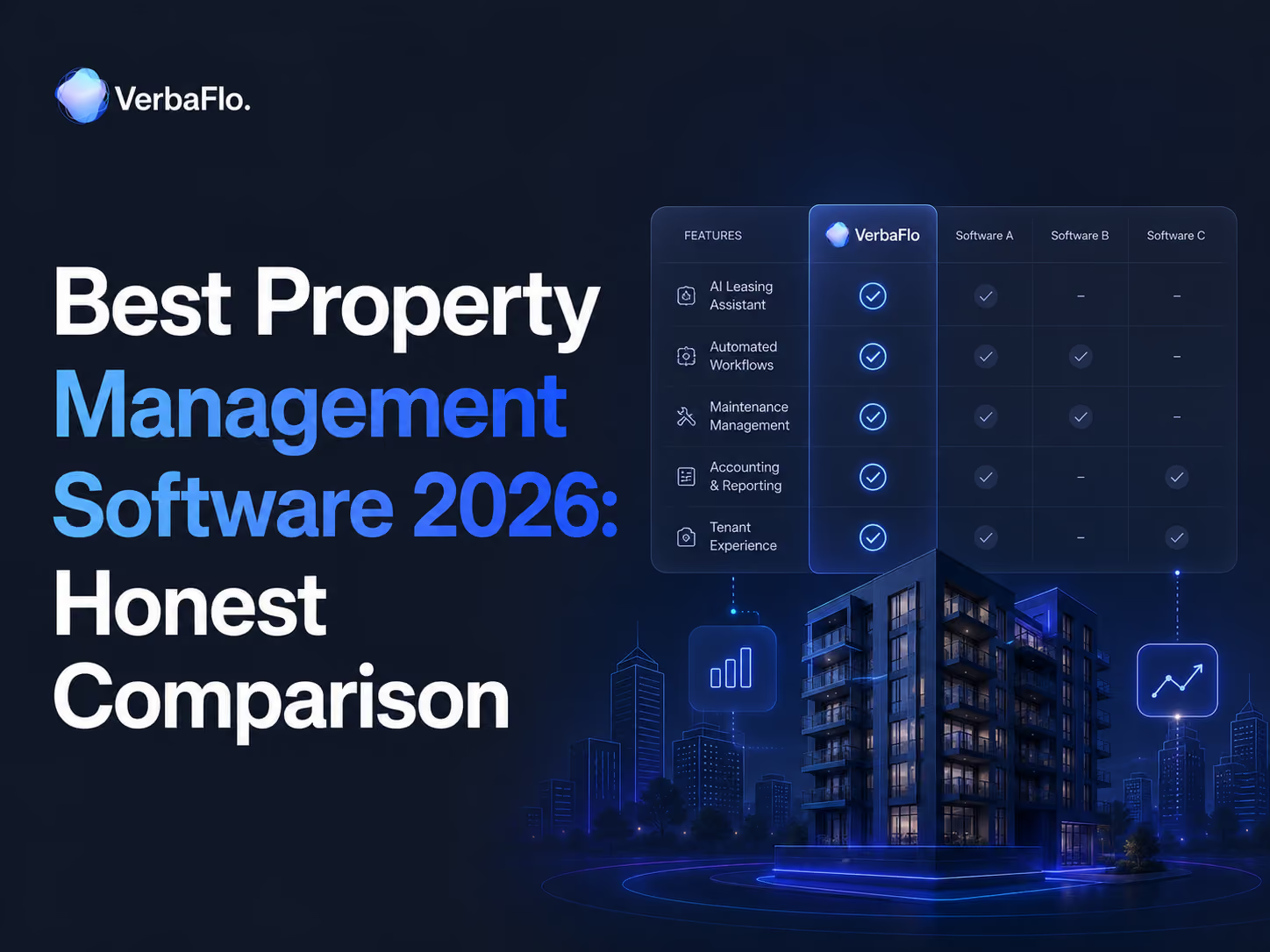
When evaluating software, it is important to consider several key factors. Core functionality should include lease management, rent collection, maintenance coordination, tenant communication, accounting, reporting, and document management. Ease of implementation, scalability, pricing transparency, integration capabilities, customer support, and long-term flexibility are equally important, particularly for growing portfolios.
Artificial intelligence has also become an increasingly important consideration. Rather than focusing on marketing claims, property managers should evaluate whether AI capabilities provide practical value by automating repetitive tasks, improving communication, supporting operational efficiency, and helping teams make better-informed decisions.
Rather than comparing software by brand alone, this guide compares the factors that matter most when evaluating property management solutions, helping organisations identify the option that best fits their operational needs and long-term goals.
Key Features to Prioritise in Property Management Software
Property management software should simplify daily operations rather than introduce unnecessary complexity. While every portfolio has different requirements, several core capabilities consistently provide value across residential and multifamily operations.
Lease management remains one of the most important functions. A centralised system for storing lease documents, tracking renewal dates, managing tenant information, and maintaining accurate records helps reduce administrative effort while improving organisation.
Rent collection is another essential capability. Online payment options, recurring payment scheduling, automated reminders, payment tracking, and financial reporting help streamline collection workflows while reducing manual follow-up.
Maintenance management is equally important. The ability to receive maintenance requests, assign work orders, monitor progress, and communicate updates within a single platform improves operational efficiency and enhances the resident experience.
Accounting and reporting features support financial visibility by organising transactions, simplifying reconciliation, generating reports, and helping property managers monitor portfolio performance. As organisations grow, integration capabilities become increasingly valuable. Software that connects with accounting systems, communication tools, and operational workflows reduces duplicate work and improves overall efficiency.
Comparing Property Management Software Based on Portfolio Size
The size and complexity of a portfolio often influence which features are most valuable. Independent landlords and smaller portfolios typically benefit from software that offers straightforward lease management, online rent collection, maintenance tracking, and basic financial reporting without unnecessary complexity.
Growing portfolios often require additional automation, more advanced reporting, stronger accounting capabilities, and tools that improve communication between property managers, owners, vendors, and residents.
Large multifamily portfolios generally require software that supports more complex operational workflows, centralised reporting, portfolio-wide visibility, role-based permissions, compliance management, and scalable administrative processes.
Rather than selecting software solely because it is popular, property managers should evaluate whether its capabilities align with both their current operational needs and future growth plans.
AI Capabilities That Matter in Property Management
Artificial intelligence is becoming an increasingly common feature in property management software, but not every AI capability delivers meaningful operational value.
The most practical AI applications automate repetitive administrative work that would otherwise consume valuable staff time. Examples include responding to routine tenant enquiries, organising maintenance requests, assisting with lease administration, summarising operational data, and supporting communication across multiple channels.
AI can also improve response times by handling routine interactions outside normal business hours while allowing property teams to focus on more complex resident needs.
When evaluating AI features, organisations should prioritise practical functionality over marketing terminology. The most valuable solutions integrate naturally into existing workflows and support day-to-day operations without creating additional administrative complexity.
Pricing and Long-Term Value
Price is often one of the first considerations when selecting property management software, but subscription cost alone rarely reflects the overall value of a solution. Organisations should evaluate pricing alongside the features included, implementation requirements, scalability, and the level of automation provided.
Some solutions charge a monthly subscription, while others use pricing models based on portfolio size or feature access. Additional costs may also arise from premium integrations, advanced reporting, expanded storage, or specialised functionality. Reviewing the complete pricing structure before implementation helps avoid unexpected expenses as operational needs evolve.
Long-term value comes from selecting software that reduces manual work, supports efficient workflows, and continues to meet operational requirements as a portfolio grows. A solution that improves productivity and simplifies daily management often provides greater value than one selected solely because of its initial price.
Features That Are Often Overlooked
Many software evaluations focus on visible features such as rent collection, maintenance tracking, and lease management. However, several less obvious capabilities can have an equally significant impact on long-term operational efficiency.
Reporting flexibility is an important consideration. The ability to generate customised reports and access meaningful operational insights supports better decision-making across portfolios of all sizes.
Communication tools also deserve close attention. Solutions that centralise conversations with residents, owners, maintenance teams, and vendors help reduce administrative effort while improving transparency throughout the leasing lifecycle.
Document management, workflow automation, permission controls, and integration capabilities are additional areas that can influence day-to-day operations. Evaluating these features early helps organisations choose software that supports both current requirements and future growth.
How AI Complements Property Management Software
Property management software serves as the operational foundation for managing leases, maintenance, accounting, and resident information. AI can further strengthen these workflows by automating communication, improving response times, and reducing repetitive administrative tasks.
Conversational AI solutions such as VerbaFlo can work alongside existing property management systems by engaging prospects and residents across voice, chat, SMS, email, and WhatsApp. This allows property teams to maintain responsive communication without replacing their existing operational software.
Rather than replacing property management platforms, AI complements them by helping automate routine interactions while allowing property teams to focus on leasing, resident relationships, and operational decision-making.
Choosing the Right Property Management Software
No single property management solution is the right choice for every organisation. The best option depends on portfolio size, operational complexity, business objectives, and the features required to support daily workflows.
Evaluating software based on functionality, scalability, pricing transparency, ease of implementation, integration capabilities, and AI readiness provides a more reliable foundation than comparing brand names alone. Organisations that prioritise long-term operational fit are more likely to select software that continues to support their needs as their portfolios expand.