
For a letting agent, enquiries rarely arrive at a convenient time.
A prospective tenant might enquire about a property late in the evening, ask whether pets are allowed over the weekend, or want to arrange a viewing before another applicant does. At the same time, letting teams manage viewings, applications, landlord communication, property marketing, compliance, and tenancy administration.
This creates an obvious question: where can AI actually help a letting agent, and where should it stay out of the process?
The answer is more nuanced than simply automating as much as possible.
AI can be useful for handling repetitive enquiries, responding outside office hours, qualifying prospective tenants, scheduling viewings and keeping communication moving. But it should not replace professional judgement, sensitive conversations or decisions that require a human understanding of the circumstances involved.
For UK letting agents and estate agencies, the opportunity is therefore not about replacing the traditional role of the agent. It is about removing some of the repetitive work surrounding it.
What Does AI for Letting Agents Actually Mean?
AI for letting agents refers to using artificial intelligence to support repetitive communication, administrative tasks, and operational workflows within a lettings business.
That can include:
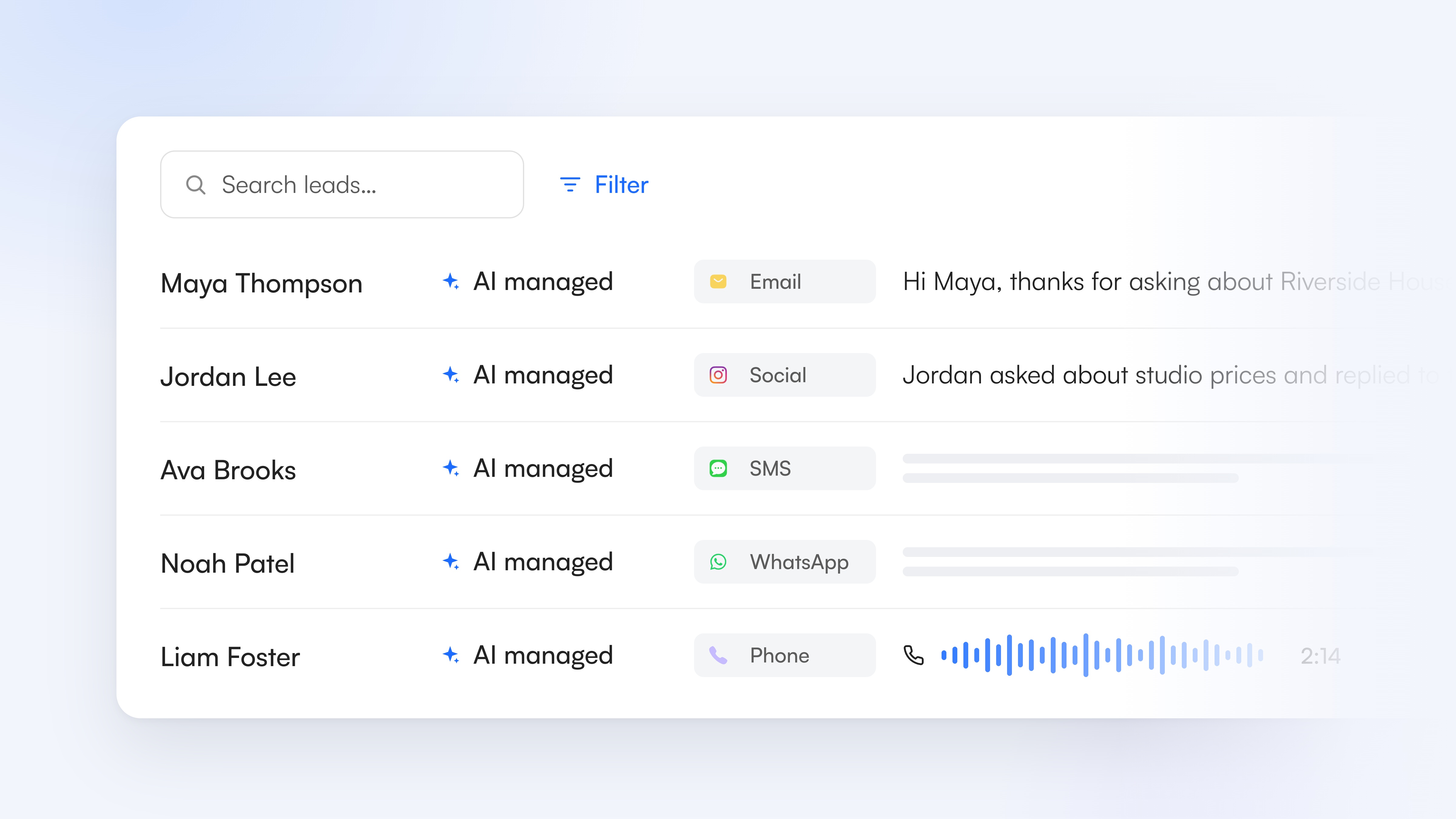
- Answering routine property enquiries
- Responding outside office hours
- Qualifying prospective tenants
- Scheduling property viewings
- Following up with applicants
- Providing property information
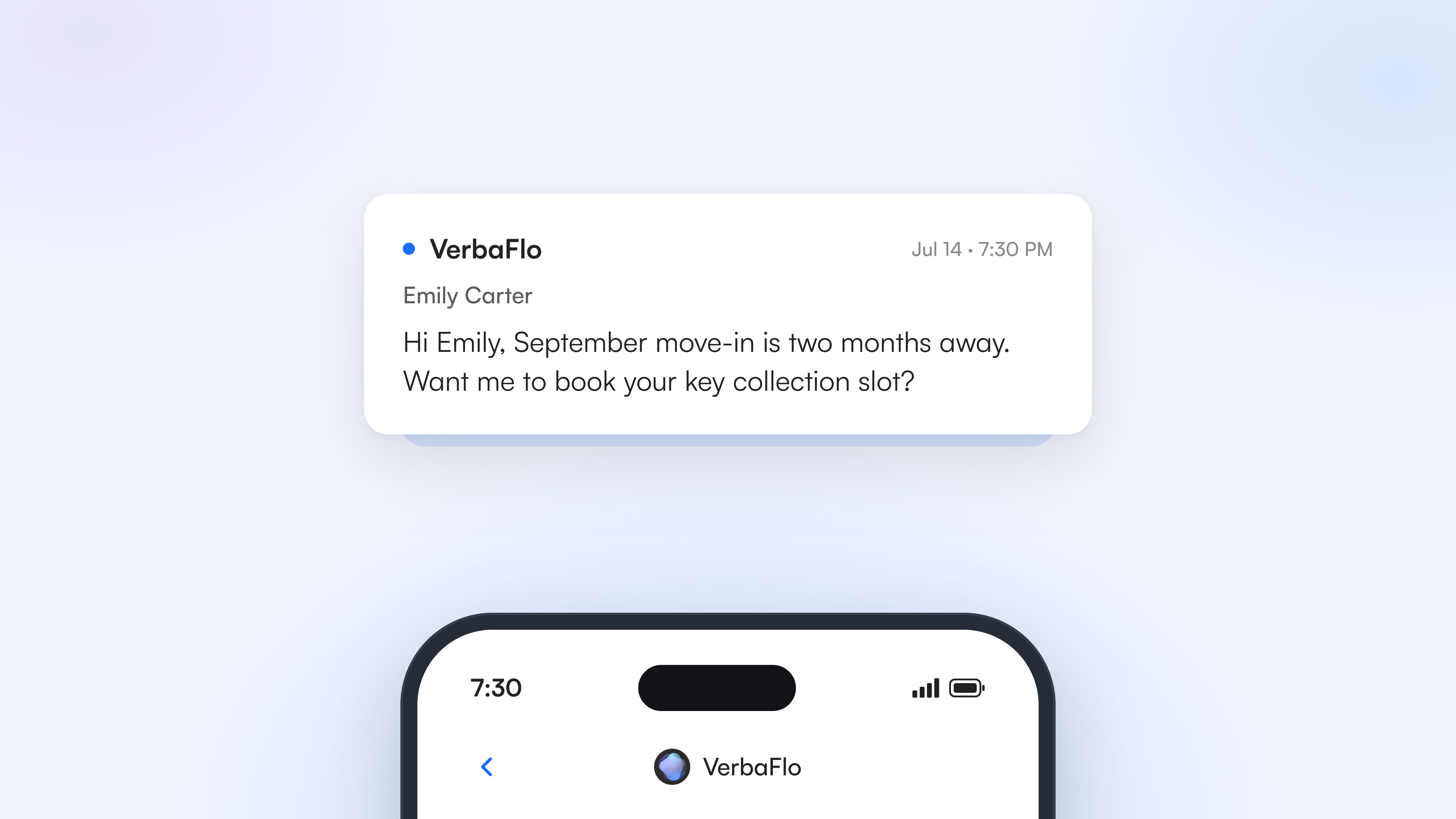
- Sending reminders
- Summarising conversations
- Routing complex enquiries to staff
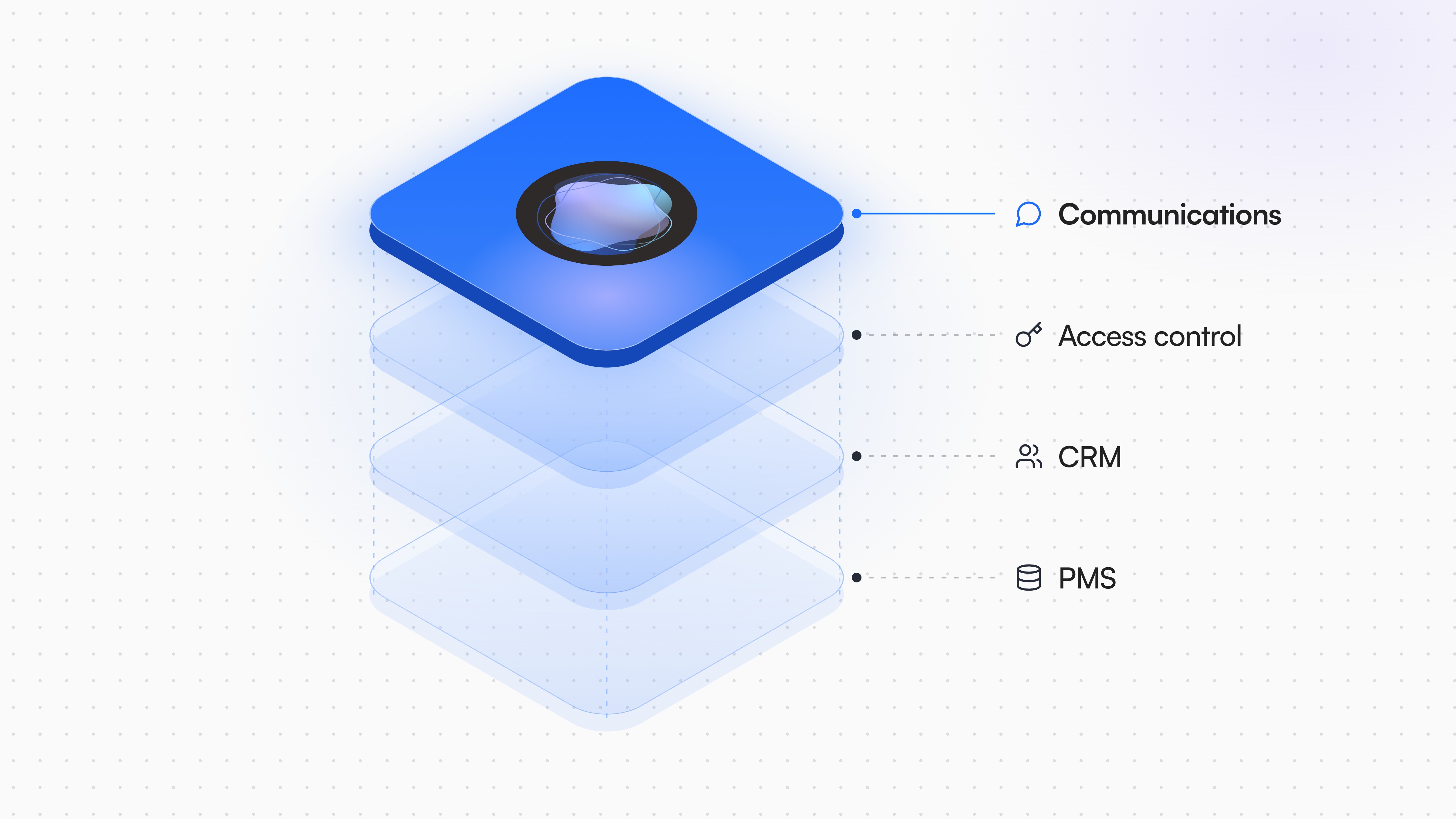
This sits alongside existing letting agent software rather than necessarily replacing it.
A CRM may continue to manage applicant records. Property management software may handle tenancies and payments. Marketing platforms may manage listings. AI can sit across these systems and help turn information into conversations and actions.
Where AI Can Make a Letting Agent's Day Easier
The biggest opportunity is usually found in tasks that are frequent, predictable and relatively easy to standardise.
Consider a typical enquiry asking whether the two-bedroom flat on High Street is still available and whether a viewing can be arranged for Saturday.
A member of the lettings team can answer it. But if the same team receives dozens of similar questions every day, responding to each one manually takes time that could be spent on viewings, landlords and applicants who need more personal attention.
An AI assistant can handle the initial interaction, provide approved information and, where the necessary systems are connected, help arrange the next step.
The benefit is not simply speed. It means the agent can start the conversation with more context instead of repeatedly asking the same basic questions.
AI Can Keep Handling Enquiries After the Office Closes
This is one of the clearest use cases for estate agency AI. Property searches do not stop at 5pm. Prospective tenants may search after work, during lunch breaks, in the evening or over the weekend. If an enquiry sits unanswered until the next working day, the applicant may have already contacted several other agents.
AI can provide an immediate response to routine questions about property availability, asking rent, deposit information, property features, furnishings, pet policies, viewing availability, location, tenancy requirements and office opening hours.
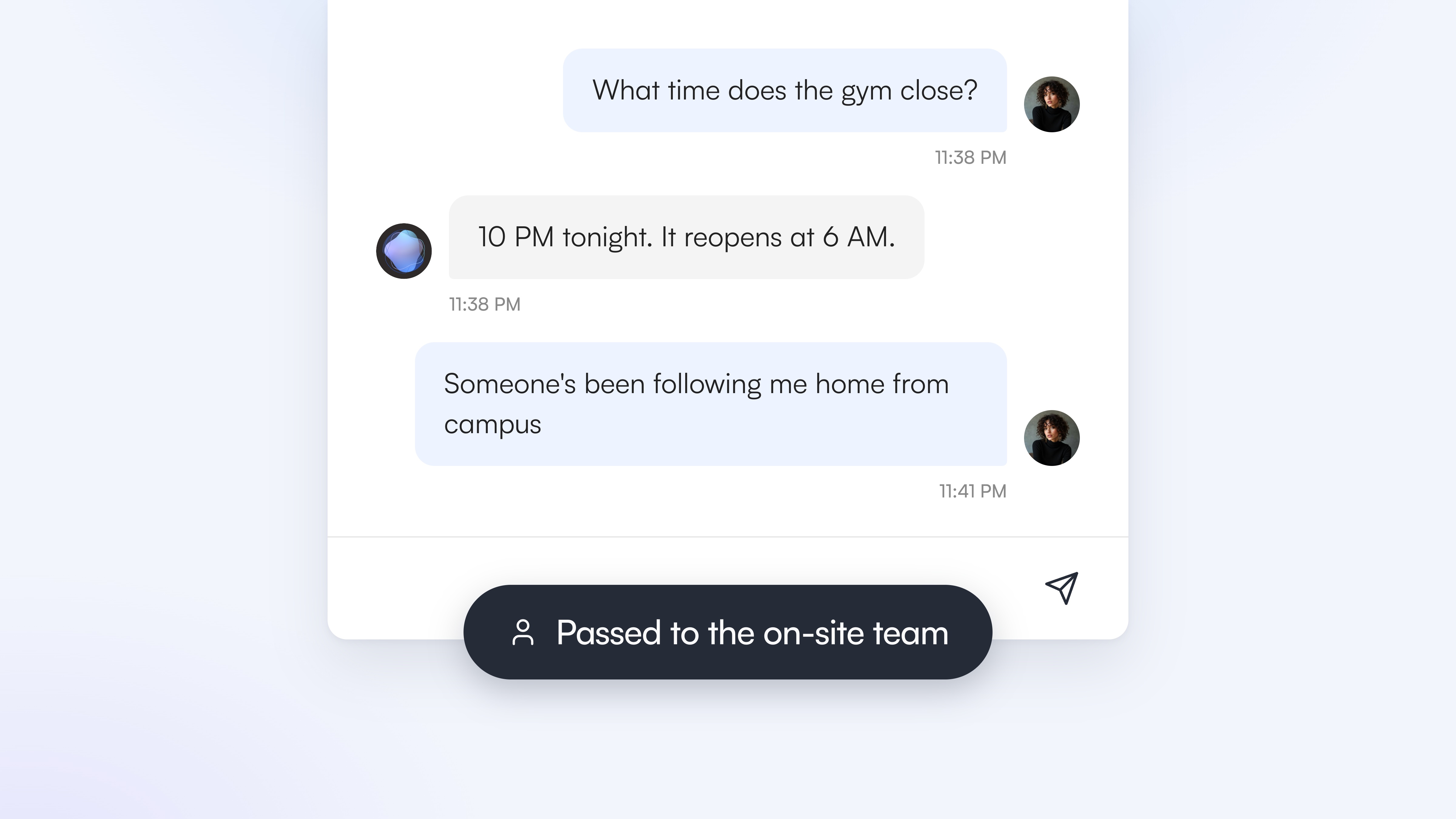
This does not mean every enquiry should receive an automated answer indefinitely. The useful model is AI first, human when needed. The AI handles straightforward questions and identifies when an agent needs to become involved.
From Enquiry to Viewing Without the Back-and-Forth
Arranging a viewing can involve surprisingly little actual decision-making but a considerable amount of communication. An applicant asks about a property. The agent checks availability. They exchange messages about suitable times. The agent confirms the appointment. A reminder is sent later. For a busy agency, this happens repeatedly.
Lettings automation can connect these steps so that an applicant can move from an initial enquiry towards a viewing without requiring an agent to manually manage every interaction.
The sequence runs from enquiry to qualification, then viewing availability, booking, confirmation and reminder.
This creates a more straightforward experience for the applicant while reducing administrative work for the lettings team.
VerbaFlo can support this conversational approach, allowing prospective tenants to ask questions and continue the conversation without moving between disconnected communication channels.
AI Can Help Agents Prioritise Enquiries
Not every enquiry represents the same level of urgency. One prospective tenant may simply be researching the local rental market for a move several months away. Another may have a specific move-in date and be ready to arrange a viewing immediately.
AI can help identify these differences by analysing the information provided during the conversation.
Signals may include:
- Desired move-in date
- Property type
- Budget
- Preferred location
- Viewing requests
- Responses to follow-up messages
- Level of engagement
- Specific questions about the tenancy
This gives agents more context when deciding which conversations require immediate attention. Importantly, use this to prioritise communication, not to make assumptions about an applicant's suitability based on protected characteristics or other inappropriate criteria.
Where AI Should Not Replace a Letting Agent
This is where an honest AI strategy differs from a typical software sales pitch. Some situations require human involvement.
Complex tenancy questions
A prospective tenant may ask a question about a tenancy agreement, contractual obligation or unusual circumstance that requires professional interpretation. AI can identify the question and direct it to the appropriate person. It should not confidently improvise an answer simply because the conversation needs a quick response.
Sensitive or difficult conversations
Issues involving complaints, disputes, vulnerability or personal circumstances require empathy and judgement. An automated response may be technically efficient but completely inappropriate for the situation.
Negotiation
Rent negotiations, landlord instructions, tenancy exceptions and unusual arrangements can involve competing interests and circumstances that require an experienced agent. AI can provide background information, but the authorised professional should make the decision.
Property and legal decisions
AI should not independently make decisions about matters requiring professional, legal or regulatory judgement. For UK agencies, automation should support established processes rather than create an alternative decision-making system that staff cannot properly oversee.
AI Property Manager or AI Assistant? They Are Not the Same Thing
The phrase "AI property manager" can make the technology sound more autonomous than it actually needs to be. A better way to think about AI is as an operational assistant.
A human property manager or letting agent remains responsible for decisions. AI helps with the work surrounding those decisions. The division looks like this:
This distinction matters because successful AI adoption is less about removing people from the process and more about helping them use their time better.
What About Landlords?
AI can also help agencies manage communication with landlords. Routine updates can be automated around viewing confirmations, applicant progress, maintenance updates, appointment reminders, property status and follow-up actions.
The same principle applies. Routine information can be automated, while decisions, negotiations and relationship management remain with the agent.
Choosing Letting Agent Software With AI in Mind
AI should not be evaluated separately from the rest of an agency's technology. Before introducing another platform, ask:
- Does it integrate with our existing systems? If staff have to copy information between the AI tool, CRM and property management system, the promised efficiency can quickly disappear.
- Can it use approved property information? AI responses need to be grounded in accurate information about the properties and services the agency actually manages.
- Can conversations be handed to staff? There should be a clear route from automated interaction to human support.
- Can the agency see what the AI is doing? Teams should have visibility into conversations, actions and escalations rather than operating a black box.
- Can it work outside office hours? For agencies considering AI primarily to improve responsiveness, evening and weekend coverage should be a core consideration.
How to Introduce AI Without Over-Automating Your Agency
The most practical approach is to start with one high-volume workflow rather than attempting to automate the entire agency.
- Identify the enquiries that consume the most staff time.
- Standardise the information used to answer them.
- Introduce AI for routine questions.
- Add viewing scheduling and follow-up where appropriate.
- Create clear escalation rules for human intervention.
- Monitor conversations and refine the workflow.
- Expand automation only where it genuinely improves the experience.
So, Is AI Worth It for UK Letting Agents?
AI is unlikely to make a letting agent redundant. It can, however, make a busy agency considerably more responsive. The strongest use cases are those where teams repeatedly perform the same administrative tasks, including answering common enquiries, handling out-of-hours messages, arranging viewings, sending reminders, and keeping prospective tenants informed.
The future of lettings automation is not necessarily an agency where AI handles every conversation. It is an agency where AI handles the predictable work and people handle the important work. Book a demo to see how it works.