.avif)
The Tipping Point: AI Has Moved From Experiment to Essential
The multifamily housing sector is no longer testing artificial intelligence. It is reorganising around it.
For a long time, AI sat on the edge of operations. It appeared in pilots, small experiments, and limited deployments. Teams explored what it could do, but core workflows remained largely unchanged. That phase has now passed.
In 2026, the shift is more structural. AI is becoming part of how leasing, communication, and portfolio management actually function. It is not replacing systems. It is sitting between them, connecting data, conversations, and actions in a way that manual processes cannot keep up with.
This change has not happened suddenly. It has built gradually through pressure. More enquiries, more channels, more expectations from residents. At the same time, staffing constraints and rising costs have made it harder to scale using traditional methods.
According to McKinsey & Company, more than half of organisations already use AI in at least one business function, with adoption continuing to expand into operational workflows.
In real estate, that expansion is becoming visible in everyday operations rather than isolated tools.
Reasons Multifamily Operators Are Going All-In on AI
There is no single driver behind this shift. It is the result of several pressures that have made manual models harder to sustain.
Centralisation is no longer optional
Many operators are moving towards centralised leasing and management structures. Instead of running each property independently, they are consolidating operations into shared teams.
This improves consistency and reduces duplication. However, it also increases the volume of interactions each team needs to manage.
AI makes this model practical. It allows a central team to handle enquiries, follow-ups, and workflows across multiple properties without increasing headcount at the same pace.
Labour constraints continue to shape operations
Staffing remains one of the most consistent challenges in property management. High turnover and limited availability of experienced staff mean that teams are often stretched.
A large portion of leasing work is repetitive. Questions around pricing, availability, documentation, and scheduling appear again and again.
Up to 60% of current work activities could be automated using existing technology.
This is where AI fits naturally. It absorbs repetitive interactions and reduces the operational load on teams.
Financial pressure is accelerating adoption
Rising interest rates, insurance costs, and operating expenses are pushing operators to rethink efficiency.
Improving Net Operating Income is no longer just about increasing rent. It is about reducing leakage, improving conversion, and lowering the cost of operations.
AI contributes by:
- Capturing and responding to every enquiry
- Reducing delays in communication
- Lowering the cost per interaction
Over time, these improvements compound.
Where Multifamily Operators Are Deploying AI First
AI adoption tends to follow a pattern. Operators start where the impact is easiest to measure and expand from there.
Leasing and lead management
The leasing journey is often the first area to change. This is where speed has the most visible impact.
Responding to leads within minutes significantly increases the likelihood of conversion, while delays reduce success rates.
AI systems address this gap directly.
They allow operators to:
- Respond instantly across web, messaging, and email
- Schedule tours without manual coordination
- Maintain consistent follow-ups over time
This keeps the conversation moving and reduces drop-off.
Resident communication and maintenance
Beyond leasing, AI is being applied to resident services.
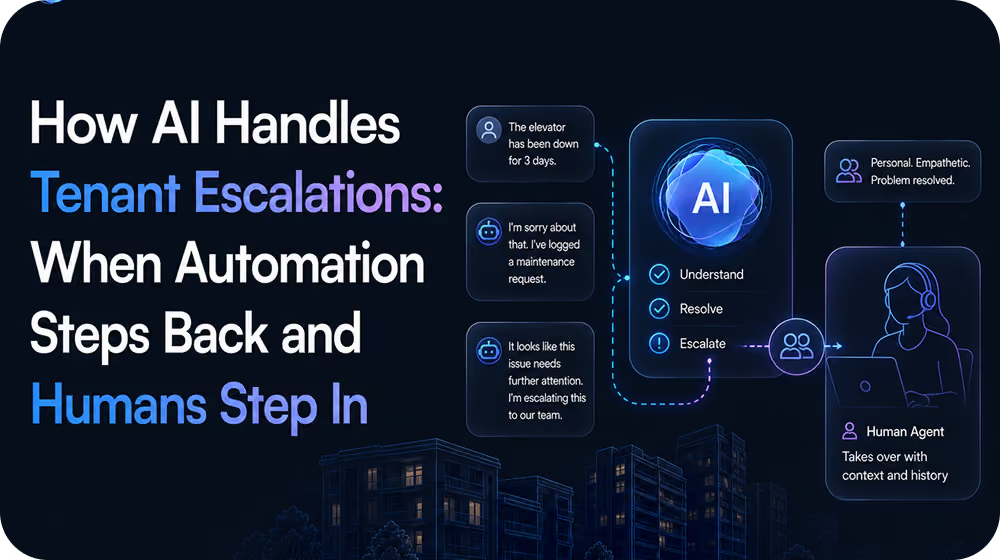
Handling maintenance requests and general queries often involves repeated back-and-forth communication. AI reduces that friction by interpreting requests and routing them correctly from the start.
Typical improvements include:
- Faster issue classification
- Better routing to vendors or internal teams
- Automated follow-ups once work is completed
This improves response times without increasing workload.
Multi-channel interaction
Conversations no longer happen in one place. Prospects and residents move between websites, messaging apps, and email.
AI helps maintain continuity across these channels.
Platforms like VerbaFlo support this shift by connecting conversations across channels while keeping them aligned with internal systems.
The Cost of Waiting
Choosing not to adopt AI does not keep operations stable. It introduces a different set of challenges.
Slower response times
Modern renters expect quick engagement. When responses are delayed, conversations lose momentum.
This often leads to missed opportunities that are difficult to recover later.
Higher operational overhead
Traditional models rely on staffing to handle growth. As portfolios expand, costs increase accordingly.
AI changes that dynamic by allowing teams to manage higher volumes without proportional increases in headcount.
Increased pressure on teams
Repetitive tasks place a consistent burden on leasing teams.
Over time, this leads to fatigue, reduced productivity, and higher turnover. AI reduces that load, allowing teams to focus on work that requires attention and judgement.
What the Leading Adopters Do Differently
Adoption alone is not enough. The way AI is implemented makes a significant difference.
They treat AI as infrastructure
Leading operators do not position AI as a feature. They integrate it into their core systems.
This includes:
- Property Management Software
- CRM platforms
- Maintenance workflows
The goal is to create a continuous flow between conversations and actions.
They use data actively
AI generates a large volume of interaction data.
Leading teams use this to understand:
- Why leads drop off
- Which queries appear most often
- Where operational bottlenecks exist
This allows them to adjust strategy in real time.
They redefine team roles
The role of on-site teams is changing.
Instead of handling every enquiry, teams are focusing on:
- Resident experience
- Complex conversations
- Community engagement
AI supports this by removing repetitive work from daily operations.