How AI Handles the Move-In Communication Gap in US Multifamily
The move-in period has always been a pressure point for US multifamily operators. Even when leasing journeys are seamless, the days leading up to arrival often introduce uncertainty, miscommunication and avoidable delays. Property managers know the pattern well: residents sign a lease, receive a package of instructions, and still arrive with questions about access, payments, utilities, parking or compliance. The result is predictable, overloaded teams, repeated explanations and early dissatisfaction before the tenancy has even begun.
Artificial intelligence (AI) now offers a structured, reliable way to close this communication gap. Solutions such as VerbaFlo bring consistency, accuracy and immediacy to move-in communication, ensuring that residents receive the right information at the right time without increasing administrative overhead. This article examines why the gap exists, where traditional systems fall short, and how AI-led communication meets the operational standard modern multifamily housing requires.
The Reality of the Move-In Communication Gap
Move-in communication is not a single step; it is a sequence of information exchanges that must be accurate and timely. When any part of this chain breaks, the resident experience suffers and internal workload increases.
Property managers frequently cite three operational challenges:
1. Information fragmentation
Move-in details are often divided across email templates, PDFs, portals, and internal notes. Even when teams are meticulous, information becomes difficult for residents to track.
2. Delayed responses
Residents expect prompt answers. However, leasing and site teams often manage high enquiry volumes on top of inspections, turnovers, and onboarding tasks. Delays are not caused by negligence but by workload capacity.
3. Repetitive questions
Even with clear instructions, residents tend to ask variations of the same questions. This consumes time that teams could redirect to higher-value tasks.
Demand pressure adds another layer. According to the U.S. Census Bureau multifamily housing data, completions remain high across many markets, contributing to fast unit turnover and rising administrative volume. More residents moving in means more communication to manage, and traditional workflows struggle to scale.
A HUD housing satisfaction report further highlights communication clarity as a key predictor of resident satisfaction and retention. When early communication is inconsistent, trust and confidence diminish rapidly.
Additional Data Reinforcing the Communication Gap (Stats)
According to the NMHC/Kingsley Resident Preferences Report, 41% of renters experienced confusion during their move-in process, often tied to unclear or inconsistent instructions.
Similarly, a J Turner Research survey found that 57% of resident complaints in the first week relate directly to unclear or incomplete move-in information, underscoring how communication gaps amplify early workload for property teams.
Why Traditional Channels Struggle
Property management teams already use email campaigns, resident portals, and automated reminders. Yet these approaches leave several weaknesses unaddressed.
Email alone is insufficient
Resident inboxes are crowded. Move-in emails, even when carefully drafted, are often skimmed, misplaced or unread. This creates gaps that result in last-minute questions.
Portals are underutilised
Many residents log in only when required to pay rent or sign documents. Relying solely on portals assumes engagement levels that rarely reflect reality.
Static documents age quickly
Move-in guides can become outdated within months. Adjustments to policies, amenity rules, parking procedures or compliance requirements may not reach residents consistently.
Manual responses create inconsistency
Different team members may respond to the same question differently, which creates risk and reduces operational cohesion.
The move-in experience suffers not because property teams lack effort but because the process was never designed for the communication demands of modern multifamily housing.
How AI Addresses the Move-In Gap
Conversational AI platform such as VerbaFlo introduce structure, consistency and speed into the move-in phase. Rather than replacing property teams, AI supports them by handling predictable communication reliably.
1. Centralised, always-accurate information
VerbaFlo ensures that every resident receives updated, site-specific guidance. When policies or instructions change, updates flow automatically into the communication engine. This prevents outdated information from circulating.
2. Immediate, context-specific responses
AI can process resident questions instantly and provide precise answers drawn from verified property data. This eliminates delays and reduces enquiry volume directed at onsite teams.
For example, if a resident asks about parking registration, gate access, move-in lifts or utility setup, the system responds with accurate, pre-approved instructions rather than generic templates.
3. Consistency across portfolios
Large operators often manage multiple buildings, each with its own rules. AI ensures communication consistency across the full portfolio while still delivering property-specific details.
4. Reduced manual workload
By handling common questions and delivering scheduled move-in instructions, AI frees property managers to focus on inspections, turnovers and resident engagement.
A Federal Trade Commission (FTC) bulletin on AI use and accuracy in consumer communication underscores the importance of trustworthy, consistent information in consumer housing interactions—an area where AI excels when properly implemented.
5. Clear audit trails and accountability
AI systems track communication logs, timestamps and content, supporting compliance standards and helping teams review interactions when necessary.
Where VerbaFlo Specifically Adds Value
VerbaFlo is designed to support property management teams without adding complexity. Its move-in automation capabilities align closely with multifamily needs.
Targeted move-in sequencing
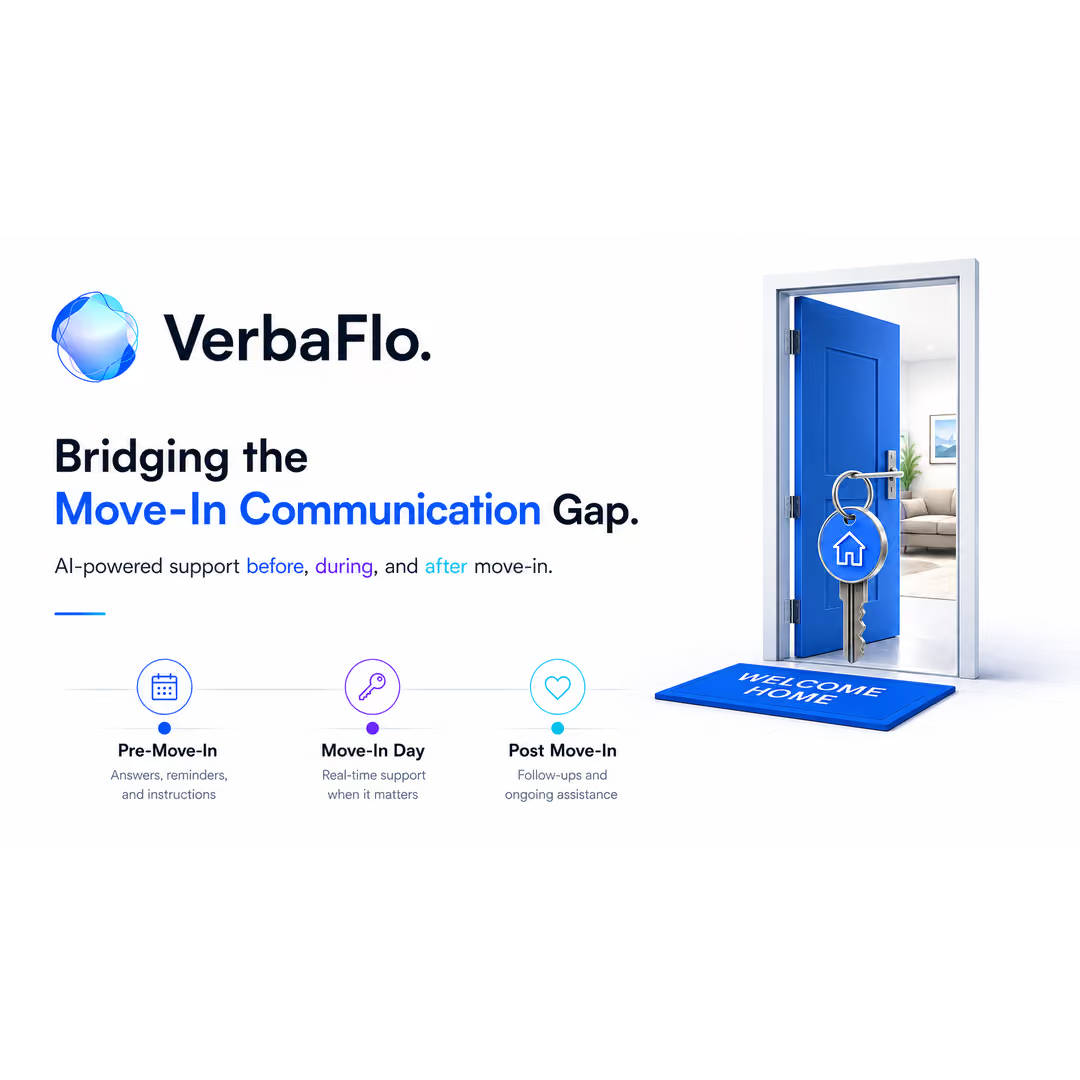
The platform sends information in logical stages, lease signing, pre-move verification, arrival instructions, amenity orientation, and first-week guidance. Each stage is timely and structured to reduce confusion.
Portfolio-level configuration with property-specific detail
Regional managers and corporate teams can maintain consistent communication frameworks across all assets. At the same time, onsite teams can configure local instructions without rewriting content or duplicating templates.
AI-driven conversation engine
Residents can ask questions in natural language. VerbaFlo responds using sourced information from property documents, SOPs and knowledge bases, ensuring accuracy and reducing back-and-forth interactions.
Compatibility with existing systems
VerbaFlo integrates with common property management software used across the US, improving adoption and reducing operational friction.
Operational oversight
Management teams gain visibility into enquiry volume, response patterns and resident sentiment, enabling continuous process improvement.
The Move-In Impact: Results Property Managers Can Expect
More confident residents
When residents receive consistent guidance, they arrive informed and prepared. This sets the tone for a smoother tenancy and higher satisfaction.
Fewer escalations and repeated questions
AI absorbs common queries, decreasing call volume, walk-ins and repetitive email loops.
Higher staff productivity
Teams redirect time from basic explanations to tasks that require judgment, such as inspections, conflict resolution and relationship building.
Faster onboarding and fewer delays
Clear communication reduces missed appointments, incomplete documentation and failed move-ins.
Consistency across operational teams
Regardless of staff changes or seasonal hiring, AI ensures that move-in standards remain stable.
These outcomes align with operational guidance from the U.S. General Services Administration (GSA) digital communication standards, which emphasise clarity, accuracy and accessibility in public-facing communication—principles that directly translate to multifamily move-in workflows.
Implementing AI in Move-In Communication
Adoption does not require significant restructuring. Most property teams begin with a phased approach.
1. Standardise core documents
Move-in guides, access instructions and amenity rules should be organised and verified. VerbaFlo uses these materials as source data.
2. Configure property profiles
Each building’s rules, access points, hours and contact details are loaded into the system.
3. Train the AI with approved content
The platform learns from team-verified information only, ensuring control over accuracy.
4. Automate the communication sequence
Teams schedule the flow of move-in communication—welcome messages, confirmations, reminders and orientation steps.
5. Monitor and refine
Over time, teams analyse enquiry patterns and adjust content to increase clarity.
Conclusion: AI Closes the Move-In Gap with Precision and Consistency
The move-in experience is one of the strongest predictors of a resident’s long-term satisfaction. When communication is fragmented, delayed or inconsistent, property managers face operational strain and diminished resident confidence. AI is not a futuristic enhancement; it is a practical solution that aligns communication workflows with the expectations of modern renters.
VerbaFlo delivers the clarity, consistency and responsiveness required to close the move-in communication gap across multifamily portfolios. By automating essential information delivery and supporting resident questions in real time, the platform enables property managers to maintain high operational standards while reducing manual workload.